簡略版 イラン戦争における米国の「無条件降伏」概念の再考― 日本敗戦史との比較地政学分析
Brief Version: Unconditional Surrender Revisited:War Termination Theory and the Geopolitics of a Potential Iran War in Comparison with Japan’s Defeat in World War II
2026.3.19
中東アジア情報戦略研究所
Institute of Middle East Asia Information Strategy (IMEAIS)
キーワード(5 Key words)
- Unconditional Surrender(無条件降伏)
- Regime Change(体制転換)
- State Structure(国家構造)
- Religious Governance(宗教統治)
- Strategic Misperception(戦略的誤認)
はじめに
米国政治において、「無条件降伏(Unconditional Surrender)」という概念は、第二次世界大戦における対日・対独戦略の歴史的記憶と強く結びついている。
米国大統領 ドナルド・トランプ は、イラン問題に関する演説や政策議論の中で、しばしば「体制転換」や「完全な敗北」を示唆する表現を用いてきた。
このような言説は、第二次世界大戦期における フランクリン・ルーズベルト が提示した「無条件降伏」原則を想起させる。この概念は1943年の カサブランカ会談 で公式に提示され、連合国の対枢軸国戦争の基本原則となった。
しかし、日本とイラン体制を同一の枠組みで理解することには重大な問題がある。米国を主体とする連合国による日本の終戦処理は、国家構造・宗教・民族構造が極めて特殊であったため、戦後統治が成立した。
トランプ大統領は、体制の転換は望んでいないと言いつつも、イランの無条件降伏以外終戦はないと発言している。中東地域の国家構造は多民族・宗派構造を内包しており、単純な体制崩壊は国家崩壊を意味する可能性が高い。日本は、天皇陛下による終戦の詔勅により、武器を放棄した。イランの宗教指導者が革命防衛隊や軍隊に対して、武器放棄を指示するとは考え難い。イラン戦争の大義は、核開発阻止である。しかしながら、イラン国民に対して、国民自ら、体制転換を行うよう促す発言もしている。この矛盾が戦争終結の大きな課題である。同時に日本と同じように終戦処理が出来ると考えるの誤りである。本稿では
- 無条件降伏の歴史的意味
- 日本とイランの国家構造
- 宗教・統治理念の差異
を比較し、米国戦略の歴史的誤認の可能性を検討する。
Introduction
In U.S. politics, the concept of “unconditional surrender” is deeply tied to the historical memory of wartime strategy against Japan and Germany during World War II.
U.S. President Donald Trump has frequently used expressions implying “regime change” and “total defeat” in speeches and policy discussions concerning Iran.
Such rhetoric recalls the principle of “unconditional surrender” advanced by Franklin D. Roosevelt during World War II. This concept was formally presented at the Casablanca Conference in 1943 and became a foundational principle of the Allied war effort against the Axis powers.
However, there are serious problems in understanding Japan and the Iranian regime within the same analytical framework. The Allied-led postwar settlement of Japan, centered on the United States, was made possible by Japan’s highly unique national structure, religion, and ethnic composition, which allowed for stable postwar governance.
While President Trump has stated that he does not seek regime change, he has also asserted that the war with Iran cannot end without its unconditional surrender. The state structures of the Middle East inherently contain multi-ethnic and multi-sectarian complexities, making a simple regime collapse highly likely to result in state collapse.
Japan renounced arms following the Imperial Rescript on the termination of the war issued by the emperor. In contrast, it is difficult to imagine Iran’s religious leadership ordering the Revolutionary Guard or the military to lay down their arms. The stated justification for a war with Iran is to prevent nuclear development. However, there have also been statements urging the Iranian people themselves to bring about regime change. This contradiction constitutes a major challenge to ending the war. At the same time, it is a mistake to assume that a postwar settlement similar to Japan’s is possible.
This paper examines:
- The historical meaning of unconditional surrender
- The national structures of Japan and Iran
- Differences in religion and governing principles
Through this comparison, it explores the possibility of historical misperception in U.S. strategy.
第1章 無条件降伏と条件降伏
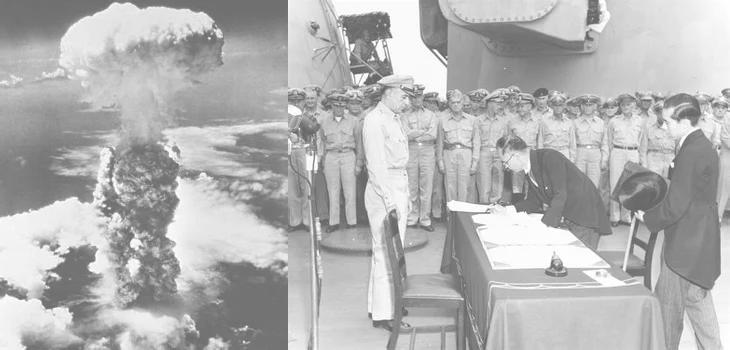
「無条件降伏」という概念は、第二次世界大戦において連合国が採用した戦争終結戦略である。1943年1月、カサブランカ会談でルーズベルト大統領は次のように宣言した。「連合国はドイツ、日本、イタリアに対して無条件降伏以外を認めない」¹
この戦略の目的は
- 枢軸国の完全軍事的無力化
- 体制転換
- 再軍備阻止
であった。しかし、実際の戦後処理では完全な無条件降伏ではなかった。日本の場合、ポツダム宣言受諾後も
- 天皇制存続
- 日本政府の行政機構維持
が認められた。これは占領政策を担当した ダグラス・マッカーサー の判断による。彼は次のように述べている。「天皇は日本社会の安定の象徴であり、占領統治に不可欠である」²したがって、歴史的には、日本は完全な無条件降伏ではなく、条件付き体制転換であったと理解されている。
出典
- U.S. Department of State, Foreign Relations of the United States: Casablanca Conference, 1943
- MacArthur, Reminiscences, 1964
Unconditional Surrender and Conditional Surrender
The concept of “unconditional surrender” emerged as a war termination strategy adopted by the Allied powers during World War II. In January 1943, at the Casablanca Conference, U.S. President Franklin D. Roosevelt declared:
“The Allies will accept nothing less than unconditional surrender from Germany, Japan, and Italy.” ¹
The objectives of this strategy were as follows:
- The complete military neutralization of the Axis powers
- Political regime transformation
- The prevention of future rearmament
However, in practice, the postwar settlement did not constitute a fully unconditional surrender. In the case of Japan, even after accepting the Potsdam Declaration, the following were preserved:
- The continuation of the imperial institution
- The maintenance of the Japanese government’s administrative structure
This outcome was largely the result of decisions made by Douglas MacArthur, who oversaw the occupation policy. He stated:
“The emperor is a symbol of stability in Japanese society and indispensable to the administration of the occupation.” ²
Therefore, from a historical perspective, Japan’s defeat is better understood not as a purely unconditional surrender, but rather as a form of conditional regime transformation.
References
- U.S. Department of State, Foreign Relations of the United States: Casablanca Conference, 1943
- MacArthur, Reminiscences, 1964
第2章 日本とイランの民族構造と政治構造
日本は歴史的に単一民族国家に近い構造を持つ。
民族構成
| 民族 | 割合 |
|---|---|
| 大和民族 | 98%以上 |
これに対してイランは多民族国家である。
| 民族 | 割合 |
|---|---|
| ペルシャ人 | 約60% |
| アゼリー人 | 約16% |
| クルド人 | 約10% |
| アラブ人 | 約3% |
この民族構造は、国家統治において重要な意味を持つ。日本では、中央政権崩壊=国家崩壊ではない、しかしイランでは、中央政権崩壊=内戦の可能性が高い。これは2003年の イラク戦争 で証明されている。サダム政権崩壊後、国家は
- シーア派
- スンニ派
- クルド勢力
に分裂した。
出典
- CIA World Factbook, Iran Ethnic Composition
- Phebe Marr, The Modern History of Iraq, Westview Press
Chapter 2
Ethnic and Political Structures of Japan and Iran
Japan has historically maintained a social structure that is close to that of an ethnically homogeneous nation-state.
Ethnic Composition of Japan
Ethnic Group | Percentage
Yamato (Japanese) | Over 98%
In contrast, Iran is a multiethnic state.
Ethnic Composition of Iran
Ethnic Group | Percentage
Persians | Approximately 60%
Azeris | Approximately 16%
Kurds | Approximately 10%
Arabs | Approximately 3%
This ethnic composition carries significant implications for state governance. In Japan, the collapse of the central government does not necessarily imply the collapse of the state itself. In Iran, however, the collapse of central authority would likely increase the probability of civil conflict.
This dynamic was demonstrated during the Iraq War. Following the fall of the regime of Saddam Hussein, the Iraqi state fragmented along sectarian and ethnic lines into:
- Shiite factions
- Sunni factions
- Kurdish political forces
References
3. CIA World Factbook, Iran Ethnic Composition
4. Phebe Marr, The Modern History of Iraq, Westview Press
第3章 権威と権力の統治システム
日本の統治は、権威(天皇)と権力(政府)の二重構造で成立している。政治学者 丸山眞男 は、日本政治を「権威と権力の二重構造」と定義した。³これに対しイランは、宗教権力国家である。
最高権力者は、Ali Khamenei(アリー・ハメネイ)→Mojtaba Khamenei(モジュタバ・ハメネイ)=(最高指導者)であり、国家構造は
- 革命防衛隊
- 宗教指導者
- 選挙政府
の三層構造である。この構造は、戦前の日本の天皇制とは根本的に異なる。
出典
- 丸山眞男『日本政治思想史研究』岩波書店
- Said Arjomand, The Turban for the Crown
Chapter 3
Systems of Authority and Power in Governance
The political system of Japan has historically been structured around a dual framework consisting of authority (the emperor) and power (the government). Political scientist Masao Maruyama defined Japanese politics as a “dual structure of authority and power.”³
In contrast, Iran represents a form of religious-political state. The highest authority is the Supreme Leader, currently Ali Khamenei, with figures such as Mojtaba Khamenei often discussed in the context of succession within the leadership structure.
The Iranian state can be understood as a three-layered system consisting of:
- The Islamic Revolutionary Guard Corps (IRGC)
- The clerical (religious) leadership
- An elected governmental administration
This governance structure differs fundamentally from the imperial system of prewar Japan.
References
5. Masao Maruyama, Studies in the Intellectual History of Japanese Politics, Iwanami shorten
6. Said Arjomand, The Turban for the Crown
第4章 中東宗教と神道文化
日本の宗教文化は神道である。神道は
- 教義がない
- 聖典がない
- 政治権力と分離可能
という特徴を持つ。これに対してイランの国家理念は、シーア派イスラム神権政治である。1979年の イラン革命 により、ルーホッラー・ホメイニが神権政治を樹立した。この体制は、宗教=国家という構造である。したがって、体制崩壊は宗教秩序崩壊を意味する。
出典
- Nikki Keddie, Modern Iran
- John Breen & Mark Teeuwen, A New History of Shinto
Chapter 4
Middle Eastern Religion and Shinto Culture
The religious culture of Japan is fundamentally shaped by Shinto. Shinto possesses several distinctive characteristics:
- It lacks a fixed doctrinal system
- It has no canonical scripture
- It can be institutionally separated from political authority
In contrast, the ideological foundation of Iran is based on Shiite Islamic theocracy. Following the Iranian Revolution, Ruhollah Khomeini established a political system grounded in religious rule.
Under this system, religion and the state are structurally unified. Consequently, the collapse of the political regime would likely imply not only governmental transformation but also the disintegration of the religious order itself.
References
7. Nikki Keddie, Modern Iran
8. John Breen & Mark Teeuwen, A New History of Shinto
第5章 天皇制の歴史と宗教
日本の国家統合の中心は、昭和天皇を頂点とする天皇制であった。戦後、占領軍は天皇制を維持した。1946年の人間宣言により、天皇は神格を否定した。しかし象徴としての存在は維持された。これは占領統治成功の最大要因であったとされる。
出典
- Herbert Bix, Hirohito and the Making of Modern Japan
Chapter 5
The Historical Role of the Emperor System and Religion
The central institution of national integration in modern Japan was the imperial system, symbolically headed by Emperor Hirohito. Following Japan’s defeat in World War II, the Allied occupation authorities chose to preserve the imperial institution rather than abolish it.
In 1946, the emperor issued the so-called Humanity Declaration, in which he renounced his divine status. Despite this transformation, the emperor was retained as a symbolic figure of the nation.
This decision is widely regarded as one of the most significant factors contributing to the success of the Allied occupation and the stability of postwar Japan.
References
9. Herbert Bix, Hirohito and the Making of Modern Japan
第6章 戦勝国の歴史観は戦略を見誤る
戦争において戦勝国の歴史観は戦略を固定化する。アメリカの中東政策では
- イラク戦争
- アフガニスタン戦争
において、体制転換=民主化という前提が置かれた。しかし実際には
- 国家崩壊
- 内戦
- テロ組織拡大
を引き起こした。これは、歴史モデルの誤用である。日本の戦後成功モデルを中東に適用することは政治文化の違いから極めて困難である。
結論
本考察の結論は次の通りである。
- 無条件降伏は第二次世界大戦特有の戦略である
- 日本の戦後体制は例外的成功事例である
- イランの国家構造は多民族宗教国家である
- 体制崩壊は国家崩壊につながる可能性が高い
- 日本モデルを中東に適用することは戦略的誤認となる
したがって、イラン問題の解決は、外交・地域秩序・勢力均衡による現実的解決が必要である。
Chapter 6
The Strategic Misinterpretation of Victory Narratives
In warfare, the historical narratives of victorious powers tend to shape and rigidify strategic thinking. In U.S. policy toward the Middle East, particularly during the Iraq War and the War in Afghanistan, the assumption prevailed that regime change would lead to democratization.
In practice, however, these interventions resulted in:
- State collapse
- Prolonged civil conflict
- The expansion of terrorist organizations
This reflects a misapplication of historical models. Applying Japan’s successful postwar reconstruction model to the Middle East is extremely difficult due to fundamental differences in political culture, religious structure, and social organization.
Conclusion
The analysis presented in this study leads to the following conclusions:
- Unconditional surrender was a strategy specific to World War II.
- Japan’s postwar transformation represents an exceptional case of success.
- Iran is fundamentally structured as a multiethnic and religious state.
- The collapse of the governing regime is highly likely to result in state fragmentation.
- Applying the Japanese model to the Middle East constitutes a strategic misperception.
Therefore, resolving the Iranian issue requires a realistic approach based on diplomacy, regional order, and balance of power, rather than strategies premised on regime collapse.
・木下 顕伸(Akinobu Kinoshita)
中東アジア情報戦略研究所 所長
中東・アジア地域の政治・安全保障・情報戦略を専門とする独立系アナリスト。 30年以上の現地ネットワークと政府レベルの実務経験を基盤に、 2025年、中東アジア情報戦略研究所を設立。 著書『ISISと戦う』(愛育社、2016年)。
An independent analyst specializing in political affairs, security, and information strategy across the Middle East and Asia. Drawing on over 30 years of field networks and hands-on experience at the government level, he founded the Middle East Asia Information Strategy Institute in 2025. Author of ISIS to Tatakau (Aiikusha, 2016).