『イスラエル・イラン対立における「正当と不当」の構造分析』
― 宗教・歴史・政治・国際法・経済の多層的検証
Structural Analysis of “Legitimacy and Illegitimacy” in the Israel–Iran Conflict
A Multilayered Examination of Religion, History, Politics, International Law, and Economics
2026.04.15
発行: 中東アジア情報戦略研究所
*There is an English version below this Japanese article.
はじめに
― 米国・イスラエル対イラン戦争における正当性の構造分析 ―
本稿は、米国およびイスラエルによる対イラン軍事行動の「正当性」の所在について、国際法・歴史・地政学・経済の複合的観点から検証するものである。
まず問題の核心は、国際社会における「法の支配」と「力の支配」の乖離にある。イスラエルは長年にわたり、国連決議に反する入植地拡大政策を継続してきたと指摘されており、これを米国が軍事的・政治的に支援している構図は、国際法秩序の形骸化を象徴する事例といえる。これは単なる地域問題ではなく、国連の安全保障機能そのものの信頼性に関わる問題である。
一方で、ロシアによるウクライナ侵攻は国際社会から強い非難を受けており、同様の主権侵害行為に対する評価が、主体によって大きく異なるという「二重基準(ダブルスタンダード)」の存在が浮き彫りとなっている。
こうした中、米国は2025年6月、イランの核開発阻止を名目として同国の核施設に対する軍事攻撃を実施し、その成功を発表した。さらに2026年2月には、イスラエルと連携した第二次攻撃が行われたが、現在に至るまで包括的な和平合意は成立していない。この一連の軍事行動の法的根拠および戦略的合理性は、依然として国際的議論の対象である。
また、米国の政策目的自体も一貫性を欠いている。ドナルド・トランプ大統領は当初、体制転換を目的としないと表明しながらも、イランの最高指導層に対する攻撃を実施し、その後は政治体制の選択をイラン国民に委ねるとの立場を示した。この政策の変遷は、軍事行動の正当性のみならず、戦略目標の曖昧さを示唆している。
さらに、米国国家テロ対策センター関係者であるジョー・ケント氏の発言は注目に値する。同氏は「イランは差し迫った脅威ではなかった」と述べ、今回の戦争がイスラエルおよび米国内のロビー活動の影響下で開始された可能性を指摘している。これは、安全保障上の必要性よりも政治的要因が優先された可能性を示唆するものである。以上を踏まえると、本戦争の正当性に関する問いは、以下の複合的論点に集約される。
- 米国の対外軍事介入は国際法上正当化され得るのか
- イスラエル防衛という目的は、どの程度まで国際的に容認されるのか
- 国連決議と現実の軍事行動の乖離は何を意味するのか
- 「脅威の先制排除」という論理はどこまで許容されるのか
さらに、本稿ではこれらに加え、中東における歴史的対立構造、すなわち帝国支配の遺産、宗教的対立、資源を巡る覇権争いが現在の紛争に与える影響を検討する。また、石油取引と基軸通貨体制を結びつける「ペトロダラー体制」に着目し、米国の中東関与が単なる安全保障政策にとどまらず、国際金融秩序の維持と密接に関係している可能性についても考察する。特に、エネルギー資源をめぐる統制構造と軍事介入の関連性、さらにはベネズエラに対する過去の政策との比較分析を通じて、「資源・通貨・軍事」が一体化した現代の覇権構造を明らかにすることを目的とする。
エグゼクティブサマリー
- 「正当性と不当性」は絶対概念ではなく、歴史・宗教・国家利益によって相対化される構造にある
- イスラエルは国際法的正統性を持つ一方、軍事行動においてはグレーゾーンを拡大している
- イランは反帝国主義の正当性を掲げるが、代理戦争と宗教支配において国際秩序を侵食している
- 国連安全保障体制は機能不全に陥り、国際法の「正義」は実質的に大国政治に依存している
- 基軸通貨体制(ドル)が「制裁=正義」を形成し、経済面でも非対称的な善悪構造を生んでいる
【キーポイント】
① 覇権は軍事力ではなく信認によって維持される
② 「正と不」は単一基準では決定できない
③ 中東対立は歴史・宗教ではなく構造的競争である
④ ドル体制は覇権維持の中核であり同時に脆弱性でもある
⑤ 覇権行動は自己侵食的リスクを持つ
第1章 覇権の正当性と歴史的領土問題
中東における覇権の正当性は、歴史的記憶に強く依存している。
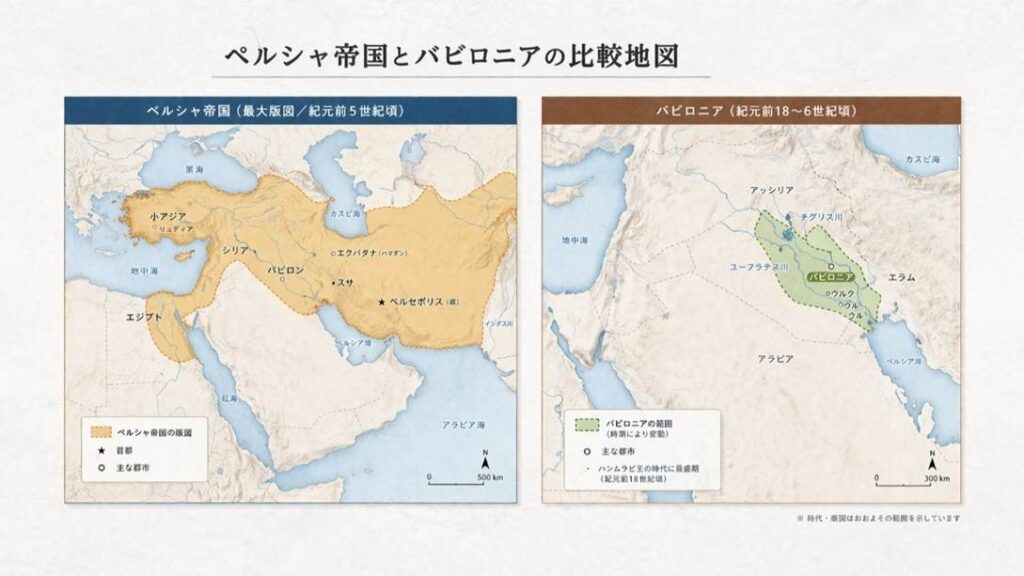
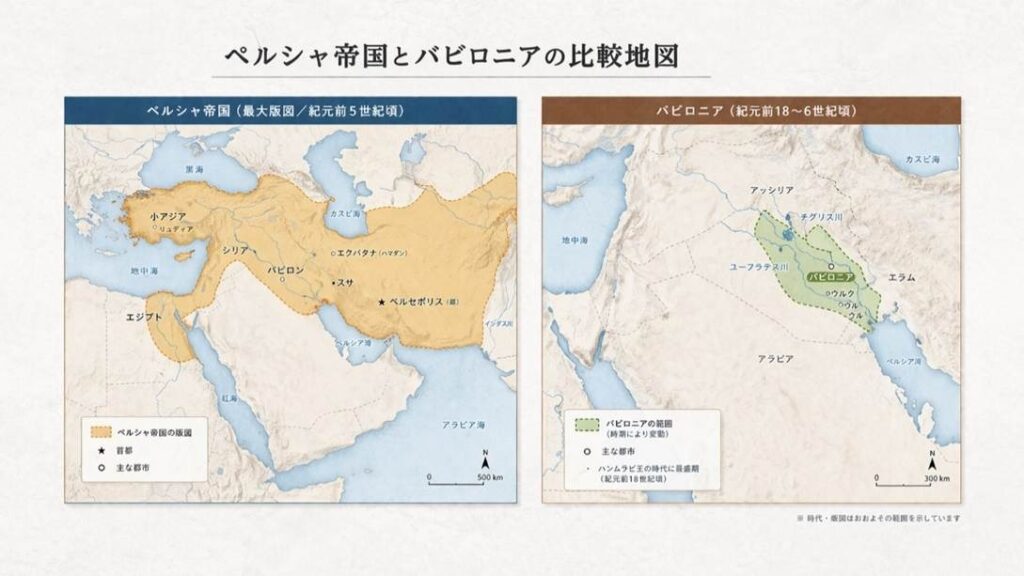
- イランは、古代の ペルシャ帝国 を起源とし、広大な支配領域を歴史的正統性の根拠とする
- 一方、ユダヤ民族は バビロン捕囚 という歴史的被害体験を国家意識の核心に持つ
分析
- イランの「正」:歴史的文明国家としての復権
- イスラエルの「正」:民族的生存と帰還の正当性
問題点 → 双方とも「歴史」を正義の根拠にしており、相互否定構造となっている
第2章 国際法と国家成立の正当性
イスラエルは、1947年の国際連合 による分割決議に基づき建国された。しかし、国連を無視して入植地を拡大。
- パレスチナ側から見れば「外部による強制分割」
- アラブ諸国から見れば「侵略的国家形成」
一方イランは、ハマス ヒズボラ など民兵組織を通じてパレスチナ・レバノン・シリア・イラク・に影響力を拡大している。国家予算の消費は、国民にとっての正当性は見いだせない。
分析
- イスラエルの「正」:国際法に基づく国家承認
- イランの「正」:被抑圧民族支援(対イスラエル)
問題点
→ 中東における代理戦争構造(Proxy War)により、国家責任が曖昧化
→ 国際法は実質的に無力化している
第3章 パレスチナ問題と国家構造の不可能性
仮にイスラエル・パレスチナ共和国として単一国家とした場合:
- 人口比によりパレスチナ人が政治的多数派となる可能性
- ユダヤ国家の理念(選民思想)と衝突
- 武装勢力の政治参加 → 軍閥国家化リスク
シナリオ分析
① 二国家解決 → 実質的に停滞
② 一国家解決 → 内戦リスク
③ 周辺国編入(エジプト・ヨルダン) → 現実性低
結論 → 構造的に安定解は存在しない
第4章 国連安全保障体制の崩壊
国際連合安全保障理事会は、
- 拒否権によって機能停止
- 大国の代理戦争を抑止できない
具体例:
- ロシアのウクライナ侵攻
- イスラエルのガザ・レバノン作戦
- イランの域内干渉(シリア・イラク)
- 米国のイラン攻撃
結論 → 国際法の「正」は強制力を失った規範に過ぎない
第5章 国内政治と「国民に対する不当性」
イスラエル
- 首相:ベンヤミン・ネタニヤフ:汚職問題・政権維持のための強硬政策
イラン
- 実権:宗教指導体制+革命防衛隊(イラン革命防衛隊)
分析
- イスラエル:民主主義だが政治的分断
- イラン:宗教権威による統治と国民抑圧
共通点→ 政権維持が対外強硬姿勢を生む
第6章 基軸通貨体制と地政経学的「正当性と不当性」
国際経済はドル体制に依存している。基軸通貨は正、反基軸通貨は悪
- イラン:制裁により通貨価値低下
- イスラエル:西側経済圏に統合=米国依存
分析
- 「制裁=正義」という構造
- その適用は、米国政治により選択的
問題点 → 経済力=正義の実装手段
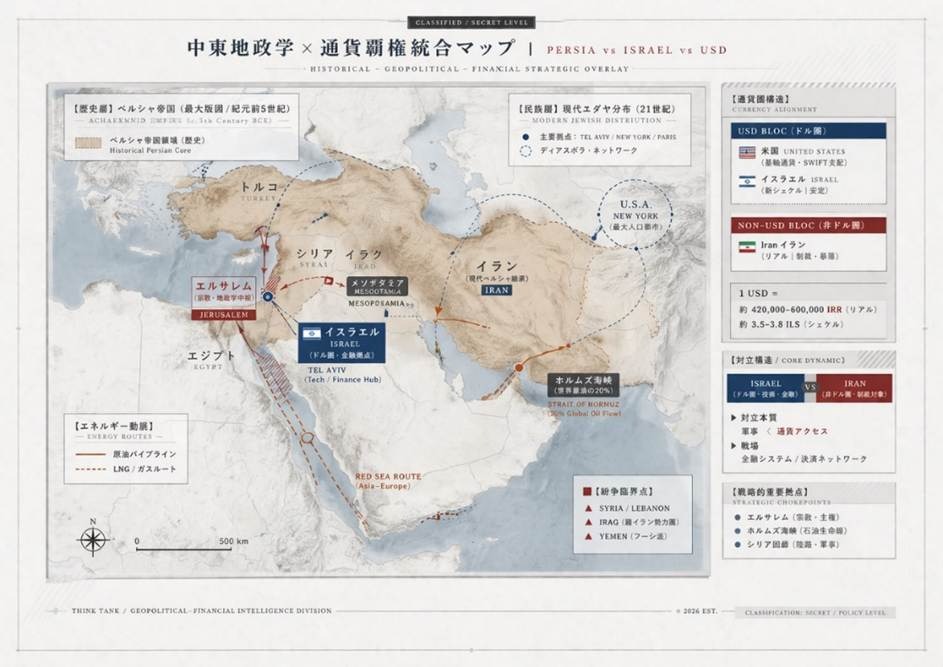
通貨比較(2026年前後の実勢レンジ)
| 通貨 | 単位 | 対ドル(USD) | 特徴 |
| イラン | イラン・リアル | 1 USD ≒ 約 420,000〜600,000 IRR | 制裁により極端に弱い |
| イスラエル | 新シェケル | 1 USD ≒ 約 3.5〜3.8 ILS | 安定・先進国通貨 |
| 米国 | 米ドル | 基軸通貨 | 世界基準 |
構造比較(地政学+金融制裁)
① イラン通貨(リアル)
- 状態:極度の通貨下落
- 背景:
- 米国制裁(SWIFT制限)
- 石油依存経済
- 外貨不足 実質的に「制裁通貨」
② イスラエル通貨(シェケル)
- 状態:安定通貨
- 背景:
- ハイテク産業(AI・サイバー)
- 米国との強固な関係
- 資本市場の信頼性 「先進国型金融通貨同盟」
③ 米ドル(基軸通貨)
- 状態:世界の基準
- 背景:
- 石油決済(ペトロダラー)
- 軍事覇権
- 国際金融システム支配 「世界支配通貨」
(価値比較)
価値の強さ(対ドル)
ドル █████████████████████(基準)
シェケル ████████████
リアル ░(極めて低い)
戦略的正当性と不当性
① 制裁の影響
- イラン→ ドル遮断=自国通貨崩壊
- イスラエル→ ドル連動=安定
② 覇権構造
- ドル圏+ イスラエル→ 金融・技術ブロック 基軸通貨同盟
- 非ドル圏(イラン等)→ 制裁対象ブロック 反基軸通貨同盟
③ 中東対立の本質: 軍事対立ではなく 「基軸通貨体制との戦い」
- イラン:脱ドル志向
- イスラエル:ドル圏中核
結論
- イラン通貨は制裁により機能不全
- イスラエル通貨は先進国並みの安定性
- 米ドルが全体を規定
- 中東対立は「通貨覇権戦争」の側面を持つ
総合結論
イスラエルとイランの対立は、
- 宗教対立ではなく
- 歴史対立でも単純ではなく
- 本質的には 「国家正当性」と「覇権競争」の衝突である
基軸通貨体制連合:米・欧・イスラエルVSイラン他反基軸通貨体制
第7章 米国・イラン和平合意と「正当性と不当性」の多層構造
7-1 問題設定:単線的な「正義」は成立しない
アメリカ合衆国とイランの対立は、単なる二項対立ではなく、
- 核拡散防止(国際規範)
- 中東秩序(安全保障)
- ドル体制(金融覇権)
が重層的に絡む構造である。したがって「正と不」は領域ごとに相対化される。
7-2 核開発阻止という「正」
規範的正当性
- 核拡散防止体制(NPT)維持は国際公共財
- 中東における核ドミノ回避
核開発阻止は国際社会における「正」 中東軍事バランスは「不」
7-3 イスラエル入植問題という「不の側面」
イスラエルの入植地拡大は、
- 国連決議との緊張関係
- 領土問題の固定化
国際規範との齟齬という意味で「不の側面」
7-4 イランの位置づけ:抵抗と拡張の二面性
「正」の側面
- 地域バランスへの対抗軸
- 一部において対抗的抑止機能
「不」の側面
- 影響圏拡大(地域覇権志向)
- 歴史的イメージとしての「帝国的連想」(いわゆるペルシャ的広域志向)
イランは中東における「均衡装置」となり得る反面「不安定化要因」
7-5 政治指導と戦争のインセンティブ
ベンヤミン・ネタニヤフの事例に見られるように、
- 国内政治(連立維持・支持率)
- 安全保障上の脅威認識 が相互作用し、軍事行動の誘因となり得る。
戦争は純粋な安全保障だけでなく政治的動機とも結びつく
7-6 和平合意と経済制裁解除
米国・イラン間の終結条件として想定されるのは:
- 制裁解除
- 核制限の検証
- 安全保障の保証
7-7 米とイランによる「ペルシャ湾通行料ドル建て構想」の含意
ペルシャ湾において、イランは戦争による再興措置としての徴収、米国は、戦利徴収
- 通行料を米ドル建てで徴収
- 戦後補償の担保とする
という構想を仮定すると、湾岸諸国は、イランの権益を認めるだけでなく、米国に対し戦後補償を与える事になる。しかし、輸入国の負担となる。結果、イランは、基軸通貨同盟による支配下に組み入れられ、資源も管理下に置かれる。
影響①:湾岸諸国
- 主権制約
- 米国によるエネルギー輸出の管理下(ペトロダラーシステムの延長)
影響②:アジア輸入国(日本・インド・中国など)
- 輸送コスト上昇
- エネルギー安全保障(米国の管理下)
影響③:国際金融
- ドル強制使用への反発 (BRICS)
- 決済多様化の加速 (BRICS通貨)(ハワラ金融システム)
構造的帰結:通貨の強制は信認低下を招き、ペトロダラーと米国の信用が失墜
7-8 ドル覇権への逆作用
このような制度設計は、「ドル=安全な中立通貨」から 「ドル=政治的強制通貨」へ という認識変化を引き起こす。
結果:
- 非ドル決済拡大
- 金・他通貨の利用増加
- BRICS圏の結束強化
7-9 総合評価
本章の評価を整理すると:
「正」
- 核拡散防止
- 一定の地域抑止
「不」
- 入植問題(規範逸脱)
- 地域覇権競争
- 通貨強制による市場歪曲
7-10 最終結論
国際社会における「正と不」は単一基準では決定できない。安全保障・規範・経済の三層で評価が分裂する。
第8章 本稿の核心 ― 覇権の持続条件と中東介入の構造的リスク ―
本稿の核心は、覇権の本質が単なる軍事的優位(ハードパワー)ではなく、国際社会における「信認(legitimacy)」によって支えられている点にある。
すなわち、覇権国家は一時的には「力」によって秩序を維持し得るものの、その行動が国際法や普遍的規範から逸脱し続ける場合、国際社会の信認は徐々に毀損され、結果として覇権の持続性そのものが揺らぐこととなる。
8-1中東における「歴史的正当性」と負の連鎖
中東地域においては、宗教・民族・帝国支配の歴史が複雑に交錯し、それぞれの主体が独自の「正当性」を主張してきた。この多層的正当性の衝突は、以下の構造を生み出している。
- 歴史的被害認識の固定化
- 相互不信の再生産
- 紛争の連鎖的継続
その結果、「正義の主張」が逆に対立を固定化し、和平ではなく対立の再帰構造(負の連鎖)を強化する要因となっている。
8-2米国介入と国際秩序の空洞化
米国による対イラン介入およびイスラエル支援は、本来、国際安全保障の中核を担う国連体制との整合性が問われる行為である。しかしながら、
- 国連決議との乖離
- 安全保障理事会の機能不全
- 同盟関係を優先した軍事行動
といった要素が重なることで、「国連による集団安全保障」という概念自体が実質的に空洞化するリスクが生じている。これは、国際秩序が「ルール」から「力」へと再転換する兆候であり、長期的には覇権国自身の正当性基盤を侵食する。
8-3 覇権維持構造としてのペトロダラー
米国の中東関与は、安全保障上の理由に加え、国際金融秩序との密接な関係を持つ。特に重要なのが、
- 原油取引をドル建てで行う「ペトロダラー体制」
- エネルギー供給と通貨需要の結合
- 軍事力による供給ルートの安定化
という構造である。この体制は、ドルを事実上の基軸通貨として維持する重要な支柱となってきた。
8-4イラン戦争がもたらす構造的リスク
しかしながら、対イラン強硬政策および軍事介入は、以下の逆作用を生み得る。
- 非ドル決済圏の拡大(資源取引の多通貨化)
- 産油国の地政学的再編(反米圏の結束)
- 制裁回避ネットワークの高度化
これにより、ペトロダラー体制の基盤そのものが揺らぎ、結果としてドルの国際的信認低下を招く可能性がある。
8-5 結論:覇権の限界と自己侵食性
以上を総合すると、本稿の結論は以下に集約される。
- 覇権は「力」によって短期的には維持可能である
- しかし「信認」が失われた場合、その持続性は根底から崩れる
- 中東における米国の介入は、短期的には同盟維持に資する一方で、
- 国際法秩序の空洞化
- 国連安全保障概念の弱体化
- 基軸通貨体制の動揺
を同時に引き起こす可能性を内包している すなわち、現在の対イラン戦略は、「覇権維持のための行動」が逆に「覇権の基盤を侵食する」という自己矛盾的構造を孕んでいる。
Structural Analysis of “Legitimacy and Illegitimacy” in the Israel–Iran Conflict
— A Multilayered Examination of Religion, History, Politics, International Law, and Economics —
March 14, 2026
Published by: Middle East & Asia Strategic Intelligence Institute
Author: Kenshin Kinoshita
Introduction
— A Structural Analysis of Legitimacy in the U.S.–Israel vs. Iran Conflict —
This paper examines the locus of “legitimacy” in the military actions undertaken by the United States and Israel against Iran, from a comprehensive perspective encompassing international law, history, geopolitics, and economics.
At the core of the issue lies a fundamental divergence between the “rule of law” and the “rule of power” in the international system. Israel has long been criticized for continuing settlement expansion policies that contravene United Nations resolutions, and the structural support provided by the United States—both militarily and politically—can be seen as emblematic of the erosion of the international legal order. This is not merely a regional issue, but one that calls into question the very credibility of the United Nations’ collective security framework.
In contrast, Russia’s invasion of Ukraine has been met with strong international condemnation, highlighting the existence of a “double standard” in the evaluation of similar violations of sovereignty, depending on the actor involved.
Amid this context, in June 2025, the United States conducted military strikes against Iranian nuclear facilities under the justification of preventing nuclear proliferation, subsequently announcing their success. In February 2026, a second round of attacks was carried out in coordination with Israel. However, as of now, no comprehensive peace agreement has been achieved. The legal basis and strategic rationality of this series of military actions remain subjects of ongoing international debate.
Furthermore, U.S. policy objectives themselves appear inconsistent. President Donald Trump initially declared that regime change was not the objective, yet proceeded to authorize strikes targeting Iran’s top leadership, later stating that the determination of Iran’s political future should be left to its people. Such shifts not only cast doubt on the legitimacy of military actions but also suggest ambiguity in strategic objectives.
Additionally, remarks by Joe Kent, a figure associated with the U.S. National Counterterrorism Center, are noteworthy. He stated that “Iran was not an imminent threat to our country,” and suggested that the conflict may have been initiated under pressure from Israel and influential domestic lobbying efforts within the United States. This raises the possibility that political considerations outweighed genuine security imperatives.
Considering these factors, the question of legitimacy in this conflict can be distilled into the following interrelated issues:
- Can U.S. military intervention abroad be justified under international law?
- To what extent is the objective of defending Israel internationally acceptable?
- What does the gap between UN resolutions and actual military actions signify?
- To what extent can the doctrine of “preemptive elimination of threats” be justified?
Beyond these questions, this paper also examines the historical structure of conflict in the Middle East—namely, the legacy of imperial rule, religious antagonisms, and hegemonic competition over resources—and how these factors continue to shape contemporary conflicts.
Moreover, particular attention is given to the “petrodollar system,” which links oil transactions to the global reserve currency structure. The paper explores the possibility that U.S. involvement in the Middle East is not solely driven by security concerns but is also deeply intertwined with the maintenance of the international financial order.
Through an analysis of the relationship between control over energy resources and military intervention, as well as a comparative examination of past U.S. policies toward Venezuela, this study aims to elucidate the integrated structure of modern hegemony—where resources, currency, and military power are inextricably linked.
Executive Summary
- Legitimacy and illegitimacy are not absolute concepts, but are structurally relativized by history, religion, and national interests.
- Israel possesses formal legitimacy under international law, yet its military actions have increasingly expanded into legal and normative gray zones.
- Iran asserts legitimacy through anti-imperialist narratives, but its use of proxy warfare and religious governance has eroded elements of the international order.
- The United Nations security framework is in a state of dysfunction, and the notion of “justice” in international law has become effectively dependent on great power politics.
- The global reserve currency system (the U.S. dollar) underpins a structure in which sanctions are equated with “justice,” thereby generating an asymmetric moral framework in the economic domain.
Key Points
① Hegemony is sustained not only by military power but by legitimacy
② Justice cannot be determined by a single standard
③ The Middle East conflict is a structural competition, not merely religious or historical
④ The dollar system is both the core and a vulnerability of hegemony
⑤ Hegemonic actions carry self-eroding risks
Chapter 1: Legitimacy of Hegemony and Historical Territorial Issues
The legitimacy of hegemony in the Middle East is deeply rooted in historical memory.
- Iran traces its origins to the Persian Empire and bases its claim to legitimacy on the vast territories it once ruled.
- In contrast, the Jewish people place the historical trauma of the Babylonian Exile at the core of their national identity.
Analysis
- Iran’s “justice”: the restoration of a historically rooted civilization-state.
- Israel’s “justice”: the legitimacy of ethnic survival and return.
Core Issue
→ Both sides derive their sense of justice from “history,” resulting in a structure of mutual negation.
Chapter 2: International Law and the Legitimacy of State Formation
Israel was established based on the United Nations Partition Plan of 1947. However, it has expanded settlements in disregard of UN frameworks.
- From the Palestinian perspective: “a forced partition imposed from outside”
- From the Arab perspective: “an aggressive formation of a state”
Meanwhile, Iran has expanded its influence across Palestine, Lebanon, Syria, and Iraq through proxy militias such as Hamas and Hezbollah. The allocation of national resources toward such activities lacks clear legitimacy from the standpoint of its own citizens.
Analysis
- Israel’s “justice”: state recognition based on international law
- Iran’s “justice”: support for oppressed peoples (against Israel)
Core Issues
→ The proxy war structure in the Middle East has obscured state responsibility
→ International law has been effectively neutralized
Chapter 3: The Palestinian Issue and the Impossibility of State Structure
If Israel and Palestine were hypothetically unified into a single state:
- Palestinians could become the political majority due to demographic factors
- This would clash with the ideological foundation of a Jewish state
- The inclusion of armed groups in politics could lead to a warlord-state scenario
Scenario Analysis
- Two-state solution → effectively stalled
- One-state solution → high risk of civil war
- Integration into neighboring states (Egypt, Jordan) → low feasibility
Conclusion
→ Structurally, no stable solution exists
Chapter 4: Collapse of the UN Security Framework
The United Nations Security Council:
- Is paralyzed by veto power
- Cannot prevent proxy wars among major powers
Examples
- Russia’s invasion of Ukraine (Russian invasion of Ukraine)
- Israel’s military operations in Gaza and Lebanon
- Iran’s regional interventions in Syria and Iraq
- U.S. strikes against Iran
Conclusion
→ The “justice” of international law has been reduced to a norm without enforcement power
Chapter 5: Domestic Politics and “Injustice Toward Citizens”
Israel
- Prime Minister: Benjamin Netanyahu
- Corruption allegations and hardline policies aimed at maintaining political power
Iran
- Real power structure: religious leadership combined with the Islamic Revolutionary Guard Corps
Analysis
- Israel: a democracy, yet deeply politically divided
- Iran: governance based on religious authority, accompanied by domestic repression
Commonality
→ Regime survival drives increasingly hardline external policies
Chapter 6: The Reserve Currency System and Geo-economic “Legitimacy and Illegitimacy”
The global economic system is heavily dependent on the U.S. dollar–based reserve currency regime. Within this structure, alignment with the dominant currency is often equated with “legitimacy,” while opposition is framed as “illegitimacy.”
- Iran: Subject to sanctions, resulting in a significant decline in currency value
- Israel: Integrated into the Western economic sphere, with strong dependence on the United States
Analysis
- A structural dynamic in which “sanctions = justice”
- The application of such measures is selective and largely determined by U.S. political interests
Core Issue
→ Economic power functions as the primary instrument for implementing “justice” in the international system
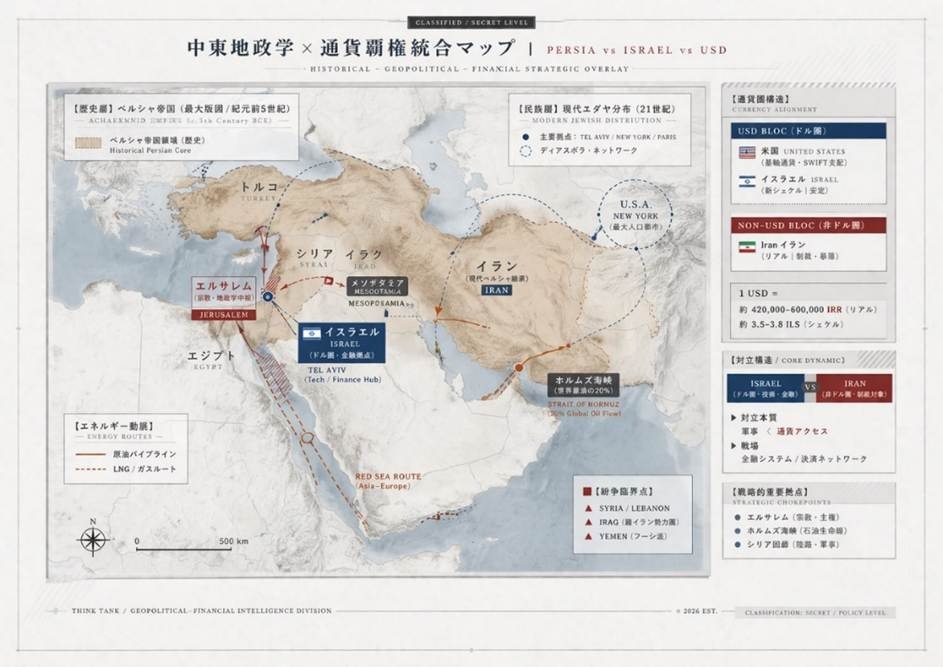
Currency Comparison (Approximate Market Range around 2026)
| Country | Currency | Against USD | Characteristics |
| Iran | Iranian Rial | 1 USD ≒ approx. 420,000–600,000 IRR | Extremely weak due to sanctions |
| Israel | New Shekel | 1 USD ≒ approx. 3.5–3.8 ILS | Stable, developed economy currency |
| United States | U.S. Dollar | Reserve currency | Global benchmark |
Structural Comparison (Geopolitics + Financial Sanctions)
1. Iranian Currency (Rial)
- Status: Severe currency depreciation
- Background:
- U.S. sanctions (including restrictions on SWIFT)
- Oil-dependent economy
- Shortage of foreign currency reserves
→ Effectively a “sanctioned currency”
2. Israeli Currency (Shekel)
- Status: Stable currency
- Background:
- Advanced high-tech industries (AI, cybersecurity)
- Strong strategic relationship with the United States
- High credibility of capital markets
→ A “developed financial currency alliance”
3. U.S. Dollar (Reserve Currency)
- Status: Global standard
- Background:
- Oil settlement system (petrodollar)
- Military hegemony
- Dominance over the international financial system
→ A “global hegemonic currency”
(Value Comparison)
Relative Strength (vs. USD)
USD █████████████████████ (benchmark)
Shekel ████████████
Rial ░ (extremely weak)
Strategic Legitimacy and Illegitimacy
1. Impact of Sanctions
- Iran → Exclusion from the dollar system = collapse of domestic currency
- Israel → Alignment with the dollar system = stability
2. Hegemonic Structure
- Dollar bloc + Israel → Financial and technological bloc (reserve currency alliance)
- Non-dollar bloc (e.g., Iran) → Sanction-targeted bloc (anti-reserve currency alliance)
3. Core Nature of Middle East Conflict
Not merely a military confrontation, but:
→ A struggle against the reserve currency system
- Iran: pursuing de-dollarization
- Israel: a core component of the dollar-based system
Conclusion
- The Iranian currency is functionally impaired due to sanctions
- The Israeli currency maintains stability comparable to developed economies
- The U.S. dollar defines the overall system
- The Middle East conflict contains a dimension of “currency hegemony warfare”
Overall Conclusion
The confrontation between Israel and Iran is:
- Not merely a religious conflict
- Not simply a historical dispute
- Fundamentally a clash between state legitimacy and hegemonic competition
Reserve currency system alliance: U.S., Europe, Israel
Anti-reserve currency bloc: Iran and others
Chapter 7: U.S.–Iran Peace Agreement and the Multi-layered Structure of “Legitimacy and Illegitimacy”
7-1 Problem Setting: The Impossibility of a Single-Line “Justice”
The confrontation between the United States and Iran is not a simple binary conflict, but a multilayered structure involving:
- Nuclear non-proliferation (international norms)
- Middle Eastern order (security)
- The dollar system (financial hegemony)
Therefore, “justice” and “injustice” must be relativized across different domains.
7-2 The “Justice” of Preventing Nuclear Development
Normative Legitimacy
- Maintaining the Nuclear Non-Proliferation Treaty is a global public good
- Preventing a nuclear domino effect in the Middle East
→ Preventing nuclear development constitutes “justice” in the international system
→ However, it may simultaneously produce “injustice” in terms of regional military balance
7-3 The “Illegitimate” Aspect of Israeli Settlements
The expansion of Israeli settlements:
- Exists in tension with United Nations resolutions
- Contributes to the entrenchment of territorial disputes
→ Represents an “illegitimate aspect” in terms of deviation from international norms
7-4 Iran’s Position: Duality of Resistance and Expansion
“Legitimate” Aspects
- Acts as a counterbalance within the regional power structure
- Provides a form of deterrence in certain contexts
“Illegitimate” Aspects
- Expansion of its sphere of influence (regional hegemonic ambition)
- Historical associations with imperial-scale ambitions (so-called Persian geopolitical orientation)
→ Iran can function both as a “balancing mechanism” and a “source of instability” in the Middle East
7-5 Political Leadership and Incentives for War
As seen in the case of Benjamin Netanyahu:
- Domestic politics (coalition maintenance, approval ratings)
- Perceptions of security threats
These factors interact and can create incentives for military action.
→ War is driven not only by security concerns but also by political motivations
7-6 Peace Agreement and Lifting of Sanctions
Potential conditions for a U.S.–Iran settlement include:
- Lifting of sanctions
- Verification of nuclear restrictions
- Security guarantees
7-7 Implications of a “USD-Denominated Persian Gulf Transit Fee” Concept by the United States and Iran
In the Persian Gulf, Iran would impose charges as a reconstruction measure arising from war, while the United States would collect war-related gains.
- Transit fees would be denominated in U.S. dollars
- These fees would serve as collateral for postwar reparations
Under this hypothetical framework, the Gulf states would not only recognize Iran’s interests but would also effectively provide postwar compensation to the United States. However, this arrangement would ultimately place a financial burden on importing countries. As a result, Iran would be incorporated into a system dominated by a reserve currency alliance, with its natural resources placed under external management and control.
Impact ①: Gulf States
- Constraints on sovereignty
- Energy exports effectively managed under U.S. influence (extension of the petrodollar system)
Impact ②: Asian Importers (Japan, India, China, etc.)
- Increased transportation costs
- Energy security under U.S. oversight
Impact ③: International Finance
- Backlash against enforced dollar usage (e.g., BRICS)
- Acceleration of diversified settlement systems (BRICS currency initiatives, hawala-type financial networks)
Structural Outcome
→ Forced currency usage undermines trust, potentially weakening both the petrodollar system and U.S. credibility
7-8 Reverse Effects on Dollar Hegemony
Such a system could shift perceptions from:
- “Dollar as a neutral and safe currency”
→ to - “Dollar as a politically coercive currency”
Results
- Expansion of non-dollar settlements
- Increased use of gold and alternative currencies
- Strengthening cohesion among BRICS countries
7-9 Overall Assessment
“Legitimate” Elements
- Nuclear non-proliferation
- Certain forms of regional deterrence
“Illegitimate” Elements
- Settlement expansion (norm deviation)
- Regional hegemonic competition
- Market distortions caused by forced currency usage
7-10 Final Conclusion
“Justice” and “injustice” in international society cannot be determined by a single standard.
→ Evaluations diverge across three dimensions:
- Security
- Norms
- Economics
Chapter 8: Core Argument — Conditions for Sustaining Hegemony and Structural Risks of Middle East Intervention
The core argument of this paper is that the essence of hegemony lies not merely in military superiority (hard power), but in “legitimacy” within the international community.
In other words, while a hegemonic state may temporarily maintain order through force, continued deviation from international law and universal norms gradually erodes international legitimacy, ultimately undermining the sustainability of hegemony itself.
8-1 Historical Legitimacy and the Cycle of Negative Reinforcement in the Middle East
In the Middle East, the intertwined histories of religion, ethnicity, and imperial rule have led each actor to assert its own form of “legitimacy.” This multilayered clash produces the following structure:
- Fixation of historical victimhood narratives
- Reproduction of mutual distrust
- Cyclical continuation of conflict
As a result, claims of “justice” paradoxically reinforce confrontation, creating a recursive structure of conflict rather than peace (a negative cycle).
8-2 U.S. Intervention and the Hollowing Out of International Order
Intervention by the United States against Iran, along with its support for Israel, raises fundamental questions regarding consistency with the United Nations system, which is intended to serve as the core of international security.
However, the overlap of the following factors:
- Divergence from UN resolutions
- Dysfunction of the United Nations Security Council
- Military actions prioritizing alliance commitments
creates a risk that the very concept of “collective security under the UN” becomes hollow in practice.
This signals a structural shift in international order—from “rules” to “power”—which, in the long term, erodes the legitimacy foundation of the hegemonic state itself.
8-3 The Petrodollar as a Structure of Hegemonic Maintenance
U.S. involvement in the Middle East is closely tied not only to security concerns but also to the international financial order. Of particular importance is:
- The “petrodollar system,” in which oil transactions are denominated in U.S. dollars
- The linkage between energy supply and global currency demand
- The stabilization of supply routes through military power
This structure has served as a key pillar in maintaining the U.S. dollar as the de facto global reserve currency.
8-4 Structural Risks Posed by a Potential Iran War
However, a hardline policy toward Iran and potential military intervention could generate the following counter-effects:
- Expansion of non-dollar settlement systems (multi-currency resource trade)
- Geopolitical realignment among oil-producing states (greater cohesion in anti-U.S. blocs)
- Increasing sophistication of sanction-evasion networks
These dynamics could destabilize the very foundation of the petrodollar system, potentially leading to a decline in global confidence in the U.S. dollar.
8-5 Conclusion: Limits and Self-Erosive Nature of Hegemony
In summary, the conclusions of this chapter are as follows:
- Hegemony can be sustained in the short term through “power”
- However, once “legitimacy” is lost, its sustainability collapses at a fundamental level
- U.S. intervention in the Middle East, while contributing to alliance maintenance in the short term, simultaneously risks:
- Hollowing out the international legal order
- Weakening the concept of collective security under the UN
- Destabilizing the reserve currency system
In other words, the current strategy toward Iran contains an inherent contradiction:
actions intended to preserve hegemony may ultimately erode its very foundations.
・木下 顕伸(Akinobu Kinoshita)
中東アジア情報戦略研究所 所長
中東・アジア地域の政治・安全保障・情報戦略を専門とする独立系アナリスト。 30年以上の現地ネットワークと政府レベルの実務経験を基盤に、 2025年、中東アジア情報戦略研究所を設立。 著書『ISISと戦う』(愛育社、2016年)。
An independent analyst specializing in political affairs, security, and information strategy across the Middle East and Asia. Drawing on over 30 years of field networks and hands-on experience at the government level, he founded the Middle East Asia Information Strategy Institute in 2025. Author of ISIS to Tatakau (Aiikusha, 2016).