
October 20, 2026
Middle East and Asia Strategic Information Institute (MEASII)
Executive Summary
This revised edition (as of October 20, 2026) supersedes the edition dated October 14. It applies the war-guidance theory of Horiba Kazuo, a Japanese army officer who watched Japan win battle after battle in China from 1937 yet fail to end the war, to the U.S.–Israel–Iran conflict that began on February 28, 2026.
1. The Horiba framework asks how a war ends, not only how it is won. Horiba held that war guidance rests on three tasks: establishing war aims, regulating the limits of advance, and grasping the moment of war termination. Japan’s war in China (1937–1945) is his cautionary case: military victories that never became a peace.
2. The problem is not a step-by-step expansion of aims but multiple, unprioritized aims from day one. Nuclear and missile disarmament, regime change and free passage through the Strait of Hormuz were all stated at the outset. Without a ranking among them, achieving one never settles the war.
3. Termination conditions are moving in both directions. On October 6, Vice President JD Vance asked for a “meaningful” reduction in Iran’s enrichment capacity. It is unclear whether this softens the earlier demand for zero enrichment.
4. Iran has now written down its own termination conditions. Its seven-day plan offers to reopen Hormuz if the United States lifts the naval blockade and oil sanctions. Washington wants nuclear concessions first. The core dispute is now about sequencing.
5. The U.S. electoral calendar now shapes military timing directly. On October 8, President Trump pledged no strikes on Iran before the November 3 midterm elections. Iran is reportedly preparing for strikes afterward.
6. A war cannot end without a counterpart able to end it. Washington says it is unsure who decides in Tehran after the killing of Supreme Leader Ali Khamenei. This echoes Japan’s January 1938 decision to stop dealing with China’s government, which closed Japan’s own exit. A settlement must be designed around an authoritative channel, a solution to sequencing and credible guarantees.
Introduction: Why Ending a War Is Harder Than Starting One
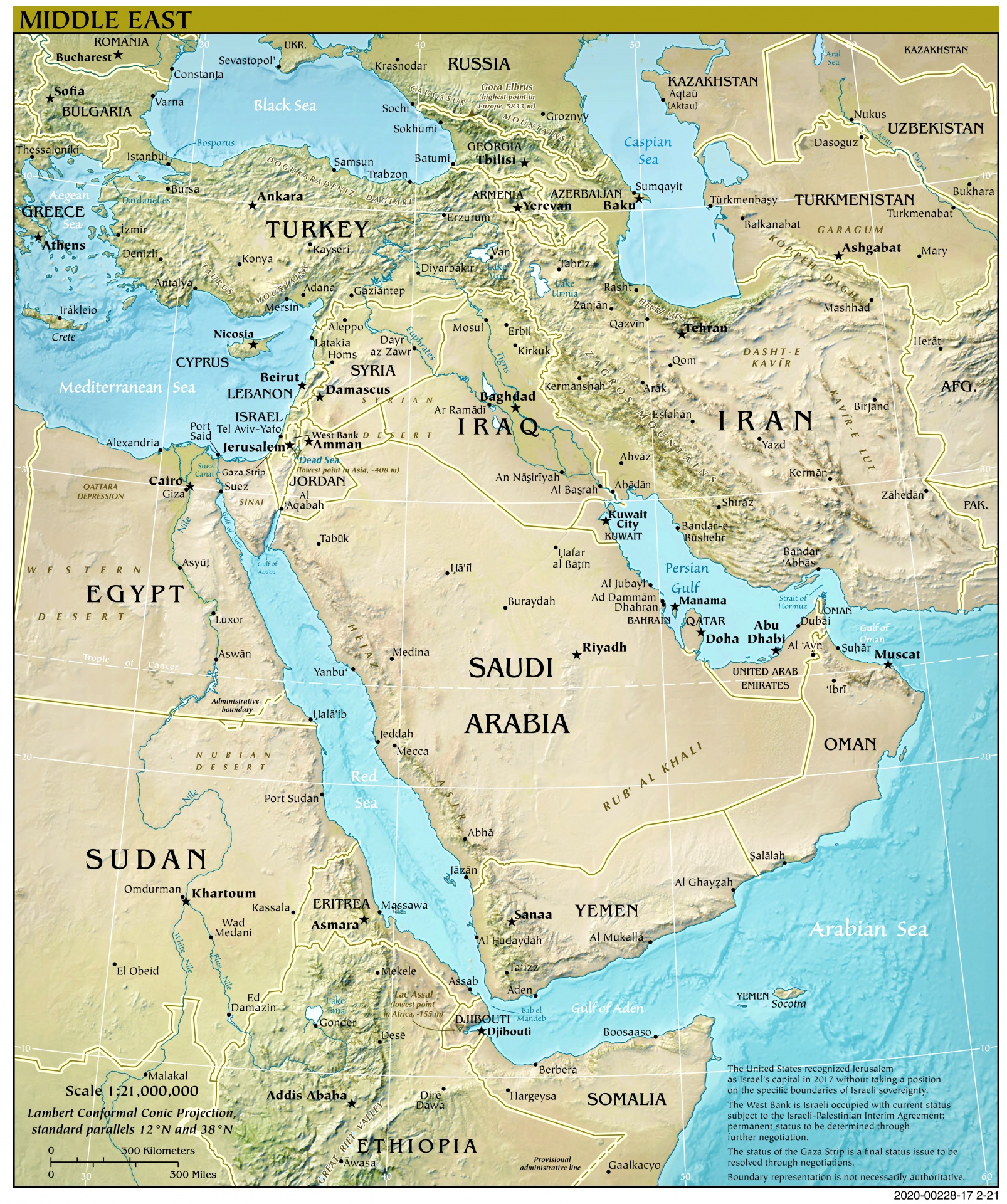
In its eighth month, the conflict has become a war of attrition centered on the Strait of Hormuz, according to the Congressional Research Service. An April ceasefire and a June Memorandum of Understanding (MoU) both failed to end it.
Military analysis usually asks how to win. This report asks three earlier questions:
• What is the war for?
• At what point does more fighting stop producing political gain?
• On what terms, and with whom, can it end?
To answer them, the report borrows a framework from an unexpected source: a Japanese officer’s account of how his own country failed to end its war in China. That history is little known outside Japan, so two background sections come first. The aim is not to predict the outcome, but to identify the conditions under which termination could become possible.
Facts are distinguished from analysis throughout. Where a judgment is the author’s own, it is marked as analysis. Japanese names are given family name first.
Who Was Horiba Kazuo?
Horiba Kazuo (1900–1953) was an Imperial Japanese Army staff officer. He sat at the center of Japan’s war planning in 1937, when the war with China began, and later wrote its most searching insider critique.
| Period | Role |
| 1900 | Born in Aichi Prefecture (some sources give 1901) |
| 1922 | Graduated from the Army Academy (34th class). With classmates Hattori Takushirō and Nishiura Susumu, he was called one of the class’s “three crows” (top talents) |
| 1930 | Graduated from the Army War College with honors |
| 1934–1937 | Assistant military attaché in the Soviet Union |
| March 1937 | Joined the Army General Staff’s War Guidance Section, concurrently with the Cabinet Planning Board |
| 1941 | Researcher at the Total War Research Institute; promoted to colonel |
| 1942–1945 | Air unit commander, then staff officer in the Southern Area and China theaters |
| 1953 | Died at age 52 |
Source: biographical record based on Japanese army records.
Why his voice matters. Horiba joined the War Guidance Section four months before the Marco Polo Bridge Incident of July 1937. “War guidance” (sensō shidō) meant the coordination of military operations with national political aims. His job, in effect, was to keep the war tied to a purpose and an end. The Army General Staff, where he served, argued in vain against breaking off German-mediated peace talks with China in January 1938.
His book. His manuscripts were published posthumously as Shina Jihen Sensō Shidō Shi (A History of War Guidance in the China Incident; Jiji Tsūshinsha, 1962; reissued by Hara Shobō, 1973). There he states that the essentials of war guidance are “the establishment of war aims, the regulation of the limits of advance, and the grasp of war termination” (sensō mokuteki no kakuritsu, shingun genkai no kisei oyobi sensō shūketsu no haaku). Historians at Japan’s National Institute for Defense Studies (NIDS) cite this formula as his core thesis (NIDS).
His verdict on Japan. In the NIDS reading, Horiba concluded that Japan failed on all three counts in China (NIDS):
• War aims took more than a year to settle.
• Operations ran ahead of policy, so the limits of advance were exceeded.
• A sense of victory crowded out preparation for a long war, and chances to end it were missed.
A caveat for readers. Horiba wrote as a participant and an officer of an army responsible for aggression and atrocities in China. NIDS historians also note that his heavy emphasis on “moral righteousness” (dōgi) weakens his argument. This report uses his three-part framework as an analytical tool. It does not endorse the policies he served.
Historical Background: Japan’s War in China, 1937–1945
Japan’s war in China is a textbook case of a stronger power that kept winning battles and could not end the war. It began as a local clash in July 1937 and ended only with Japan’s surrender in August 1945, after merging into the Pacific War.
A war that was not called a war. On July 7, 1937, Japanese and Chinese troops clashed at the Marco Polo Bridge near Beijing. Tokyo first announced a policy of non-expansion, yet fighting spread to Shanghai within weeks. Japan never formally declared war and called the conflict the “China Incident” (Shina Jihen). The term is now considered dated and pejorative, and is used here only as a historical name.
Victories without a peace. Japan captured China’s capital, Nanjing, in December 1937, an operation accompanied by the mass killing of civilians and prisoners known as the Nanjing Massacre. Army headquarters had no plan to take Nanjing; field armies pressed ahead, and the newly created Imperial General Headquarters set a control line to stop them (Tobe, NIDS). Japan then took Xuzhou in May 1938 and Wuhan and Canton in October 1938. None of these victories produced a settlement. By late 1938 the army had reached the limit of its strength and shifted to holding occupied territory.
The exit closed from within. German Ambassador Oskar Trautmann mediated between Tokyo and the Chinese Nationalist government in late 1937. After Nanjing fell, Japan raised its terms. On January 16, 1938, Prime Minister Konoe Fumimaro declared that Japan would no longer deal with the Nationalist government (kokumin seifu o aite to sezu). Having refused to recognize the only counterpart able to end the war, Japan spent years searching for alternatives. As historian Tobe Ryōichi has shown, peace efforts ran in parallel with the fighting for almost the entire war, and every one of them failed (Tobe, Peace Feeler).
Why this matters for 2026. The table below sets Horiba’s three tasks against Japan’s experience and the present conflict. The parallels are structural, not moral: they concern how wars fail to end, not who is right.
| Horiba’s task | Japan in China, 1937–1938 | U.S.–Israel–Iran, 2026 |
| Establish war aims | Aims shifted from a local settlement to the “new order in East Asia”; they took over a year to settle | Nuclear, missile, regime-change and maritime aims stated together, without a ranking |
| Regulate the limits of advance | Field armies outran policy; each capital taken did not end the war | Each strike round has not reopened Hormuz; the war has spread to the Red Sea and Saudi Arabia |
| Grasp war termination | Konoe’s January 1938 declaration removed the counterpart | Leadership killed on day one; Washington unsure who decides in Tehran |
Chapter 1. The Horiba Framework
The framework has three linked tasks. If they are designed together, military success can be turned into a settlement; if not, each victory raises new demands.
1. Establish war aims. Decide what the war is for, rank the aims, and tie each to a measurable condition of success. Several aims are possible, but an unranked list cannot tell a government when it is done.
2. Regulate the limits of advance. NIDS historians read Horiba’s term as matching the spatial reach of operations to the war’s aims (NIDS). This report extends it, as analysis, to a cost-benefit threshold. The limit is the point where further military action costs more in lives, money, energy disruption, diplomacy and domestic politics than it gains politically. Being able to keep fighting is not the same as having reason to.
3. Grasp war termination. Identify the moment, the terms and the counterpart for ending the war, and seize them. Termination conditions mirror the aims: the more aims, the more conditions.
Relation to existing scholarship. Horiba’s ideas parallel familiar Western concepts:
• Carl von Clausewitz’s “culminating point of the attack,” beyond which an offensive weakens its own position.
• Fred Iklé’s Every War Must End (1971), which argued that governments plan wars without planning their endings.
• Later war-termination studies, such as H. E. Goemans, War and Punishment (2000); Dan Reiter, How Wars End (2009); and Gideon Rose, How Wars End (2010).
Horiba adds two things, in this report’s analysis. First, he wrote as an insider whose government failed at all three tasks, so his framework is a diagnosis of failure, not just a model. Second, his case highlights a factor the Western literature treats less directly: an attacker can destroy or disown the counterpart it needs in order to end the war.
Chapter 2. The Course of the Conflict, February–October 2026
Two diplomatic exits have already been tried and have failed: an April ceasefire and a June MoU. Since August the conflict has settled into attrition over Hormuz. Newest events first:
| Date (2026) | Event |
| Oct 19 | Russian Foreign Minister Sergey Lavrov visits Tehran after Gulf states urged Moscow to press Iran toward dialogue and reopening Hormuz (Al Jazeera) |
| Oct 18 | Iran says its seven-day plan is still on the table (CBS News); an adviser to Supreme Leader Mojtaba Khamenei threatens retaliation against “nine countries” if attacked (Al Jazeera) |
| Oct 13 | Container ship GFS Pride sinks after being struck near Hormuz (CNN) |
| Oct 8 | Trump pledges no attack on Iran before the November 3 midterms (AP via WCAX) |
| Oct 6 | Vance calls for a “meaningful” cut in enrichment (Reuters via GV Wire); Qatar says indirect talks continue (AFP via FMT) |
| Late Sep | Iran proposes a seven-day plan to reopen Hormuz; Trump rejects it (CNBC) |
| Sep 22 | At the UN, Trump predicts a deal after the midterms (Axios) |
| Sep 9 | Trump says the war will end “immediately” after the election and that Washington is not seeking talks (The National) |
| Aug | The June MoU formally expires (CRS) |
| Jul 7–13 | Trump declares the MoU over; U.S. strikes resume and the naval blockade is reinstated (Al Jazeera) |
| Jun 17 | Pakistan-mediated 14-point MoU: a 60-day ceasefire, Hormuz to reopen, U.S. blockade to lift (Gulf News) |
| Apr 13 | U.S. begins a naval blockade of Iranian ports (Babel) |
| Apr 7 | Two-week ceasefire, later extended indefinitely (CRS) |
| Mar 2 | War Powers notification lists free maritime commerce through Hormuz among the aims (Dallas Express) |
| Feb 28 | U.S.–Israeli strikes begin; Supreme Leader Ali Khamenei is killed (Brussels Signal) |
Chapter 3. Multiple, Unprioritized Aims and a Moving Endpoint
The aims did not expand in neat stages; they were plural from the first day. On February 28, President Trump and Prime Minister Benjamin Netanyahu both emphasized regime change (Christian Science Monitor). The March 2 War Powers notification also listed missile sites, maritime mining capabilities and free commerce through Hormuz (Dallas Express). In Horiba’s terms, the failure is in establishing war aims: no ranking was set among them.
| Aim | What would count as success | Status, October 2026 |
| Nuclear | No path to a weapon, verified | Demand now a “meaningful” enrichment cut; inspectors still barred from key sites, including Pickaxe Mountain (Al-Monitor) |
| Missiles and navy | Capabilities degraded below a threshold | Heavily degraded, but Iran still strikes ships and Gulf targets |
| Regime | Weakened, changed or replaced | Supreme Leader killed; the Islamic Republic persists under new leadership |
| Hormuz | Free and safe commercial passage | Effectively closed; Iran demands blockade and sanctions relief first (CBS News) |
The endpoint moves both ways. Washington has tried to shrink the war on paper as well as expand it. In May, Secretary of State Marco Rubio said the original operation had met its objectives and called the Hormuz effort a separate, smaller defensive operation (GV Wire). The same month, the president told Congress that hostilities had ended (Breitbart). The war resumed in July. On October 6, Vance’s call for a “meaningful” cut raised the question of whether the zero-enrichment demand had been dropped (Al-Monitor).
Analysis. Declaring an aim achieved does not end a war when the adversary still holds leverage. Iran’s control of Hormuz lets it veto a unilateral “mission accomplished.” Termination conditions are therefore set jointly, not by one side alone.
Chapter 4. The Strait of Hormuz and the Sequencing Problem
Both sides now say what they want; they disagree on what comes first. Before the war, about a fifth of the world’s oil passed through Hormuz.
Iran’s plan. Presented in late September, it calls for an end to the U.S. naval blockade, the lifting of oil sanctions, the reopening of Hormuz and a return to direct nuclear talks. Foreign Minister Abbas Araghchi says Hormuz would reopen on day six and negotiations would start on day seven if conditions are met (CBS News). Tehran wants talks to begin with Hormuz and maritime security (Reuters via Spokesman-Review).
Washington’s position. Vance says Iran must make real cuts to enrichment capacity, not promises of future drawdowns (Al Arabiya). Trump has rejected the seven-day plan.
Lessons from the June MoU. The MoU paired the reopening of Hormuz with a lifted blockade and oil-export waivers. Within ten days, the two sides were trading strikes again (Al Jazeera). Two weaknesses stand out:
• The transit regime was undefined. Tehran wanted ships to seek its permission and objected to vessels hugging Oman’s coast (The Week).
• Reciprocal steps could be reversed unilaterally. The U.S. Treasury withdrew Iran’s oil waiver after the breakdown began (same source). Iran says traffic had recovered to about 60% of pre-war levels before U.S. measures halted implementation (Tasnim); this is Iran’s claim.
Analysis. Hormuz is both Iran’s main leverage and the most likely entry point to talks. A deal must replace “who moves first” with simultaneous, verified, step-by-step exchanges and an agreed transit regime. Chapter 8 proposes one.
Chapter 5. Elections, Prestige and the Political Exit
The midterm calendar has moved from the background to the foreground: it now sets the timing of military action.
What has been said.
• September 9: Trump said the war would end “immediately” after the election and that Washington was not seeking negotiations (The National).
• September 22: At the UN, he predicted a deal after the midterms. He also said he gives no weight to the election in his Iran decisions (Axios).
• October 8: He pledged no attack on Iran before November 3. CNN reported that officials see flare-ups as driving up oil prices and hurting Republican candidates (CNN via KRDO). Iran is reportedly fortifying nuclear sites for possible strikes after the election (CNBC).
How to read these statements. Newsweek counted at least 23 occasions on which Trump said the war was nearly over, would end soon or had effectively been won (Newsweek). Predictions of an end are therefore weak evidence of an actual plan. The October 8 pledge is different: it is a commitment about military action, and it creates a window that closes on November 3.
National interest versus political interest. U.S. national interests include non-proliferation, the protection of forces and partners, and freedom of navigation. Political interests include elections, credibility and consistency with past statements. They overlap but are not identical. Nothing in the public record proves that the war is being prolonged for personal or electoral gain, and this report makes no such claim.
Prestige as a design problem. A leader who has promised victory needs a way to end the war that can be explained as success. Former Israeli intelligence officer Danny Citrinowicz describes the bind: Trump cannot declare victory now, yet cannot leave without acting (JTA). Iran’s leaders face the mirror image, since accepting terms under blockade can look like surrender.
Analysis. A workable exit lets each side tell a defensible story: for Washington, verified nuclear limits and open shipping; for Israel, durable security arrangements; for Iran, sovereignty preserved and economic restrictions lifted in exchange for verified steps. These are possible narratives, not predicted outcomes.
Chapter 6. The Limits of Advance: Costs and a Widening War
The costs of continuing are rising on several fronts at once, and Iran’s counter-strategy is moving the limit by widening the war.
| Indicator | Figure | Source |
| U.S. cost of operations to Aug 1, 2026 | about $38 billion, rising $2–3 billion a month | CBO via KUTV |
| Munitions | Interceptor stocks heavily depleted; rebuilding may take at least five years | Ground News summary of CBO/IG reports |
| Oil and liquids through Hormuz | 4.9 million barrels a day in Q2 2026, against 21.6 million in Q4 2025 (EIA) | AFP via Connaissance des Énergies |
| Brent crude, 2026 average | EIA forecast raised to about $98 a barrel | Oil and Gas 360 |
The war has spread to the Red Sea. A dormant civil war in Yemen has reignited as a spillover of the U.S.–Iran conflict. The Houthis have sought control of the Bab el-Mandeb Strait and fired missiles and drones at Saudi cities and infrastructure. Saudi Arabia, Turkey and Pakistan agreed to deploy forces in Saudi Arabia under a joint defense pact (Reuters via bdnews24). On October 18, a Houthi missile strike killed at least 58 recruits at a training center in Yemen (Al Jazeera).
Bypass routes are targets too. Saudi Arabia’s East-West pipeline, the main route around Hormuz, was reported halted in September after drone attacks launched from Iraq (AFP). Plans for new bypass infrastructure cannot be treated as a near-term exit.
Analysis. The limit of advance is not a fixed line that one side calculates alone. Each round of U.S. pressure has been met by horizontal escalation: new chokepoints, new theaters and new targets. This raises the cost of the next round. The relevant question is no longer whether the United States can strike again, but whether another round would change Iran’s terms. The record since July suggests it has not.
Chapter 7. Who Is the Counterpart? The Lesson of 1938
A war ends only when someone on the other side has the authority to end it and is recognized as having it. Japan’s January 1938 declaration that it would no longer deal with China’s Nationalist government removed that counterpart, and Japan spent seven more years at war.
The 2026 parallel. The opening strikes on February 28 killed Supreme Leader Ali Khamenei and senior commanders. In October, Vance said Washington was unsure who makes decisions in Tehran, even though it talks to President Masoud Pezeshkian and Foreign Minister Araghchi (Reuters via GV Wire). Iran’s foreign ministry replied that U.S. officials know their counterparts and how Iran’s system works (Al Arabiya). An Iranian lawmaker says indirect contacts are overseen by the Supreme National Security Council (Middle East Monitor).
Three differences from 1938. The parallel has limits:
• Washington has not refused to negotiate with Tehran; indirect channels through Qatar and Oman remain open.
• Iran’s state institutions continue to function under new leadership.
• Several mediators are active: Pakistan and Qatar brokered the June MoU, Oman manages Hormuz talks with Iran, and Russia now offers its help.
Israel’s aims are not identical to Washington’s. Poland’s Centre for Eastern Studies assessed in March that Israel’s aim is to overthrow the regime, and that even a change of power might not count as “mission accomplished” for Israel (OSW). A U.S.–Iran deal that Israel does not accept could fail as the April ceasefire was strained by the Lebanon front.
New mediators bring their own interests. On October 19, Lavrov visited Tehran after Gulf states pressed Moscow to urge dialogue and the reopening of Hormuz. He also reaffirmed Russia’s 20-year strategic partnership with Iran (Al Jazeera).
Analysis. The lesson of 1938 is not that talks must succeed, but that the counterpart must be preserved. Pressure designed to topple a government, and pressure designed to make that government agree, work against each other. A strategy should decide which of the two it is pursuing.
Chapter 8. Redesigning the Conditions for Ending the War
The following is this report’s analytical proposal, not an existing agreement or a forecast. It is built around the four weaknesses that sank the June MoU.
| Weakness of the June MoU | Design response |
| No agreed order of steps: each side waited for the other to move first | Simultaneous, small, verifiable exchanges on a published day-by-day ladder |
| Hormuz transit rules left vague | A written transit regime agreed with Oman as co-littoral state, monitored by a neutral party |
| Benefits withdrawn unilaterally (the oil waiver revoked) | Relief placed in escrow-like steps that reverse only after a dispute panel finds a breach |
| Dispute mechanisms bypassed | A standing hotline and a mediator panel (Pakistan, Qatar, Oman) with a fixed response time |
Phase 0: Hold the window (now to November 3). Both sides avoid steps that would close the post-election option. Mediators draft the ladder in advance so that it is ready the day after the vote.
Phase I: De-escalation ladder (about 7–14 days). Iran’s seven-day plan and the U.S. demand for concrete nuclear steps are combined into paired moves rather than ranked against each other. For example, a halt to attacks on shipping matches a pause in strikes on Iran, partial reopening of Hormuz matches a partial easing of the blockade, and a first nuclear step matches a first tranche of oil-sale relief.
Phase II: Interim agreement (30–90 days). The nuclear core is negotiated here: the level of enrichment, International Atomic Energy Agency (IAEA) access to all relevant sites including Pickaxe Mountain, and an accounting of the pre-war stockpile of highly enriched uranium. Sanctions relief is tied to each verified step. Destroying facilities cannot substitute for verification.
Phase III: Regional framework (6–12 months). Separate but coordinated tracks: U.S.–Iran, Iran–Gulf states (including a Gulf maritime security arrangement) and Israel–Iran security issues. Iran has called for a regional security arrangement without foreign forces (Express Tribune); Gulf states want shipping restored. That overlap is a starting point.
Analysis. The plan does not resolve the deepest disagreement over whether Iran keeps any enrichment. It aims to stop that question from blocking the reopening of Hormuz and the end of active hostilities.
Conclusion: From Winning the War to Ending It
Eight months in, the question is no longer whether the United States can inflict more damage on Iran. It is whether either side can define an end that the other can accept.
Horiba’s history of Japan in China offers three warnings:
1. Unranked aims make every victory provisional. The aims of this war were plural from the first day. Until they are ranked, a success on one front only raises the stakes on another.
2. The limit of advance is set by both sides. Iran has answered pressure by widening the war to shipping, the Red Sea and Saudi Arabia. Each new round costs more and has not changed Tehran’s terms.
3. Termination requires a counterpart. Japan closed its own exit in 1938. Today Washington doubts who decides in Tehran, while its own pressure has been aimed partly at removing that authority.
Two things have changed since mid-October. Iran has put its conditions in writing, and the U.S. electoral calendar has created a window that closes on November 3. After the vote, the choice will likely narrow to a sequenced deal or renewed strikes. The design of the first should be ready before the window opens.
The essential shift is from asking how to win a war to deciding how to end it.
References
Primary and historical sources
• Horiba Kazuo, Shina Jihen Sensō Shidō Shi (A History of War Guidance in the China Incident). Tokyo: Jiji Tsūshinsha, 1962; Hara Shobō, 1973.
• Wada Tomoyuki, “War Guidance in the Latter Half of the Pacific War”, NIDS, 2010 (Japanese).
• “Japan’s War Guidance: Three Perspectives”, NIDS International Forum on War History, 2007 (Japanese).
• Tobe Ryōichi, “The Expansion of the Sino-Japanese War and the Imperial Japanese Army”, NIDS, 2019 (Japanese).
• Tobe Ryōichi, Peace Feeler: A History of Peace Efforts in the China Incident. Chikuma Gakugei Bunko, 2024 (Japanese).
• Horiba Kazuo, biographical entry (Japanese).
War-termination literature
• Carl von Clausewitz, On War (1832).
• Fred Charles Iklé, Every War Must End. Columbia University Press, 1971.
• H. E. Goemans, War and Punishment. Princeton University Press, 2000.
• Dan Reiter, How Wars End. Princeton University Press, 2009.
• Gideon Rose, How Wars End. Simon & Schuster, 2010.
Official and analytical reports
• Congressional Research Service, Conflict with Iran, R48887, updated September 18, 2026.
• Congressional Research Service, U.S.-Iran Ceasefire, IN12678, April 9, 2026.
• Centre for Eastern Studies (OSW), “US and Israeli strikes on Iran: an attempt to engineer regime change”, March 2, 2026.
News reports
Wire-service stories are credited to the originating agency; the link is the outlet where the full text was accessed.
• Al Jazeera, “Russia’s Lavrov discusses US war and regional security during Tehran visit”, October 19, 2026.
• Al Jazeera, “Iran war live”, October 18, 2026.
• Al Jazeera, “US-Iran Memorandum of Understanding expires: How and why it fell apart”, August 17, 2026.
• CBS News, Iran war live updates, October 18–19, 2026.
• Reuters, “Iran urges US to accept proposal to reopen Strait of Hormuz,” October 18, 2026 (accessed via The Spokesman-Review; also gCaptain).
• Tasnim News Agency, “Iran Offers 7-Day Plan to Reopen Hormuz” (full text of Araghchi’s OIC speech), October 17, 2026.
• CNN, “How the US-Iran war upended two critical global trade routes”, October 17, 2026.
• CNBC, “Iran reportedly fortifies nuclear sites as it prepares for possible U.S. strikes after midterms”, October 13, 2026.
• Associated Press, “Trump says US will not resume military strikes on Iran before the midterm elections,” October 8, 2026 (accessed via WCAX); CNN, same date (accessed via KRDO).
• Reuters, “Exclusive: In interview, US Vice President Vance says Iran must cut enrichment to end war,” October 6, 2026 (accessed via GV Wire and Al Arabiya).
• Al-Monitor, “US enrichment stance unclear as Vance urges ‘meaningful’ Iran cuts”, October 2026.
• Reuters, “Yemeni government forces drive Houthis from Bab el-Mandeb Strait,” October 6, 2026 (accessed via bdnews24).
• AFP, “Qatar says US, Iran still in talks to end war,” October 6, 2026 (accessed via Free Malaysia Today).
• AFP, Houthi–Saudi fighting and EIA flow data, September 2026 (accessed via Connaissance des Énergies).
• Express Tribune, “Araqchi blames US for Strait of Hormuz tensions”, October 20, 2026.
• Middle East Monitor, “Iranian lawmaker says indirect talks with US continuing through Qatar, Oman”, October 17, 2026.
• JTA, “A renewed Iran war is only a matter of time, Israeli experts warn”, October 19, 2026.
• CNBC, “Iran offers to reopen Strait of Hormuz within 7 days and restart nuclear talks”, September 25, 2026.
• Axios, “Trump says he faces a decision whether to ‘annihilate’ Iran in UN speech”, September 22, 2026.
• The National, “Trump says Iran war will end ‘immediately’ after midterm elections”, September 9, 2026.
• Newsweek, “Trump’s claims about the end of the Iran war”, September 2026.
• Sinclair/TNND, “New reports detail mounting costs six months into Iran war” (CBO and Pentagon IG figures), September 2026.
• The Week, “Patience runs out: the US-Iran ceasefire collapses into strikes”, July 9, 2026.
• Christian Science Monitor, “US and Israel launch broad campaign against Iran”, February 28, 2026.
Source note. The application of Horiba’s framework to the U.S.–Israel–Iran conflict, including the proposed phased settlement, is this report’s own analysis. It does not represent the policy of any government. Horiba Kazuo’s birth year is given as 1900 in most records; some sources give 1901.
Author Profile
Kenshin Kinoshita is the Director of the Middle East and Asia Strategic Information Institute.
His research focuses primarily on politics, security, and information strategy in the Middle East and Asia. He conducts analyses of international affairs and develops research and policy recommendations intended to contribute to Japan’s policy decision-making.
The Middle East and Asia Strategic Information Institute is an independent think tank that analyzes political, security, economic, and information-strategy developments in the Middle East and Asia and develops policy recommendations intended to contribute to Japan’s policy-making and institutional design.
© 2026 Middle East and Asia Strategic Information Institute
All Rights Reserved.