詳細版 「大アジア主義」が言語・文化を継承し、民族の尊厳を守る
― インド・日本・チベット対話と大アジア主義の歴史的考察 ―
2026年6月21日
発行:中東アジア情報戦略研究所
筆者:木下顕伸
The English translation is appended at the end of the Japanese text.
エグゼクティブサマリー
- 言語と文化は民族の歴史・記憶・精神を継承する基盤であり、その保護は民族の尊厳を守ることにつながる。
- 日本、インド、チベットによる三者対話は、言語・文化の継承と民族の自立という共通課題を共有し、アジアにおける新たな文明間協力の可能性を示した。
- 近代アジアにおける大アジア主義は、単なる政治的連携ではなく、各民族の独立と文化的主体性を尊重する思想として再評価する必要がある。
- インド太平洋構想(FOIP)は、安全保障や経済協力に加え、民族の尊厳と文化多様性の保護という視点を取り入れることで、より人間中心の国際秩序へ発展できる。
- 21世紀のアジアに求められるのは覇権や同化ではなく、言語・文化・伝統を相互に尊重しながら共存共栄を目指す「王道」の理念である。
キーワード
- 言語と文化の継承
- 民族の尊厳
- 大アジア主義
- インド太平洋構想(FOIP)
- 文明間協力(王道思想)
はじめに
2026年5月8日及び10日、アジア戦略研究会議の主催により、インド・日本・チベットによる初の三者間構造化対話プログラムが開催された。
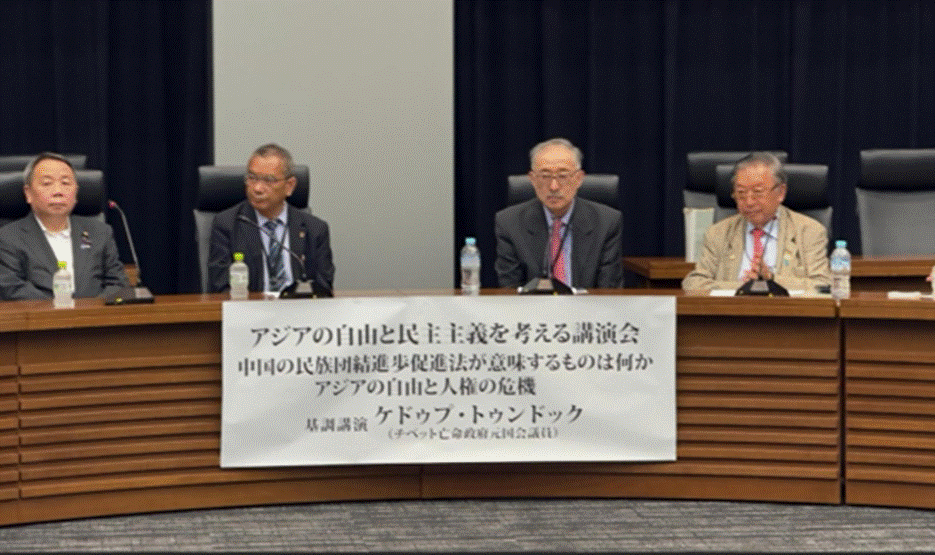
チベット独立運動学生団体を中心として、一橋大学および東京大学において学識経験者、市民活動団体関係者らが参加するシンポジウムが実施され、超党派の日本チベット国会議員連盟所属議員に対しても、その開催意義が説明された。
本対話は、従来のインド政府とチベット亡命政府との関係に加え、日本との連携を制度的に構築することを目的としている。しかし、本会議の真の意義は、単なる外交・安全保障上の協力関係の構築にとどまらない。
何故、日本で開催されることに意義があるのか。それは、日本の大アジア主義と民族的連関と植民地支配からの解放と独立が関係する。
日本は敗戦後の急速な民主化と国際化の中にあっても、伝統文化や日本語を守り続けてきた。建国以来2600年以上の歴史を有する日本は、長い歴史の中で独自の言語、文化、価値観を継承し、それらを民族的アイデンティティの基盤として維持してきた。
一方、近代以降のアジアでは、植民地支配や民族統合政策、さらにはグローバル化の進展によって、多くの民族が言語や文化の喪失という課題に直面している。歴史を振り返れば、民族固有の言語や文化は単なる伝達手段や生活様式ではなく、その民族の歴史的記憶、精神的価値観、共同体意識を支える根幹であった。したがって、「言語と文化を守ることは民族の尊厳を守ることにほかならない」という本質的な課題が存在している。
アジアには、チベット、モンゴル、ウイグル、台湾先住民族をはじめ、多様な民族が独自の言語と文化を継承してきた歴史がある。しかし、国家統合や同化政策の中で、それらの伝統が失われる危機に直面している事例も少なくない。こうした現象は、民族のアイデンティティや尊厳の問題と深く結びついている。
日本において、近代以降に提唱された「大アジア主義」が、アジア諸民族の連帯や相互尊重を掲げる思想として展開された。その思想的背景には、西洋列強による植民地主義への対抗だけでなく、各民族が有する固有の歴史・文化・言語を尊重するという理念が存在していた。
本稿では、日本とアジア諸民族との歴史的連関を考察するとともに、民族の言語と文化の継承がいかに民族の尊厳を守り得るのかを検証する。さらに、アジア諸民族の言語史を概観しながら、大アジア主義との思想的連関についても考察し、現代アジアにおける文化継承と民族自決の意義を明らかにすることを目的とする。
目次
はじめに
1-1 中国とインドの文明国家競争
1-2 インド太平洋時代の到来
1-3 地政学と文明論の接点
2-1 植民地支配と言語政策
2-2 多言語・多民族国家インド
2-3 インドの民族と言語系統
2-4 民族数と言語数の実態
2-5 カーストと言語階層
3-1 ガンディーと非暴力独立運動
3-2 チャンドラ・ボースと武装独立運動
3-3 インド独立と分離独立問題
3-4 ジャワハルラール・ネルー(独立後の初の首相)
4-1 明治維新と近代国家形成
4-2 日本語と文化継承法
4-3 敗戦後日本の変容
4-4 グローバル化時代の課題
5-1 言語と民族共同体
5-2 言語と思考法
5-3 文明多様性の価値
5-4 FUNESCOと言語保護
5-5 文化継承権
6-1 FOIPの理念
6-2 地政学と文化主権
6-3 FOIP第四の柱
6-4 民族の尊厳と文化多様性
7-1 対話の背景
7-2 日本とチベット
7-3 インドとチベット
7-4 三者協力の意義
7-5 文化的尊厳共同体
8-1 大アジア主義の形成
8-2 孫文革命と日本
8-3 日清戦争・日露戦争とアジア
8-4 革命家達の日本亡命
8-5 インド独立運動との連関
8-6 王道と覇道
8-7 覇道による新軍国主義(新型軍国主義)
第9章 チベット・モンゴル・ウイグルにおける言語と文化の現状
9-1 チベット民族の人口と言語
9-2 チベット語教育をめぐる問題
9-3 モンゴル民族と言語の変遷
9-4 内モンゴル自治区の言語人口歴史
9-5 ウイグル民族の言語・人口の現状と歴史
- インド・日本・チベット対話の意義
- 大アジア主義とFOIPの接点
- 21世紀アジアへの提言
- 民族の尊厳と文化多様性の未来
第1章 アジアの地政学変動とインドの台頭
1-1 中国とインドの文明国家競争
21世紀のアジアにおいて、インドと中国は二大文明国家として存在感を高めている。
インドは世界最大の人口を有する国家となり、今後も高い経済成長率が予測されている。一方、中国は米国に次ぐ経済大国として巨大な影響力を維持している。
1-2 インド太平洋時代の到来
インドは中国と国境を接する核保有国であり、アジアの安全保障環境において極めて重要な位置を占める。
近年の国際政治においては、中国が推進する「一帯一路」構想と、インドを中心とする多極的アジア秩序形成との間に競争構造が生まれている。
1-3 地政学と文明論の接点
この競争は単なる経済競争や軍事競争ではない。その根底には、「文明」「文化」「言語」という人類の根源的価値を巡る問題が存在する。
第2章 歴史が示す言語政策と文化変容
2-1 植民地支配と言語政策
歴史を振り返れば、言語は常に支配と統治の手段として利用されてきた。インドでは英国植民地時代に英語教育が導入され、1835年のマコーレー覚書(Macaulay Minute)以降、英語は行政・教育・司法の中心となった。
その結果、英語はインド社会に深く浸透し、現在でも国際競争力を支える重要な資産となっている。
一方で、多くの歴史学者や文化研究者は、植民地支配下において伝統的知識体系や地域文化が弱体化した側面も指摘している。
言語は単なる意思伝達手段ではない。その民族の歴史観、宗教観、世界観、価値観を内包している。言語の変化は、文化の変化を伴うのである。
2-2 多言語・多民族国家インド
インドは極めて多様な民族と言語が交錯する多民族・多言語国家である。憲法で公認された22の主要言語のほか、方言を含めると1,000以上の言語が存在する。また、カースト制度の身分や階層によって、使用する語彙やアクセントなどの「階級言語」的特徴も存在する。
2-3 インド民族と言語系統
インドの民族構成は、主に侵入と定住の歴史によって形成された。大きく分けると以下の語族が対応している。
- インド・アーリア系(インド・ヨーロッパ語族): 国土の中央部から北部に居住。ヒンディー語、ベンガル語、マラーティー語などが属する。
- ドラヴィダ系(ドラヴィダ語族): 主に南部に居住。タミル語、テルグ語、カンナダ語などが属する。
- チベット・ビルマ系(シナ・チベット語族)および ムンダ系(オーストロアジア語族): 北東部の山岳地帯や中央部の高原地帯に住む先住民族(指定部族: ST)に多く見られる。
2-4 民族数と言語数の実態
- 言語の数: インド国勢調査では、100万人以上の話者を持つ言語が29種、母語としては1,600以上の言語・方言が確認されている。
- 民族の数: 先住民族(指定部族)だけで400〜600以上のグループが認定されており、細分化された部族や集団を含めると数千にのぼるとも言われる。
2-5 カーストと言語階層
インドのカースト(ヴァルナおよびジャーティ)と言語・方言には、社会的な階層化が反映されている。
- カースト方言(社会階層の方言):
上位カーストと下位カースト、または不可触民(ダリット)の間で、話す言語の文法、語彙、発音、イントネーションなどに明確な差異が存在する。これを社会言語学では「カースト方言」と呼び、言葉遣いを聞くだけで相手のカーストが特定されることが歴史的にあった。 - サンスクリット語と土着言語:
かつては宗教的権威(バラモン)のみがサンスクリット語を独占・使用し、一般民衆は日常の俗語(プラークリット)を使用するという明確な言語的階層が存在した。 - 英語カースト:
近年では、流暢な英語を操り西洋的な価値観を持つ都市部の高学歴層が「英語カースト」とも呼ばれる新たな特権的階層を形成している。一方で貧困層は現地の言葉(ヒンディー語など)しか話せないことが多く、現代における新たな教育・経済格差の象徴となっている。
第3章 インド独立と文明国家形成
インドは1947年8月15日にイギリスの植民地支配から独立を果たした。約90年に及ぶイギリスの直接統治に抵抗し、自由を勝ち取った。
3-1 ガンディーと非暴力独立運動
植民地化と民族意識の芽生え(1857年〜)
- インド大反乱(1857年):イギリス東インド会社の雇い兵(シパーヒー)の反抗から始まり、全国的な反英闘争へ発展した。
- 直接統治の開始(1858年):反乱を鎮圧したイギリスが東インド会社を解散し、イギリス国王を元首とする「インド帝国」が成立した。
- インド国民会議の設立(1885年):当初は知識人による親英的な組織であったが、次第に自主独立(スワラージ)を掲げる民族運動の中心へ変化した。
- ベンガル分割令(1905年):イギリスが宗教対立を利用して民族運動を分断しようと試み、激しい国産品愛用(スワデーシ)などの抗議運動が起きた。
ガンディーの登場と「非暴力・不服従」(1919年〜)
- ローラット法と弾圧(1919年):第一次世界大戦後の自治約束を裏切ったイギリスは、令状なしの逮捕を認める治安維持法を制定し、アムリットサル事件で抗議の群衆を虐殺した。
- 非暴力・不服従運動の展開(1920年〜):マハトマ・ガンディーが帰国し、イギリス製品の不買や対話による平和的な抵抗運動を先導した。
- 塩の行進(1930年):イギリスの塩税専売に抗議し、ガンディーと民衆が海まで歩いて自ら塩を作る象徴的な非暴力抗議を行った。
3-2 チャンドラ・ボースと武装独立運動
第二次世界大戦と独立(1939年〜1947年)
- 即時独立の要求(1942年):大戦への強制動員に反発した国民会議派は「インドから立ち去れ(Quit India)運動」を展開した。
- チャンドラ・ボースの武力闘争:非暴力を掲げるガンディーとは対照的に、日本軍の支援を得て「インド国民軍(INA)」を組織し、武力による解放を目指した。
- 大英帝国の弱体化:第二次世界大戦の勝利と引き換えにイギリスの国力は激しく衰退し、植民地を維持する能力と気力を喪失した。
両名の思想の違い
- ガンディー(非暴力・徹底的な平和主義)
- 「手段が目的を正当化する」と考えた。血を流して勝ち取った独立は、独立後も暴力的な国家を生むと危惧したためである。
- チャンドラ・ボース(武力闘争・現実主義)
- 「イギリスの危機はインドのチャンス」と考えた。第一次世界大戦で裏切られた経験から、イギリスが第二次世界大戦で苦境に立たされている今こそ、武力で追い出すべきだと主張した。
国民会議派での激突と決別(1939年)
ボースはそのカリスマ性から、若者を中心に絶大な人気を誇っていた。1939年の国民会議派の議長選挙で、ボースはガンディーが推薦した候補を破って当選する。
しかし、ガンディーは「彼の勝利は私の敗北である」と述べ、ボースの方針(イギリスへの最後通牒と武力闘争)を認めなかった。ガンディー派の幹部たちが一斉に辞任してボースを孤立させたため、ボースはインド国内での合法的活動に限界を感じ、議長を辞任して国民会議派を離脱した。
「敵の敵は味方」:ボースの亡命と独自の戦い
インド国内で軟禁状態に置かれたボースは、変装して命がけの脱出を敢行する。ソ連を経由してナチス・ドイツへ渡り、その後潜水艦で日本へと向かった。
- 自由インド仮政府の樹立:日本軍の協力を得て、シンガポールで「自由インド仮政府」の樹立を宣言。
- インド国民軍(INA)の組織:マレー半島などで日本軍の捕虜となったインド人兵士らを募り、独自の軍隊を結成した。
- 「マハトマ」と呼んだボース:ボースはラジオ放送で、対立関係にあったガンディーに対し「建国の父(マハトマ)」と呼びかけ、自身の戦いへの祝福を求めた。思想は違えど、ガンディーへの敬意は失っていなかった。
インパール作戦とボースの最期(1944〜1945年)
ボース率いるインド国民軍は、日本軍と共にインドの東の玄関口を狙う「インパール作戦」に参戦した。しかし、補給を無視したこの作戦は凄惨な大失敗に終わり、多くのインド人・日本人兵士が命を落とした。
そして1945年8月15日、日本の敗戦により独立計画は頓挫する。ボースは再起をかけてソ連へ向かう途中、8月18日に台湾の松山飛行場で飛行機事故に遭い、全身火傷で急逝した。
歴史への影響:皮肉な結末
ボースの武力闘争は失敗に終わったかに見えた。しかし大戦後、イギリスがインド国民軍の将校を「反逆罪」で裁判にかけようとしたところ、インド民衆の怒りが爆発。大規模な暴動やインド人水兵の反乱が起き、イギリスは「これ以上インド兵をコントロールできない」と悟り、撤退を急ぐことになる。
結果として、ガンディーの精神的抵抗と、ボースが残した武力の脅威の両方が、イギリスを追い詰める両輪となった。
3-3 インド独立と分離独立問題
分離独立という悲劇
- 宗教対立の激化:イギリスの「分割統治(分断支配)」が残した爪痕により、ヒンドゥー教徒(国民会議派:ネルーら)とイスラム教徒(全インド・ムスリム連盟:ジンナーら)の対立が深まった。
- インド独立法の制定(1947年):イギリスのアトリー内閣により、単一国家ではなく分離して独立を認める法律が成立した。
- パキスタンとの分離独立(1947年8月):8月14日にイスラム教徒のパキスタンが、翌15日にヒンドゥー教徒中心のインドが個別に独立した。
独立後の影響と課題
独立と同時に、国境付近で数千万人規模の難民移動と宗教暴動が発生し、100万人以上の犠牲者を出した。特にカシミール地方の帰属を巡る争いは、独立直後に「第一次印パ戦争」を引き起こし、現在も続く印パ対立の火種となっている。
3-4 ジャワハルラール・ネルー(独立後の初の首相)
ガンディー亡き後のインドを導き、近代的で民主的な「インド共和国」の基礎を築いた初代首相、ガンディーが「精神的な父」であるなら、ネルーは「国家の設計者」と言える。
生い立ちとガンディーとの出会い
- エリートとしての出発:北インドのカシミール系高位カースト(ブランミン)の裕福な弁護士の家に生まれた。イギリスの最高峰ケンブリッジ大学に留学した超エリート。
- ガンディーへの心酔:帰国後、弁護士活動をしていたが、ガンディーの非暴力運動に深く感銘を受け、華やかなエリート生活を捨てて独立運動に身を投じた。その過程で通算約9年間もイギリスの刑務所に投獄されている。
初代首相としての偉大な功績
1947年の独立から1964年に亡くなるまで、17年間にわたり首相を務めた。彼が目指したのは「近代化」「民主主義」「世俗主義(宗教の中立)」であった。
- カースト制の法的禁止:何千年も続いた身分制度「カースト」による差別を憲法で禁止した。
- 世俗国家の確立:ヒンドゥー教徒が多数派の国でありながら、イスラム教徒や仏教徒も完全に平等に扱う「政教分離(世俗主義)」を徹底した。
- 科学技術の振興:現在のIT大国インドの土台となる「インド工科大学(IIT)」などを設立し、宇宙開発や原子力研究をスタートさせた。
非同盟運動と現代インド
ネルーの最も輝かしい功績の一つが外交ですある。当時はアメリカ(資本主義)とソ連(社会主義)が激しく対立する「冷戦」の時代であった。
- どちらの陣営にも属さない:「どちらかを選べば再び植民地になる」と考えたネルーは、第三の道である「非同盟運動」を提唱した。
- 平和五原則(1954年):中国の周恩来首相と会談し、領土保全・相互不侵犯・平和共存などの原則を発表。アジア・アフリカの発展途上国の絶対的なリーダーとなった。
晩年の挫折:中国との戦争
強固な同盟関係にあると信じていた中国(中華人民共和国)との間で、チベット問題や国境線を巡る対立が激化。1962年に中印国境紛争(中印戦争)が勃発した。近代化を急ぐあまり軍事力を軽視していたインド軍は、中国軍に惨敗。ネルーが提唱したアジアの平和共存の理想は打ち砕かれ、彼は精神的に大きな打撃を受け、失意の中、2年後の1964年に74歳で亡くなった。
第4章 日本の近代化と文化継承の課題
4-1 明治維新と近代国家形成
日本もまた例外ではない。明治維新以降、日本は西洋文明を積極的に導入し、急速な近代化を実現した。
4-2 日本語と文化継承
その結果、国家としての独立を維持しながら近代国家建設に成功した数少ない非西洋国家となった。しかし同時に、伝統文化や地域共同体の価値観が変容したことも事実である。
4-3 敗戦後日本の変容
戦後、日本は米国主導の国際秩序の中で再建された。
英語由来の外来語は日常生活に深く浸透し、多くの行政用語や経済用語にも使用されている。もちろん言語交流そのものは文明発展に不可欠である。しかし、自国語による思考能力や文化的理解が弱まるならば、長期的には文化継承に影響を与える可能性がある。
4-4 グローバル化時代の課題
問題は外国語の存在ではなく、自国文化を理解する言語的基盤を維持できるか否かにある。敗戦後の日本は、自らの伝統文化を破壊している事である。
第5章 自由で開かれたインド太平洋(FOIP)と民族の尊厳
5-1 言語と民族共同体
言語は民族共同体を形成する
言語は民族の記憶装置である。宗教、歴史、伝承、文学、哲学、価値観はすべて言語を通じて継承される。ユネスコも世界の言語多様性保護を重要課題として位置付けている。なぜなら、一つの言語が失われることは、一つの世界観が失われることを意味するからである。民族の尊厳とは、単に政治的自治だけを意味するものではない。民族とは何によって成立するのであろうか。血統や領土だけでは民族は成立しない。
政治学者ベネディクト・アンダーソンは著書『想像の共同体(Imagined Communities)』の中で、「国民とは、互いに直接会ったことがなくとも、自らを同じ共同体の一員であると想像することによって形成される。」と述べている。
その共同体意識を形成する最大の要素が言語である。共通の言語によって歴史が語られ、文学が共有され、価値観が継承される。つまり言語とは民族共同体を成立させる基盤なのである。
チベット人がチベット語を話し、日本人が日本語を話し、インド人がヒンディー語や各地方言語を継承することは、単なる会話の問題ではなく、民族共同体そのものを維持する行為である。
5-2 言語と思考
言語が思考を形成する
自らの言語で考え、自らの歴史を語り、自らの文化を継承できる権利である。
アメリカの言語学者エドワード・サピアとベンジャミン・ウォーフは、「人間は言語によって世界を認識している」という考え方を提示した。これは後に「サピア=ウォーフ仮説(言語相対論)」として知られるようになった。同じ事象であっても、使用する言語によって認識の仕方が変化する。
例えば日本語には、
・和
・義理
・情
・もののあはれ
などの概念が存在する。一方で英語には、
・Liberty(自由)
・Individualism(個人主義)
・Contract(契約)
など、西洋社会特有の価値観を表現する言葉が発達している。言語が異なれば思考様式も異なる。そのため言語の喪失は、単なる会話能力の喪失ではなく、民族固有の世界観の喪失につながる。
5-3 文明多様性の価値
文明の多様性こそ人類発展の源泉
この観点から見れば、チベット問題は単なる領土問題でも人権問題でもない。
文化継承権を巡る問題でもある。
文化人類学者クロード・レヴィ=ストロースは『人種と歴史』の中で、「文明の進歩は文明同士の多様性によって生まれる」と述べている。歴史を振り返れば、
・古代ギリシャ文明
・インド文明
・中国文明
・イスラム文明
・日本文明
は、それぞれ独自の言語と文化によって発展してきた。人類文明は単一文化によって発展したのではない。異なる文化が共存し交流することで発展してきたのである。
したがって少数民族の言語や文化を保護することは、人類全体の知的資産を守ることを意味する。
5-4 UNESCOと言語保護
国連教育科学文化機関(UNESCO)は次のように述べている。
「言語は文化遺産の主要な担い手であり、人類の知識、伝統及び記憶を世代から世代へ伝達する重要な媒体である。」(UNESCO, International Mother Language Day)
また、言語学者の Wilhelm von Humboldt は、「言語は民族精神の外的表現である。」と述べている。つまり言語とは単なる会話の道具ではなく、その民族固有の世界観そのものである。
5-5 文化継承権
文明の衝突か、文明の共存か
政治学者サミュエル・ハンチントンは『文明の衝突』において、「冷戦後の世界はイデオロギー対立ではなく文明間対立の時代へ移行する」と指摘した。実際に21世紀の国際政治を見れば、
・ロシアと西側諸国
・中国と米国
・イスラム世界と西側世界
など、文明圏同士の価値観対立が顕著になっている。しかし、文明間の違いを対立要因として捉えるだけでは未来は開けない。重要なのは文明の違いを認めながら共存することである。そのためには、各民族の言語と文化が尊重される環境が不可欠となる。
チベット問題の本質
チベット問題はしばしば領土問題、人権問題、宗教問題として語られる。しかし本質的には、「民族の文化継承権を守ることができるか」という問題でもある。チベット語が失われれば、
・チベット仏教哲学
・民族史
・伝統文学
・民族記憶
の継承が困難になる。その意味でチベット問題は世界中の少数民族が直面する課題の象徴でもある。
第6章 文化主権と文明多様性を支える第四の柱の提唱
6-1 FOIPの理念
日本が提唱する「自由で開かれたインド太平洋(FOIP)」は、
・法の支配と航行の自由
・経済的繁栄の追求
・平和と安定の確保
を三本柱としている。
6-2 地政学と文化主権
安倍晋三元首相は2016年のアフリカ開発会議(TICAD VI)において、「自由で開かれたインド太平洋を育て、アジアとアフリカの繁栄をつなぐ。」と述べた。FOIPは法の支配、航行の自由、経済的繁栄を柱としている。
・地政学的重要性の確保
・海洋安全保障の維持
・自由貿易体制の推進
を通じて地域秩序の安定を目指している。しかし21世紀の地政学的課題は、国家主権だけでなく文化主権も国家や民族の主権であることを忘れてはならない。
6-3 FOIP第四の柱
今後のFOIPには第四の柱が必要ではないだろうか。それは、「民族の尊厳と文化多様性の保護」である。
法の支配や経済発展だけでは、人々の精神的基盤を守ることはできない。
6-4 民族の尊厳と文化多様性
「言語と文化の保護なくして真の自由は存在しない」
文化人類学者の Claude Lévi-Strauss は、「文明の進歩は多様性によって生み出される。」と指摘している。
この視点に立てば、民族の言語と文化を守ることは人類全体の知的資産を守ることに等しく民族の主権を守ることに繋がる。
第7章 インド・日本・チベット対話の歴史的連関と意義
7-1 対話の背景
今回のインド・日本・チベット三者間対話は、単なる外交協力ではなく、言語と文化を守り、民族の尊厳を守るための新たな国際連携の萌芽として評価されるべきであろう。安全保障や経済協力を超えた意味を持つ。それは、アジアにおける文化的共存の枠組みを模索する試みである。
7-2 日本とチベット
日本は仏教文化を通じてチベットとの精神的接点を有している。
7-3 インドとチベット
インドはチベット文化を受け入れ保護してきた。そしてチベットだけでなくインドも、自らの言語と文化を守ろうとしている。
7-4 三者協力の意義
この三者が連携することは、民族の尊厳を守る新たな国際協力モデルとなり得る。今回のインド・日本・チベット三者間対話は、安全保障協力や経済協力を超えた文明的意義を持つ。
7-5 文化的尊厳共同体
ノーベル文学賞作家の Aleksandr Solzhenitsyn は、「民族が自らの記憶を失うとき、その民族は未来を失う。」と語っている。言語とは民族の記憶そのものである。
軍事力や経済力は国家を強くすることができる。しかし言語と文化が失われれば、その民族の精神的基盤は失われる。
インドは多言語・多民族国家として文化共存の経験を有している。
日本は独自の言語と文化を維持しながら近代化を成功させた国家である。チベットは文化継承の重要性を世界へ訴え続けている。三者の協力は、「経済的利益共同体」ではなく、「文化的尊厳共同体」という新しい国際協力モデルを示している。
これは21世紀アジアにおける新たな価値観の提案であり、自由で開かれたインド太平洋(FOIP)の理念をさらに深化させる可能性を持っている。その第四の柱として、
「民族の尊厳・言語多様性・文化継承の保護」を位置付けることは、アジアの安定と共存にとって極めて重要な意義を持つのである。
第8章 大アジア主義と民族自決思想 王道か覇道か
8-1 大アジア主義の形成:頭山満と玄洋社
中国革命を支援した日本人
- ロマン的民権派(純粋な連帯):宮崎滔天・梅谷庄吉らは、アジアが欧米列強に対抗するためには中国の自立が必要だと信じ、利権への野心なしに孫文を、私財を投げ打って支えた。
- 国権派(大陸浪人や右翼):頭山満(玄洋社)や内田良平(黒龍会)杉山茂丸、末永節、北一輝、山田良政、山田純三郎、梅谷庄吉らだけでなく無名の人士も含めて物心両面、無私、無欲の精神で孫文や革命家を援助した。彼らは、士道における利他の精神を有する民間人である。当然、彼らは、白人至上主義に対抗するため大アジア主義精神に基づいて、アジアの国々の国益を考え支援した。決して、日本政府の国策の下で支援したのではない。ロシアの南下政策や欧米列強の植民地支配から解放をするため物心共に革命家を命がけで支援した。当時の、中国王朝清は、アヘン戦争に負け、更に、日清戦争敗戦により、弱体化した清を欧米列強は、浸蝕しようとしていた。彼らは、日本政府の外交的立場より、民族の自決を訴えたのである。更に、その先には、インドの独立も見据えていたのである。その背景は「唯一日本がアジアでの独立国家であったからである。
- 政治家による支援:後に首相となる犬養毅や大隈重信ら政界の実力者も、清朝を揺さぶるカードとして孫文の活動を庇護・支援していた。 彼等は、欧米列強による不平等条約に対抗しようとした政治家であり、明治維新以降、欧米列強による植民地支配に対抗した政治家でもある。
来島恒喜と玄洋社
- 明治期の国粋主義運動家であり、玄洋社の思想的影響を強く受けた人物。特に1893年の大隈重信襲撃事件によって歴史に名を残している。
- 来島恒喜は愛媛県(旧伊予国)の出身で、青年期に国家主義思想に傾倒した。当時の日本では、条約改正問題、欧米列強との外交、朝鮮半島問題 をめぐって激しい政治論争が行われていた。
- 来島は玄洋社の思想に共鳴し、国家独立の維持 対外強硬論 アジア重視 を主張するようになる。
- 当時の大隈は条約改正交渉を進めており、国粋派から「外国に譲歩しすぎている」と批判されていました。
- 大隈重信襲撃事件1893年10月18日、来島恒喜は東京で大隈重信の馬車に爆弾を投げ込んだ。爆発により大隈は重傷を負い、右脚を切断することになります。来島は事件直後に自刃しました。
朝鮮独立と玄洋社
- 金玉均は朝鮮近代化を目指した開化派の指導者であり、1884年の甲申政変失敗後、日本へ亡命した。亡命中は福沢諭吉や頭山満らと交流し、朝鮮改革の機会を模索した。
- 1894年、上海において洪鍾宇に暗殺された。日本ではこの事件が朝鮮における清国勢力の影響を象徴するものと受け止められ、同年の日清戦争へ至る世論形成の一因となった。金玉均の生涯は、近代東アジアにおける改革・独立・文明化をめぐる葛藤を象徴する歴史として位置付けられている。
- 玄洋社は、朝鮮を清国の支配から独立させ、近代国家に改革することを支持していた。そのため、頭山満らは金玉均を保護した。後世に言われるような「日本による朝鮮支配」を目指していたわけではなく、むしろ朝鮮の自主独立と近代化を期待していた面が強いと評価されている。
- 頭山満は、西郷隆盛の精神を受けつぐむものであり、西郷は、朝鮮に対する砲艦外交ではなく、対話外交を目指した。しかし、大久保利通らと征韓論で対立し下野した。
国共内戦と大アジア主義
- 日本の敗戦後、1945年、中国では、国共内戦がおこり、共産党が覇者となり、国民党は台湾に逃れた。1924年孫文は、国共合作政策を行った。それは、背後にソビエト共産党が控えていた。つまり、日本よりもソ連を取り入れ容共連合となることである。これまで、頭山満他玄洋社などを含めた支援者に対する裏切りともいえる。何故なら、白人至上主義、植民地主義体制の解放が大アジア主義である。
- 1924年11月28日孫文の希望により、神戸で頭山満との会談が行われた。大アジア主義講演と呼ばれている。内容は、中華民国との不平等条約改正と満蒙問題を頭山に協力を要請した。しかし、当時は、群雄割拠の時代である。国をまとめるのに国共合作が必要であったとしても、満蒙問題は、背後にロシア革命後のソ連がいる。南下政策を阻止するためには、いま日本が手を引くことは出来ない。中国が一つになり、列強に抗する力が出来れば、還付すべきと頭山は、回答した。孫文は翌日、この要求を撤回した。
- 頭山は、この会談で、中国のナショナリズムが強固な革命政権を樹立し、日華両民族が共同戦線を結び、インドの独立の為に手を携えることになれば、満蒙の権益などは手放さなければならない。と述べている。「大アジア主義と頭山満」葦津珍彦著これが大アジア主義の王道である。しかし、日本を覇道と言った孫文自らソ連の覇道に屈し、国民党は、米国の支援を受けた。日本の敗戦後の結果を観れば明らかである。
- 国共内戦で敗れた中華民国国民党は、台湾に逃れた。この時、白団「日本人軍人が指揮し金門島を死守した。米国に裏切られ、日本が支援した。
- 玄洋社には、憲則が3つある。第一条,天皇を敬戴すべし第二条,本国を愛重すべし第三条、人民の権利を固守すべし。第一条は、日本の伝統文化を守ることである。第二条は、自国の誇りを忘れないことである。第三条は、民主政治である。この三条は、どのアジアの国にも共通する。
対華二十一カ条要求
- 欧米列強は欧州戦線に注力し、東アジアの情勢に構っていられない状況下で、日本は中国における自国の権益を一気に拡大する好機と捉えた。
- 1915年1月18日、外相・加藤高明が中心となり、中華民国の大総統・袁世凱に対して直接提示された。
- 二十一カ条の要求(対華二十一カ条要求)」は、1915年(大正4年)、第一次世界大戦の最中に日本(大隈重信内閣)が中国(中華民国・袁世凱政権)に突きつけた権益拡大の要求である。
- 中国の主権を著しく侵害する内容を含んでおり、のちの「五・四運動」など激しい反日・排日運動を引き起こす原因となった。
要求は全5号・21カ条で構成されていた。
- 第1号(山東省について): ドイツが保有していた山東省の権益を日本が継承することなど。
- 第2号(南満州・東部内蒙古について): 旅順・大連の租借期限や、南満州鉄道などの権益の期限を大幅に延長することなど。
- 第3号(漢冶萍公司について): 中国最大の製鉄・石炭企業である漢冶萍公司(かんやひんこうし)を日中合弁(共同経営)とすること。
- 第4号(沿岸部の不割譲について): 中国の海岸線や島嶼(とうしょ)を他国に割譲・貸与しないこと。
- 第5号(政治・軍事・財政について): 顧問としての日本人採用、警察や兵器廠(へいきしょう)の日中共同管理など(※これらは中国の内政干渉にあたるため、最も問題視された)。
21か条要求の背景と発端
ヨーロッパの列強による戦争 第一次世界大戦 (1914年〜1918年)であるが、この対戦国が三国干渉を行ったドイツであった。主に日本は、アジア側で戦闘を行い。中国におけるドイツの権益を委譲する狙いがあった。これは、三国干渉で失った権益確保でもある。
協商国・連合国陣営
最終的に勝利した陣営で、日本を含む多数の国が参加した。
- イギリス(大英帝国とその植民地・連邦国)
- フランス(およびその植民地)
- ロシア(1917年のロシア革命により途中で離脱)
- 日本(日英同盟に基づき参戦、アジア・太平洋地域で活動)
- アメリカ合衆国(1917年に参戦、勝利の決定打となる)
- イタリア(当初は中央同盟側だったが、1915年に連合側で参戦)
- その他の主な国:ベルギー、セルビア、ルーマニア、ギリシャ、中国など
中央同盟国陣営
敗北した陣営で、ヨーロッパ中央部の国家が中心。
- ドイツ帝国(陣営の中心的な軍事大国)
- オーストリア=ハンガリー帝国(開戦のきっかけとなった国)
- オスマン帝国(現在のトルコ、1914年後半に参戦)
- ブルガリア王国(1915年に参戦)
結果とその後
中国側は第5号の受け入れに猛反発し、交渉は難航した。最終的に1915年5月7日、日本は第5号を大部分削除・修正したうえで最後通牒を突きつけ、袁世凱政府はこれをやむなく受諾(5月9日)した。 その後、この要求は1919年のベルサイユ条約で一部が山東条項として国際的に認められたが、中国の学生らによる大規模な抗議活動「五・四運動」へと発展した。最終的には、1921年〜1922年にかけてのワシントン会議において、この要求に基づく条約は破棄・修正され、日本の権益は大幅に縮小されることになった。
8-2 孫文革命と日本:滅満興漢と辛亥革命
滅満興漢をスローガンにした辛亥革命(1911年)における日本との関係は、孫文ら革命派の「亡命・活動の最大の拠点」として深く機能した。しかし、一方で、日本政府や民間人の思惑が複雑に交錯した多面的な関係でもあった。
革命の拠点としての日本
- 東京での同盟会結成:1905年、孫文はそれまでの革命組織を統合し、東京で「中国同盟会」を結成した。
- 多くの中国人留学生:日露戦争後の日本には多くの中国人留学生が滞在しており、彼らが革命思想を吸収し、帰国後に革命の推進力となった。
- 孫文の長期亡命:孫文は清朝の追っ手から逃れるため、通算で約6年間も日本(横浜や東京)に亡命し、ここを組織拡大の拠点とした。
日本政府の公式な立場と対応
日本政府による二面性のある外交を展開した。
- 国際協調と清朝支持:イギリスなど欧米列強の手前、表向きは清朝政府を支持し、革命派による過度な混乱を警戒した。
- 利権拡大:革命の混乱に乗じて、陸軍を中心に「満洲への出兵」や「満蒙の独立(第一次満蒙独立運動)」を画策する動きが活発化した。
- 袁世凱への接近:革命後、孫文に代わって実権を握った袁世凱(北洋政府)に対し、日本政府は借款などを通じて接近を図った。
大正政変への影響
- 日本国内では、辛亥革命への対応(第3次桂太郎内閣の対応など)をめぐって世論や軍部が混乱し、辛亥革命後の中華民国は、清朝の宣統帝が退位し、共和国として新政府中華民国が発足した。承継国として、清朝と交わした21か条条約の継承をしなければならない、しかし、その継承は、されていなかった。軍閥が割拠する新政府が守れるはずもなかった。革命派擁護を名目とする対中出兵論やシーメンス事件など日本の国内政治が揺らぐ「大正政変」を引き起こす一因にもなった。
8-3 日清戦争・日露戦争とアジア
日清戦争と三国干渉
- 日清戦争に勝利したとはいえ、三国干渉により、1895年(明治28年)4月23日にフランス、ドイツ帝国、ロシア帝国の三国が日本に対して行った勧告である。日清戦争の日本の勝利と、それに伴う下関条約により日本に割譲された遼東半島を清国に返還することを要求する内容だった。つまり、列強は、弱体化した清朝と交渉し、自国の利益の為に租借地割譲を念頭に置いていた。また、ドイツ、フランス、ロシアからの三国干渉を受けた日本は、南下政策のロシアや清朝に対する強硬姿勢は、辛亥革命の後押しになったことは言うまでもない。
日清戦争の講和条約
(下関条約)は、1895年4月17日に日本と清国の間で結ばれた条約。主な内容は、清国による朝鮮の独立承認、日本への台湾や遼東半島などの領土割譲、そして巨額の賠償金支払いなど。 条約の具体的な内容は以下の通り。
- 朝鮮の独立承認:清国は朝鮮が完全な独立国であることを認め、宗主権を放棄した。
- 領土の割譲:清国は以下の地域を日本へ永久に割譲した。
- 台湾
- 澎湖諸島(ほうこしょとう)
- 遼東半島(りょうとうはんとう)
- 賠償金の支払い:清国は日本に対して賠償金として2億両(テール、当時の金額で約3億1千万円)を支払うこととされた。
- 通商上の特権:欧米諸国と同等の待遇を清国内で日本に認めることなどが定められた。
なお、この直後にロシア・フランス・ドイツによる「三国干渉」が起こり、日本は獲得した遼東半島を清国に返還せざるを得なくなった。
日露戦争と戦費
- 日露戦争に辛勝したとはいえ、ポーツマス条約では日本はロシアから賠償金を獲得できなかったため、外債はすべて日本政府の負担として残りました。戦後は増税や専売収入などを財源として元利償還を続けました。一般に、日露戦争で発行された外債の償還は長期間に及び、主要な外債は1930年代半ば頃までにほぼ償還されたとされている。戦後約30年かけて返済した計算になりる。ただし国民負担は非常に重かった 日露戦争後も地租・酒税・砂糖税などの増税が継続され、「非常時特別税」も維持された。これが戦後日本財政の重荷であった。
日露戦争戦費調達 (日露戦争(1904~1905年)の際)
- 日本の戦費は、欧米市場で大規模な外債を発行し、その中心的な引受人の一人がドイツ系ユダヤ人銀行家の ジェイコブ・シフ 。シフが率いる投資銀行Kuhn, Loeb & Co. (クーン・ローブ) 商会が日本国債の募集・販売を支援した。 (クーン・ローブ) 商会は、19世紀末から20世紀前半にかけてJ.P.モルガンと並ぶアメリカ最大の投資銀行の一つ。1867年にニューヨークで設立され、鉄道や重工業の資金調達を主導し、1977年にリーマン・ブラザーズと合併しました」 また、シフ個人が日本政府へ約2億ドル規模の融資・起債支援を行ったとされている。これは当時としては極めて巨額で、日本の戦費調達の重要な部分を占めた。
日露戦争外債内容
- シフらが主導した対日融資:約2億ドル
- 日本全体の外債調達額:約8億2,000万円(当時)
- 日露戦争総戦費:約21億5,000万円 つまり戦費の約4割近くを海外借入で賄ったことになる。
- 第一次~第四次外債(1904~1905年発行)日露戦争:1904~1905年
- ロンドン市場・ニューヨーク市場で発行
- 満期は10年~30年程度
戦費外債返済期間
- 歴史家の間では、日本は日露戦争(1904~1905年)の戦費調達のため、ジェイコブ・シフら欧米金融資本の支援を受けて外債を発行した。ロシアから戦争賠償金を獲得できなかったため、これらの外債は日本政府の負担として残り、返済は約30年間継続された。主要な日露戦争外債の償還は1935年前後まで続き、戦後日本財政に長期的な影響を与えた。日露戦争時に発行された主要外債そのものは、一般に1930年代までに償還されたとされている。一方で、「日露戦争の借金は昭和53年(1978年)まで返済した」という説もある。厳密には、日露戦争での巨額外債は、
- 満州事変(1931年)頃まで日露戦争債務の影響が残った
- 日露戦争外債の借換債(借り換え)
- その後の国債整理
- 戦前・戦後を通じて継承された政府債務
を含めた広義の「日露戦争債務」を指している場合が多い。日露戦争に伴う主要外債は1930年代までに償還されたが、借換債や政府債務の整理を含めれば、その負担は戦後も長く残り、一部では昭和53年(1978年)までその影響が及んだと指摘されている。なお、「昭和53年説」の出典は、経済評論家や保守系論者による記述が多くい。財務省や日本銀行の公的資料では通常「1930年代までの償還」が説明されている。
歴史的評価
ジェイコブ・シフの支援がなければ、日本は戦争継続のための資金調達が極めて困難だったと評価されている。シフはロシア帝国の反ユダヤ政策に反発しており、その政治的・道義的理由も対日支援の背景にあった。
日露戦争後の南満州鉄道権益とハリマン問題
1905年の日露戦争終結後、日本はポーツマス条約によって南満州鉄道の経営権を獲得した。
同年10月、アメリカの鉄道王エドワード・H・ハリマンは、日本政府に対し南満州鉄道の日米共同経営を提案した。桂太郎首相は「桂・ハリマン覚書」を交わし、共同経営の可能性を検討した。しかし、帰国した小村寿太郎外相は、
- 日本が戦争で獲得した権益を外国資本に委ねることになる
- アメリカの影響力が満州へ浸透する
- 将来の国益を損なう可能性がある
との理由から強く反対した。その結果、覚書は正式条約とはならず、日本は1906年に南満州鉄道株式会社(満鉄)を設立し、単独経営を選択した。
アメリカ側には「日本が約束を履行しなかった」との不満が残り、日本側には「満州権益は日露戦争で多大な犠牲を払って獲得したものであり、外国と共有すべきではない」との認識があった。
この桂・ハリマン問題は、後の日米間の満州権益をめぐる対立の出発点の一つとして評価されている。
また、日露戦争の戦費調達には欧米金融市場からの借款が重要な役割を果たしたが、南満州鉄道共同経営問題をめぐる日米の認識の相違は、その後の日米関係に少なからぬ影響を与えたと指摘されている。
満州建国とユダヤ人問題
1932年、日本は満州事変後に満州国を建国した。満州国は単なる軍事的緩衝地帯ではなく、多民族・多文化国家として建設する構想が掲げられた。
当時の満州には、ロシア革命後に流入したユダヤ人コミュニティが存在していた。特にハルビンには多くのユダヤ人が居住し、商業・金融・医療・教育分野で重要な役割を果たしていた。
日本の一部の軍人や官僚は、ユダヤ人が欧米の金融界や政界に強い影響力を持つと考え、ユダヤ人資本や技術を満州開発に活用できるのではないかと期待した。
その代表例が、後に「河豚(フグ)計画」と呼ばれる構想である。これは、ヨーロッパで迫害を受けるユダヤ人を満州や上海に受け入れ、経済発展に役立てようとする案であった。しかし、この構想が大規模に実現することはなかった。
一方、日本はドイツとの関係強化を進める中でも、ナチス・ドイツの反ユダヤ政策をそのまま採用することはなく、多くのユダヤ人難民の入国を認めた。特に外交官として知られる杉原千畝は、リトアニアで多数のユダヤ人へ通過査証を発給し、その命を救ったことで知られている。日本の一部指導層がユダヤ人社会の経済力や国際的ネットワークに注目し、満州開発への協力を期待したこと、そして満州や上海がユダヤ人難民の避難先の一つとなったことである。
五族協和
満州国(1932~1945年)は、「五族協和(日本人・漢人・満洲人・蒙古人・朝鮮人の共存共栄)」を建国理念として掲げた。この理念は後に「万民協和」として拡大解釈され、ロシア人やユダヤ人なども包摂する考え方へ発展した。
1930年代、ナチス・ドイツによる迫害から逃れたユダヤ人難民が満州へ流入する可能性が高まると、日本や満州国の指導者は、ユダヤ人を受け入れることが五族協和の理念に合致すると考えた。陸軍の安江仙弘らは、ユダヤ人を加えた「六族協和」を提唱したともいわれている。
日本側には人道的な理由だけでなく、ユダヤ人の資本・技術・国際ネットワークを満州開発に活用したいという思惑もあった。これが後に「河豚(ふぐ)計画」と呼ばれる構想である。
1938年のオトポール事件では、ハルビン特務機関長であった樋口季一郎少将が、「五族協和・万民協和の理念に反する」としてユダヤ難民の保護を決断し、多くの命を救った。この行動は後の杉原千畝による人道的救援の先例とも評価されている。
しかし、1940年の日独伊三国同盟締結と1941年の太平洋戦争勃発により、ユダヤ人受け入れ構想や河豚計画は実現しなかった。
総じて、満州国におけるユダヤ人政策は、「五族協和」という理念と、満州開発・対米関係改善を目指した日本の戦略的思惑が結びついたものであった。その一方で、結果として多くのユダヤ難民の生命を救う歴史的役割を果たしたことも事実である。
8-4 革命家達の日本亡命
孫文ら中国の革命家たちは日本の支援に感謝しつつも、革命後に日本政府が露骨な利権要求(後の1915年の「二十一カ条の要求」など)を突きつけてきたことで、強い対日不信感を抱くようになるという者がいる。それは,総統になるための軍閥統一のプロパガンでもある。当時、共和制中華民国が成立したとはいえ、軍閥統治が行われ、国内は統一されていなかった。袁世凱と孫文は、考え方は同じ考えで、統一の為、元首による独裁政治を目論んでいた。しかし、その闘争に負けた孫文・李烈鈞・黄興らは日本に亡命した(1913年9月、第二革命)
8-5 インド独立運動との連関
当時の日本は、日清戦を戦い、南下政策のロシアとも戦い。三国干渉を受けながらもアジアで唯一の独立国家を守り抜いた。それ故、欧米列強による白人至上主義の国際社会において、アジアにおける小国日本は、有色人種の光明であった。それ故、当時は、これに倣えとばかりにアジア各国から革命の獅子たちが日本で学んだのである。チャンドラ・ボースは、日本軍と国民軍をビバリ・ボースから指揮権を委譲され、ビバリ・ボースは、武器調達に日本に訪れ、孫文と面会し、大アジア主義の「玄洋社」頭山満を紹介された。イギリス政府か手配され、日本の官憲に追われる身となったビバリ・ボースを頭山や玄洋社の人士が、中村屋に匿い、頭山の媒酌で娘俊子と婚姻、日本国籍を得た。しかし、俊子は26歳で帰らぬ人となった。頭山家には、中村屋の悲哀を忘れるなと言い伝えられているという。タゴールは、哲学者であり、詩人であり思想家でもあった。頭山満と会見した。彼は、帰国の際に頭山満にて手紙を残した。人道の大義の為に尽くされている貴方との使命と同じく人類の為に、同胞愛を説く私の使命が一致することを知り限りない喜び感じている。、この気持ちをあなたに伝えるべく手紙をしたためると残している。革命家を援けた日本人は、道義を重んじ国益なぞと関係なく、アジアの解放のために尽くしたのである。 革命未だならずと孫文は言い残している。歴史を振り返れば、孫文による滅満興漢の辛亥革命は覇道ではなかったか。
8-6 王道と覇道
「王道(おうどう)」と「覇道(はどう)」の根本的な違いは、人を惹きつけるために「徳(モラル)」を使うか、「力(武力・権謀)」を使うかという点にある。 もともとは中国の儒教思想(孔子や孟子など)における政治理念から生まれた対義語である。
王道とは徳による統治: 指導者自身の高い品格や道徳心によって、周囲を自然と納得させて進む道。
覇道とは力による統治: 武力、法律、権謀術数を駆使し、強制的に相手を支配して進む道。
大アジア主義における王道とは、無私無欲の精神で、小国、小民族の誇りと尊厳を守るための精神であり。弱きを援け強きを挫く精神である。覇道とは、力や数を以て、相手を制し、屈服させ、自己都合の為に、相手の権利や尊厳を奪うことである。
玄洋社の杉山茂丸の息子である。祖父の精神を受け継ぎいだ杉山龍丸は、インドのグリーン・ファーザー(緑の父)」と呼ばれた。彼は、私財を投げうってインドの砂漠や荒野を緑化し、同国の農業発展と食糧危機救済に貢献した日本の技術者である。
杉山龍丸(すぎやま たつまる)(1919–1987)。
- 荒野の緑化: 1960年代、インド・パンジャーブ州の砂漠化と水不足による壊滅的な状況を目の当たりにし、日本の緑化技術を応用した壮大な植林と治水事業を開始した。
- 多大な貢献: 自らの財産を全て注ぎ込んで荒野に何百万本もの木を植え続けた。この取り組みは「緑の革命」の礎となり、同地域を後にインド有数の穀倉地帯へと変貌させる大きな要因となった。
- インドでの称賛: この偉業とインドの人々へ注いだ無償の愛から、インドの人々から深い敬意を込めて「グリーン・ファーザー(緑の父)」と呼ばれるようになった。
- 背景: 彼は福岡県出身で、祖父は玄洋社の杉山茂丸
相手の立場に立って、事を行うのが、王道である。同じく福岡出身で、医師の中村哲氏もアフガニスタンで灌漑事業を行っていたが、テロリストの銃弾に倒れた。
8-7 覇道による新軍国主義(新型軍国主義)
東アジアの安全保障環境の変化に伴い、主に中国などが、日本の防衛力強化や法整備の動きを牽制・批判する際に用いる政治的な言説である。 しかし、中国は、軍事力を強化し、海洋覇権を視野に入れている。これに対抗するのがインド太平洋構想である。中国・インド・パキスタン・北朝鮮は核保有国である。自国を守るための防衛力強化は、独立国の権利である。滅満興漢、辛亥革命によって成立した中国は、現在覇道を歩んでいる。多民族国家における共通言語は必要である。しかし、力による、言語の破壊は、民族の文化伝統、尊厳をも消滅させる。チベット・ウイグル・内モンゴルに対する言語の破壊工作は、覇道そのものである。
第9章 チベット・モンゴル・ウイグルにおける言語と文化の現状
9-1 チベット民族の人口と言語と歴史
チベット民族の人口と言語
総人口は約700万人から750万人とされ、その言語は大きく3大方言(中央チベット語、カム・チベット語、アムド・チベット語) を中心に構成されている。これに加えて、ギャロン語やゾンカ語などチベット系諸語を含めると、数十の関連言語が存在する。
チベット民族の人口と分布
- 中国国内: 約600万人〜750万人(主にチベット自治区、青海省、四川省、甘粛省、雲南省などに居住)
- 国外: インド、ネパール、ブータン、ヨーロッパや北米などへの亡命者や移住者を含め、約15万人以上
チベット民族の言語の数と分類
チベット人が日常的に使用する言語・方言体系は、主に以下のように分けられる。
- 3大方言(チベット語):
通常「チベット語」として一括りにされることの多い言語群である。相互の意志疎通が難しい場合があるが、同じチベット文字を共有しています。- 中央チベット語(ウー・ツァン方言): チベット自治区の中心部(ラサなど)で話される。ラサ方言は「標準チベット語」とされる。
- カム・チベット語(カム方言): チベット東部から四川省西部のカム地方で話される。
- アムド・チベット語(アムド方言): チベット北東部から青海省、甘粛省のアムド地方で話される。
- その他のチベット系諸言語:
チベット語とは系統が近く、同じ「シナ・チベット語族」に属するものの、言語学的には別言語として分類される言語が多数ある。- ギャロン語: 主に四川省のギャロン・チベット族が話す言語で、いくつかの種類(方言)に分かれる。
- ゾンカ語: ブータンの国語であり、チベット語に非常に近い関係にある。
- その他: 地域によって相互理解が困難な数種〜数十種のマイナーな言語・方言が存在する。
チベットの歴史
7世紀の強力な軍事国家の誕生から、独自の仏教文化の開花、そして現代の政治的動乱に至るまで、約1400年にわたり展開されてきた。
吐蕃王朝の隆盛(7世紀〜9世紀)
7世紀、ソンツェン・ガンポ王がチベット高原を統一し、吐蕃(とばん)王朝を建国した。
- 都の造営: 聖地ラサに都を置き、現在のポタラ宮の基盤を築いた。
- 独自の文化: インドや中国(唐)から仏教を導入し、チベット文字を制定した。
- 強大な軍事力: 唐の都・長安を一時占領するなど、東アジアで屈指の強国となった。
仏教の受容と宗派の確立(10世紀〜13世紀)
9世紀半ばに吐蕃王朝が崩壊した後、政治的な分裂期(チベットのルネサンス・空白の時代)を迎える。
- チベット仏教の誕生: インド仏教と在来の民間信仰が融合した。
- 諸宗派の成立: サキャ派、カギュ派、ゲルク派など独自の宗派が誕生した。
- 宗教社会への転換: 仏教界が世俗の権力や社会の中心を担うようになった。
モンゴル・清朝との関係(13世紀〜20世紀初頭)
チベットは近隣の強力な遊牧民族や帝国と、独特な「施主と導師(政教関係)」を結んだ。
- モンゴル帝国の支配: 13世紀に元朝の服属下に入り、チベット仏教はモンゴル貴族の信仰を集めた。
- ダライ・ラマ政権の誕生: 17世紀にゲルク派が政権を握り、ダライ・ラマ5世が政治・宗教の両権を掌握した。
- 清朝の庇護: 清朝はチベットの主権を認めつつ、チベット仏教を保護・帰依した。
独立宣言と激動の現代(20世紀〜現代)
1911年に清朝が滅亡すると、チベットは実質的な独立期を迎えるが、長続きはしなかった。
- 独立宣言: 1912年、ダライ・ラマ13世がチベットの完全独立を宣言した。
- 中国(人民解放軍)の侵攻: 1950年、成立したばかりの中華人民共和国が軍事侵攻を開始。
- ラサ蜂起と亡命: 1959年、中国の統治に対する大規模な反乱(チベット蜂起)が勃発した。ダライ・ラマ14世はインドへ亡命し、ダラムサラにチベット亡命政権を樹立。
現在の状況: 1965年に中国の「チベット自治区」とされ、現在も信仰・文化の自由や人権を巡る対立が続いている。
9-2 中国共産党のチベット語教育問題
チベットは独自の文字体系と仏教文化を保持してきた。1950年以降、中国政府の統治下に置かれたチベットでは、近年、標準中国語(普通話)教育の強制拡大が進められている。つまり言語のはく奪である。
中国政府は国家統合と経済発展を目的とする政策であると説明しているが、チベット亡命政府や国際人権団体は、チベット語教育の縮小による文化継承への影響を懸念している。
言語教育を巡る議論は単なる教育問題ではない。民族の記憶を未来へ継承できるか否かという問題なのである。つまり、言語の消失は、民族の尊厳、文化伝統を破壊させる。
Tibet Action Instituteの報告書によれば、2026年3月12日、中国共産党政府は、新たな法案「民族団結進歩促進法」に署名した。この内容は、非漢民族の言語・文化・アイデンティティを葬り去る強制同化政策であると指摘し、漢民族統治のための植民地強硬政策であると警鐘を促している。実例として、チベットの子供6歳から18歳まで80万から90万人が寄宿舎学校に入れられ、更に4歳から6歳までの小児10万人が寄宿生幼稚園で生活していると報告している。この事は、1984年の民族杭域自治法第37条において「少数民族の学生が主に通う学校、教育機関では、学生の民族の言語を使用して指導を行わなければならない。」更に、2001年に、民族区域自治法第37条が改正され、「中国語の授業は、小学校5年、6年から始まるようになっていた」。つまり、強制的に寄宿舎に強制的に入所させ中国語を強制させることは、国内法にも違反し、更に、国際条約における複数の規範に違反していると国連機関が指摘している。と述べている。
9-3 モンゴル民族と言語の変遷と歴史
モンゴル国(独立国):ロシア由来の「キリル文字」
- かつて旧ソ連(社会主義圏)の強い影響下に入ったため、1940年代に伝統的な文字を廃止し、ロシア語と同じキリル文字(横書き)を導入した。
- ※近年、モンゴル国でも民族のアイデンティティ復活のために伝統文字を再導入する動きがあるが、実生活では依然としてキリル文字が主流である。
モンゴル国と内モンゴル自治区では、話し言葉(口語)ではある程度意思疎通ができるが、文字が全く異なるため、お互いに相手の文章を読むことができない。
歴史的背景:なぜ「内」と「外」に分かれたのか?
モンゴルが南北に分断されたきっかけは、17世紀から20世紀前半の政治的枠組みにある。
清朝による統治(17世紀~)
中国の清朝(満洲族の王朝)がモンゴル高原を征服した際、万里の長城に近い南側を「内蒙古(内モンゴル)」、砂漠を挟んだ北側を「外蒙古(外モンゴル)」と分けて管理した。
辛亥革命と外蒙古の独立(1911年~)
清朝が滅亡した際、北側の「外蒙古」はロシア(のちのソ連)の支援を受けて独立を宣言し、現在の「モンゴル国」となった。
内モンゴルの中国残留
一方、南側の「内モンゴル」は漢族の人口流入がすでに進んでいたことや、中国政府による締め付けもあり独立できず、中国領内の「自治区」として留まることになった。
漢族の大量流入
内モンゴルは、歴史的に漢族農民の移住(開墾政策)を大量に受け入れてきた。
- 清朝末期~20世紀前半:清朝の政策転換や飢饉により、万里の長城を越えて大量の漢族が流入し、草原を農地に変えていった。
- 1950〜60年代(中国建国後):中国政府の政策は土地の私有を禁止し、集団管理として農業を推進し、さらに数百万人規模の漢族が移住した。
【結果としての文化の違い】
- モンゴル国:今も広大な草原が残り、人口の多くがモンゴル族であるため、伝統的な遊牧生活やゲル(移動式住居)の文化が国家のベースとして色濃く残っている。
- 内モンゴル:大部分のエリアが農地や都市化されたため、純粋な遊牧生活を送る人は激減した。多くのモンゴル族も定住し、漢族と混住しながら「半農半牧」や「都市型の生活」を送っている。
語彙(言葉)への影響
同じ系統の言語であるが、約1世紀にわたり異なる大国の影響下にあったため、外来語の取り込み方が異なる。
- 内モンゴル:中国語(漢語)の影響を強く受けており、現代的な単語(テレビ、パソコン、政治用語など)や日常会話の端々に中国語の単語がそのまま混ざることが一般的。
- モンゴル国:旧ソ連の影響から、ロシア語由来の外来語が多く使われてきた。
二つのモンゴルの比較
| 項目 | モンゴル国(独立国) | 内モンゴル自治区(中国領) |
| 政治的地位 | 主権国家(元・社会主義国) | 中国の民族自治区 |
| 使用文字 | キリル文字(ロシア文字・横書き) | 伝統モンゴル文字(縦書き) |
| 人口の多数派 | モンゴル族(約95%) | 漢族(約80%) |
| 主要な生活様式 | 遊牧文化、定住都市(ウランバートル) | 農耕、都市生活、一部で半農半牧 |
| 文化的影響 | ロシア・欧米文化の影響 | 中華文化(漢文化)の影響 |
以上のように、血筋やチベット仏教などの伝統信仰、モンゴル相撲(ブフ)といった民族文化の根底は同じだが、「どこの国の歴史に巻き込まれたか」によって、現在の姿には大きく変わる。
9-4 内モンゴル自治区の言語人口歴史
同様の議論は内モンゴル自治区や新疆ウイグル自治区でも見られる。
学校教育における中国語比率の増加は、国家統合を目的とする政策として説明される一方で、少数民族側からは母語継承の困難化を懸念する声が上がっている。
歴史的に見れば、言語の衰退は民族文化の衰退と密接に関係している。
世界各地で消滅した民族言語の多くは、その民族文化の消滅とほぼ同時に失われている。
中国・内モンゴル自治区の言語と人口
中国領内の内モンゴル自治区と、隣国の独立国であるモンゴル国は、もともと同じ「モンゴル帝国(元朝)」をルーツに持つ同民族。しかし、近現代の政治的な歴史によって切り離され、現在では「文字」「言葉(語彙)」「生活文化」の面で大きな違いが生じている。
人口は約2,400万人。このうちモンゴル族が占める割合は約17%(約400万人)で、残りの大部分(約80%以上)を漢族などの他の民族が占めている。
人口と民族構成
内モンゴル自治区は「モンゴル族」の名を冠しているが、人口の大部分は歴史的な流入により漢族が占めている。
- 総人口: 約2,400万人(近年の推計値)
- 漢族: 約80%(約1,900万人以上)
- モンゴル族: 約17%~18%(約428万人)※隣国モンゴル国の総人口(約350万人)よりも多くのモンゴル族が暮らしている。
- その他少数民族: 満洲族、回族、ダフール族、エヴェンキ族、オロチョン族、朝鮮族など。
内モンゴル自治区における言語の分類
モンゴル語(モンゴル諸語)
モンゴル族の多くによって話され、アルタイ諸語に分類さる。内モンゴルで使用される。モンゴル語は、モンゴル国で主流の「ハルハ方言」とは異なり、「チャハル方言」や「ホルチン方言」など地域ごとの方言に分かれている。文字は現在も伝統的な「ウイグル式モンゴル文字(縦書き)」が主に使用されている。
中国語(漢語)
人口の大半を占める漢族や、都市部のモンゴル族によって日常的に使用されている。内モンゴルの地域によって話される中国語の方言が異なり、東北部では「東北官話」、中西部では山西省などに近い「晋語」、さらに西部では「蘭銀官話」などが話されている。公用語としては、中国の共通語である「普通話(標準中国語)」が使われる。
言語の分類と特徴
内モンゴル自治区の公用語は、中国語(漢語)とモンゴル語の2つである。
モンゴル語の系統と分類
内モンゴルのモンゴル語は、以下の系統に分類される。
- 言語系統: アルタイ諸言語(またはモンゴル語族)に属する。日本語と同じ「SOV(主語・目的語・動詞)」の語順を持つ膠着語である。
- 主要な方言: 内モンゴルで話されるのは主にチャハル方言(標準口語の基礎)や、東部のホルチン方言、西部のオルドス方言など。
- 隣国との違い: 隣国モンゴル国が「ハルハ方言」をベースにロシア由来のキリル文字を使用するのに対し、内モンゴルでは13世紀から続く伝統的な「縦書きのモンゴル文字」を今も公式に使用している。
中国語(漢語)の分類
日常的に最も広く使われている中国語は、地域によって異なる方言に分類されます。
- 普通話(標準中国語): 学校教育や公務の場で広く推進されています。
- 地域方言:
- 東部:東北方言(黒竜江・吉林などの影響)
- 中西部:晋語(山西省を中心に話される方言)
- 西部:蘭銀官話(西北地方の方言)
近年の言語状況
現在、若者を中心に中国語とモンゴル語のバイリンガルが主流となっているが、教育現場では中国語(普通話)による「国家通用言語教育」が強化されており、モンゴル語の使用機会や学校教育の縮小が世界的な注目や議論を集めている。
内モンゴルの歴史的背景:文字の決定的な違い(伝統 vs ロシアの影響)
内モンゴル(中国領):伝統的な「モンゴル文字」
- 13世紀のチンギス・ハン時代から続く、縦書きの美しい文字を今も公式に使用している。
- 中国政府の看板や紙幣には、漢字とこの縦書きモンゴル文字が併記されている。
9-5 ウイグル民族の言語・人口の現状と歴史
中国の新疆ウイグル自治区の総人口と言語
人口は約2,585万人であり、公用語としてウイグル語と漢語(中国語)が使用されている。 人口の内訳や言語の特徴についての詳細は以下の通り。
人口と民族構成
自治区内は多民族地域であり、主に以下の2大民族が人口の大半を占めている。
- 総人口: 25,852,345人(2020年中国国勢調査)
- ウイグル族: 総人口の約44.96%(約1,162万人)を占める最大の民族
- 漢民族: 総人口の約42.24%を占め、近年増加傾向にある
- その他の少数民族: カザフ族、回(ホイ)族、キルギス族、モンゴル族などが居住
使用されている言語
地域の公用語として、以下の2つの言語が公式に定められている。
- ウイグル語
- 系統: アルタイ語系のテュルク(トルコ)語族に属する
- 文字: アラビア文字を改良したウイグル文字を使用する
- 特徴: 文法(語順)が日本語に似ている(主語・目的語・動詞の順)
- 漢語(中国語 / 普通話)
- 公的な場や学校教育、漢民族の間で広く使用されている
- 政府主導の「双語(バイリンガル)教育」推進により、ウイグル族の間でも習得が進んでいる
歴史的背景:オアシス都市から「新疆」になるまで
現在の新疆(しんきょう)ウイグル自治区は、かつてシルクロードの主要ルートとして、東西の文化や交易が交わる「西域(せいいき)」と呼ばれた地域であった。
古代から中世:遊牧国家の台頭と「トルコ化・イスラム化」
- 遊牧帝国の誕生: 744年、モンゴル高原でテュルク系遊牧民族がウイグル(回紇)遊牧帝国を建国した。唐と結んで勢力を拡大したが、840年に天災や他民族の攻撃により崩壊した。
- 西遷とオアシス定住: 帝国崩壊後、ウイグル人はタリム盆地(現在の新疆ウイグル自治区一帯)などのオアシス地帯へ移住し、先住のイラン系民族と融合しながら、現在のウイグル族の祖先となる定住農耕社会を築いた。
- イスラム教の受容: 10世紀頃から中央アジアのカラハン朝を通じてイスラム教が浸透し、従来の仏教やマニ教に代わって地域の広範な信仰となった。
- モンゴル帝国の支配: 13世紀にはチンギス・ハーンに帰順し、のちにチャガタイ・ハン国の一部として統治されながら、テュルク語と言語文化が定着していった。
近世:清朝による征服と「新疆」の成立
- 乾隆帝による征服: 18世紀半ば、清の乾隆帝がモンゴル系のジュンガル部やタリム盆地のウイグル人(回部)を軍事的に平定した。
- 「新疆」の命名: 清朝はこの地域を「新しい領土」を意味する「新疆(しんきょう)」と名付け、藩部(統治領域)として組み入れ、1884年には「新疆省」が設置され、中国の直接統治下に置かれた。
20世紀:独立運動と「東トルキスタン共和国」
- 中華民国期と混迷: 1912年の清朝崩壊後(辛亥革命)、新疆省は漢族の軍閥による半独立的な支配が続いた。
- 二度の独立国家建国: 漢族統治への反発から、土着のムスリムを中心にウイグル民族主義運動が激化した。
- 第一次(1933年): カシュガルを中心に「東トルキスタンイスラム共和国」を樹立するも、数ヶ月で崩壊。
- 第二次(1944年): イルリ地方を中心にソ連の支援を受けて「東トルキスタン共和国」を建国。
現代:中華人民共和国への編入と現代の状況
- 中国共産党への帰順と自治区の設立: 1949年、中国国共内戦の末に共産党の中国人民解放軍がこの地域に進駐し、東トルキスタン共和国の指導者らが中国政府に帰順したことで、1955年10月1日に現在の「新疆ウイグル自治区」が正式に設置された。
- 漢族の移住と経済開発: 中華人民共和国の統治下で、沿岸部から多くの漢族が移住し、タリム盆地での石油・天然ガス開発や綿花生産が進められた。これによりウイグル族の人口比率が低下し、経済格差や文化的摩擦が生じるようになった。
- 高まる緊張と国際社会の注視: 1990年代以降、ソ連崩壊や国際的な動静に呼応して分離独立運動や抗議デモ、一部の武力衝突が相次ぎ、中国政府はこれを「テロ対策」として厳しく取り締まり、2010年代半ばからは「大規模な強制収容所(再教育施設)」の建設や文化的同化政策が国際的に告発され、人権問題として世界的な関心を集めている。
現在の社会情勢:激しい対立と二つの視点
ウイグル自治区をめぐる情勢は、国際社会・人権団体側の主張と、中国政府側の主張が大きく対立しており、世界的な外交問題(安全保障や通商規制)に発展している。
国際社会・人権団体・欧米諸国からの指摘
国連や欧米の人権団体、主要メディアなどは、中国政府がウイグル族に対して深刻な人権侵害(ジェノサイド・人道に対する罪)を行っていると激しく非難している。
- 「再教育施設」への強制収容
2017年頃から、過激思想の排除を名目に、100万人以上のウイグル族やその他のムスリム少数民族が、事実上の強制収容所に拘束されたと推計されている。施設内での虐待、洗脳、強制労働、さらには不妊手術の強制などが報告されている。 - 徹底した監視社会と文化の破壊
AI顔認識カメラや検問所、DNA情報の強制採取などによる、世界で最も厳しいとされる超監視社会が構築され、また、歴史的なモスク(礼拝所)の破壊や、学校でのウイグル語教育の制限など、彼らの宗教や民族的アイデンティティを消去し漢民族へ同化させる政策(漢族化)が進められていると指摘されている。 - 国際的な制裁とサプライチェーン排除
米国などは「ウイグル強制労働防止法」に基づき、ウイグル自治区産の綿花(新疆綿)やトマトなどの輸入を厳しく規制している。これにより、日本を含む世界中のアパレル・製造企業がサプライチェーン(供給網)の見直しを迫られている。
中国政府側の反論と主張
これに対し、中国政府は「内政干渉であり、欧米による政治的陰謀・経済的いじめである」として人権侵害の事実を一切否定している。
- テロ対策と脱・過激化の成果
過去に自治区内で多発した民族分離主義や宗教過激派による暴力テロ事件(数千件)を根絶するため、断固とした治安対策を講じたと主張している。施設は「職業技能教育訓練センター(自発的な学校)」であり、テロの温床となる過激思想をなくし、就労技術を身につけさせるためのものであるとも説明している。 - 経済発展と近代化
政府の巨額投資によって、ウルムチやカシュガルなどの都市部は急速に近代化・インフラ整備が進み、現地の生活水準や可処分所得は大幅に向上したとアピールしている。近年では、観光地としての開発も急速に進められているとしているが実際観光する場合カメラで動向が監視されている。
終章 言語と文化を守ることが民族の尊厳を守る
軍事力は領土を支配し、経済力は市場を支配することができる。しかし、民族の未来と尊厳を守ることができるのは、言語と文化を継承する力である。言語は民族の記憶であり、文化は民族の精神そのものである。これらを失うことは、民族の歴史とアイデンティティを失うことに等しい。
今回のインド・日本・チベットによる対話は、単なる言語・文化に関する国際会議ではない。その本質は、アジア諸民族が共有してきた歴史的連関を再確認し、「言語と文化を未来へ継承し、民族の尊厳を守る」という共通課題について議論する試みであると考える。これは、近代アジアにおいて語られてきた大アジア主義の理念を現代的視点から再検証し、新たな文明間協力の可能性を模索する第一歩と位置付けることができる。
21世紀のアジアに求められるものは、経済成長や安全保障のみではない。互いの言語、文化、歴史を尊重し、多様な文明が共存する秩序を構築することである。その意味において、「自由で開かれたインド太平洋(FOIP)」の理念にも、「民族の尊厳と文化多様性の保護」という視点を加える必要がある。法の支配、航行の自由、経済的繁栄に加え、民族の文化的権利と尊厳を守ることによってこそ、真に人間中心の国際秩序が実現すると考えられる。
大アジア主義とは、特定民族による支配や覇権を意味するものではない。また、単なる移民政策や経済圏構想でもない。その本質は、各民族が独立と自立を維持しながら、互いの言語・文化・伝統を尊重し、外部からの支配や同化の圧力に抗して民族の尊厳を守ることにある。
今日のアジアが目指すべき道は、力による支配を意味する「覇道」ではなく、相互尊重と共生を基盤とする「王道」である。日本は、自国の伝統文化と言語を守りながら、インドやチベットをはじめとするアジア諸民族との連携を深め、文化的多様性と民族の尊厳を尊重する新たな協力関係を築いていく必要がある。
言語と文化を守ることは、民族の尊厳を守ることである。そして民族の尊厳を守ることこそが、21世紀アジアの平和と安定、さらには持続可能な文明共生の基盤となるのである。
日本は、戦前の大アジア主義の理念を現代的に再評価し、覇道ではなく王道を掲げてアジア諸国との連携を深めるべきである。力による支配は民族の尊厳を守ることができない。互いの言語・文化・伝統を尊重しながら共存共栄を目指す大アジア主義の理念は、「自由で開かれたインド太平洋」を支える重要な精神的基盤となるのである。
参考文献・引用資料
- UNESCO, International Mother Language Day Materials.
- Wilhelm von Humboldt, On Language and National Character.
- Claude Lévi-Strauss, Race and History.
- Mahatma Gandhi, Hind Swaraj.
- Rabindranath Tagore, Nationalism.
- 日本国外務省『自由で開かれたインド太平洋(FOIP)』
- Central Tibetan Administration 関連資料
- UNESCO Atlas of the World’s Languages.
- United Nations Declaration on the Rights of Indigenous Peoples(2007)
- Aleksandr Solzhenitsyn 著作集
- 『頭山満写真伝』藤本尚則編著
- 『大アジア主義と頭山満』葦津珍彦著
- 『純なる日本人―孫文革命と山田良政・純三郎』結束博治著
- 『インド太平洋におけるチベット問題の再考』インド・日本・チベット初の三者間構造化対話 東京プログラム | 2026年5⽉
筆者 木下 顕伸(Author: Akinobu Kinoshita)
中東アジア情報戦略研究所 所長/Director, Institute of Middle East and Asia Information Strategy
中東・アジア地域の政治・安全保障・情報戦略を専門とする独立系アナリスト。 30年以上の現地ネットワークと政府レベルの実務経験を基盤に、 2025年、中東アジア情報戦略研究所を設立。 著書『ISISと戦う』(愛育社、2016年)。
An independent analyst specializing in political affairs, security, and information strategy across the Middle East and Asia. Drawing on over 30 years of field networks and hands-on experience at the government level, he founded the Middle East Asia Information Strategy Institute in 2025. Author of ISIS to Tatakau (Aiikusha, 2016).
Detailed edition
Pan-Asianism Preserves Language and Culture and Protects the Dignity of Peoples
—A Historical Examination of the India–Japan–Tibet Dialogue and Pan-Asianism—
June 21, 2026
Published by: Institute of Middle East and Asia Information Strategy
Author: Akinobu Kinoshita
Executive Summary
- Language and culture constitute the foundation through which a people’s history, collective memory, and spiritual heritage are transmitted. Their preservation is therefore inseparable from safeguarding the dignity of a nation or ethnic community.
- The trilateral dialogue among Japan, India, and Tibet highlighted shared challenges regarding the preservation of language and culture and the pursuit of self-determination, demonstrating new possibilities for civilizational cooperation in Asia.
- Pan-Asianism in modern Asia should be reexamined not merely as a framework for political cooperation, but as an intellectual movement that respected the independence and cultural agency of diverse peoples.
- The Free and Open Indo-Pacific (FOIP) vision can evolve into a more human-centered international order by incorporating the protection of cultural diversity and the dignity of peoples alongside security and economic cooperation.
- What Asia requires in the twenty-first century is not hegemony or assimilation, but a “Royal Way” philosophy that seeks coexistence and mutual prosperity through reciprocal respect for languages, cultures, and traditions.
Keywords
- Preservation of Language and Culture
- Dignity of Peoples
- Pan-Asianism
- Free and Open Indo-Pacific (FOIP)
- Inter-Civilizational Cooperation (Royal Way Philosophy)
Introduction
On May 8 and 10, 2026, the first structured trilateral dialogue program among India, Japan, and Tibet was convened under the auspices of the Asian Strategic Research Conference.
Symposia were held at Hitotsubashi University and the University of Tokyo, bringing together academics, representatives of civil society organizations, and members of Tibetan student movements. The significance of the initiative was also presented to members of the bipartisan Japan-Tibet Parliamentary Friendship League.
The dialogue seeks to institutionalize cooperation between Japan and Tibet in addition to the existing relationship between the Government of India and the Central Tibetan Administration. However, the true significance of this conference extends far beyond the establishment of diplomatic and security cooperation.
Why is it meaningful that this initiative was held in Japan? The answer lies in the historical relationship between Japanese Pan-Asianism, the interconnectedness of Asian peoples, and the struggles for liberation and independence from colonial domination.
Even amid the rapid democratization and internationalization that followed its defeat in World War II, Japan continued to preserve its traditional culture and language. With a history spanning more than 2,600 years since its founding, Japan has maintained its unique language, culture, and values throughout the centuries, preserving them as the foundation of its national identity.
In contrast, many peoples across Asia have faced the loss of their languages and cultural traditions due to colonial rule, policies of national integration and assimilation, and the accelerating forces of globalization. History demonstrates that indigenous languages and cultures are not merely tools of communication or modes of living; they are the fundamental repositories of historical memory, spiritual values, and collective consciousness. Consequently, a profound truth emerges: protecting language and culture is synonymous with protecting the dignity of a people.
Asia is home to numerous peoples—including Tibetans, Mongolians, Uyghurs, and the Indigenous peoples of Taiwan—each possessing unique linguistic and cultural traditions that have been passed down through generations. Yet many of these traditions now face existential threats under the pressures of state integration and assimilation policies. Such developments are deeply intertwined with questions of identity, self-determination, and human dignity.
In Japan, the idea of “Pan-Asianism” emerged during the modern era as a philosophy advocating solidarity and mutual respect among the peoples of Asia. Its intellectual foundation was not solely opposition to Western colonialism; it also embodied the principle that each people’s distinct history, culture, and language deserved recognition and respect.
This paper examines the historical connections between Japan and the diverse peoples of Asia while exploring how the preservation of language and culture contributes to safeguarding the dignity of nations and ethnic communities. Furthermore, by surveying the linguistic histories of Asian peoples and analyzing their relationship to the ideals of Pan-Asianism, this study seeks to clarify the significance of cultural preservation and national self-determination in contemporary Asia.
Table of Contents
Introduction
Chapter 1: Geopolitical Transformation in Asia and the Rise of India
1-1. Civilizational Competition Between China and India
1-2. The Emergence of the Indo-Pacific Era
1-3. The Intersection of Geopolitics and Civilizational Theory
Chapter 2: Language Policies and Cultural Transformation in Historical Perspective
2-1. Colonial Rule and Language Policy
2-2. India as a Multilingual and Multiethnic State
2-3. Ethnic Groups and Language Families in India
2-4. The Reality of Ethnic and Linguistic Diversity
2-5. Caste and Linguistic Stratification
Chapter 3: Indian Independence and the Formation of a Civilizational State
3-1. Mahatma Gandhi and the Nonviolent Independence Movement
3-2. Subhas Chandra Bose and the Armed Struggle for Independence
3-3. Indian Independence and the Challenge of Partition
3-4. Jawaharlal Nehru: India’s First Prime Minister After Independence
Chapter 4: Japan’s Modernization and the Challenge of Cultural Continuity
4-1. The Meiji Restoration and the Formation of the Modern State
4-2. The Japanese Language and Mechanisms of Cultural Transmission
4-3. Transformation of Japan After World War II
4-4. Challenges in the Age of Globalization
Chapter 5: Language, Culture, and the Dignity of Peoples
5-1. Language and Ethnic Communities
5-2. Language and Modes of Thought
5-3. The Value of Civilizational Diversity
5-4. UNESCO and the Protection of Languages
5-5. The Right to Cultural Heritage and Transmission
Chapter 6: The Free and Open Indo-Pacific (FOIP) and the Dignity of Peoples
6-1. The Principles of FOIP
6-2. Geopolitics and Cultural Sovereignty
6-3. The Fourth Pillar of FOIP
6-4. The Dignity of Peoples and Cultural Diversity
Chapter 7: Historical Connections and Significance of the India–Japan–Tibet Dialogue
7-1. Background to the Dialogue
7-2. Japan and Tibet
7-3. India and Tibet
7-4. The Significance of Trilateral Cooperation
7-5. A Community of Cultural Dignity
Chapter 8: Pan-Asianism and the Principle of National Self-Determination
8-1. The Formation of Pan-Asianism
8-2. Sun Yat-sen’s Revolution and Japan
8-3. The First Sino-Japanese War, the Russo-Japanese War, and Asia
8-4. Revolutionary Exiles in Japan
8-5. Connections with the Indian Independence Movement
8-6. The Royal Way and the Hegemonic Way
8-7. Neo-Militarism: A New Form of Militaristic Hegemony
9-1. Population and Language of the Tibetan People
9-2. Issues Surrounding Tibetan-Language Education
9-3. The Mongolian People and the Evolution of Their Language
9-4. Historical Demographics and Language Use in Inner Mongolia
9-5. Historical and Contemporary Realities of the Uyghur People: Language and Population
“Protecting Language and Culture Means Protecting the Dignity of Peoples”
- The Significance of the India–Japan–Tibet Dialogue
- The Convergence of Pan-Asianism and FOIP
- Policy Recommendations for Twenty-First Century Asia
- The Future of Human Dignity and Cultural Diversity
Chapter 1
Geopolitical Transformation in Asia and the Rise of India
1-1. Civilizational Competition Between China and India
- In the twenty-first century, India and China have emerged as the two principal civilizational states shaping the future of Asia.
- India has become the world’s most populous nation and is expected to maintain a high rate of economic growth in the coming decades. Meanwhile, China continues to exercise enormous influence as the world’s second-largest economy after the United States.
- The rise of these two ancient civilizations has transformed the geopolitical landscape of Asia and increasingly influences the emerging international order.
1-2. The Emergence of the Indo-Pacific Era
- India is a nuclear-armed state sharing a disputed border with China and occupies a position of critical importance within Asia’s security environment.
- In contemporary international politics, a competitive dynamic has emerged between China’s Belt and Road Initiative (BRI) and efforts to establish a multipolar Asian order in which India plays a central role.
- As the strategic focus of global politics shifts from the Atlantic to the Indo-Pacific region, India’s geopolitical significance continues to grow. Consequently, the Indo-Pacific has become one of the most important arenas shaping the future balance of power in the twenty-first century.
1-3. The Intersection of Geopolitics and Civilizational Theory
- The competition between India and China is not merely an economic or military rivalry.
- At its core lies a deeper contest involving the fundamental values of human civilization: culture, language, identity, and historical memory.
- The future of Asia will be determined not only by material power but also by the ability of societies to preserve and transmit their unique civilizational traditions. Thus, geopolitics and civilizational studies increasingly converge in contemporary discussions of regional order and national development.
Chapter 2
Language Policy and Cultural Transformation in Historical Perspective
2-1. Colonial Rule and Language Policy
- Throughout history, language has often been utilized as an instrument of governance and political control.
- In India, English-language education was introduced during British colonial rule. Following the publication of Thomas Babington Macaulay’s Minute on Indian Education in 1835, English became the principal language of administration, education, and the judiciary.
- As a result, English became deeply embedded within Indian society and remains an important asset supporting India’s international competitiveness today.
- At the same time, many historians and cultural scholars have argued that colonial rule weakened traditional systems of knowledge and undermined local cultural traditions.
- Language is not merely a means of communication. It embodies a people’s historical consciousness, religious beliefs, worldview, and value system. Consequently, changes in language inevitably bring about changes in culture.
2-2. India as a Multilingual and Multiethnic State
- India is one of the most linguistically and ethnically diverse countries in the world.
- In addition to the twenty-two officially recognized languages enshrined in the Constitution, more than one thousand languages and dialects are spoken across the country.
- Furthermore, India’s social hierarchy has historically influenced linguistic expression. Vocabulary, pronunciation, speech patterns, and accents often vary according to caste and social status, giving rise to forms of what may be described as “class-based language.”
2-3. Ethnic Groups and Language Families in India
- India’s ethnic composition has been shaped by centuries of migration, settlement, and cultural interaction.
- The major linguistic and ethnic groups can broadly be categorized as follows:
Indo-Aryan Peoples (Indo-European Language Family)
Primarily concentrated in northern and central India. Languages include Hindi, Bengali, Marathi, and several others.
Dravidian Peoples (Dravidian Language Family)
Predominantly located in southern India. Languages include Tamil, Telugu, Kannada, and Malayalam.
Tibeto-Burman Peoples (Sino-Tibetan Language Family) and Munda Peoples (Austroasiatic Language Family)
These groups are commonly found among Indigenous communities, officially designated as Scheduled Tribes (STs), residing in the northeastern mountain regions and central highland areas.
2-4. The Reality of Ethnic and Linguistic Diversity
Number of Languages
- According to Indian census data, twenty-nine languages have more than one million speakers. More than 1,600 languages and dialects have been identified as mother tongues throughout the country.
Number of Ethnic Groups
- Among Indigenous peoples alone, between 400 and 600 Scheduled Tribe groups have been officially recognized. When smaller tribes, subgroups, and local communities are included, the total number of distinct ethnic groups may reach several thousand.
- This extraordinary diversity makes India one of the most culturally complex societies in the world.
2-5. Caste and Linguistic Stratification
- India’s caste system (Varna and Jati) has historically been reflected in language and dialect, creating patterns of linguistic stratification.
Caste Dialects
- Distinct differences in grammar, vocabulary, pronunciation, and intonation have historically existed among upper castes, lower castes, and Dalit communities (formerly referred to as “Untouchables”).
- Sociolinguists often describe these variations as “caste dialects.” In many regions, an individual’s caste could historically be inferred simply from the way they spoke.
Sanskrit and Vernacular Languages
- Traditionally, Sanskrit was largely monopolized by the Brahmin priestly class and served as the language of religious authority and scholarship.
- Ordinary people, by contrast, communicated primarily through vernacular languages and Prakrit dialects, resulting in a clear linguistic hierarchy within society.
The emergence of an “English Caste”
- In contemporary India, a new privileged social stratum has emerged among highly educated urban elites who speak fluent English and are strongly integrated into global economic and cultural networks.
- Some scholars and commentators have informally described this phenomenon as an “English caste.”
- Conversely, many economically disadvantaged populations possess limited access to English-language education and rely primarily on regional languages such as Hindi and other local tongues. As a result, linguistic proficiency has become a symbol of contemporary educational and economic inequality.
- Language, therefore, continues to function not only as a means of communication but also as an indicator of social status, cultural capital, and access to opportunity in modern India.
Chapter 3
Indian Independence and the Formation of a Civilizational State
- India achieved independence from British colonial rule on August 15, 1947. After nearly ninety years of direct British administration, the Indian people succeeded in securing their freedom through a prolonged struggle for national self-determination.
3-1. Mahatma Gandhi and the Nonviolent Independence Movement
Colonial Rule and the Rise of National Consciousness (1857–)
The Indian Rebellion of 1857
- The uprising began among Indian sepoys employed by the British East India Company and evolved into a widespread anti-British resistance movement across the subcontinent.
The Beginning of Direct British Rule (1858)
- Following the suppression of the rebellion, Britain dissolved the East India Company and established the British Raj, placing India directly under the authority of the British Crown.
The Establishment of the Indian National Congress (1885)
- Initially composed primarily of Western-educated intellectuals and moderate reformers, the Congress gradually evolved into the principal organization advocating Swaraj (self-rule) and national independence.
The Partition of Bengal (1905)
- British authorities attempted to weaken the nationalist movement by exploiting religious divisions. The decision provoked widespread protests, including the Swadeshi Movement, which promoted the use of domestically produced goods.
Gandhi and the Philosophy of Nonviolence and Civil Disobedience (1919–)
The Rowlatt Act and Political Repression (1919)
- After the First World War, Britain failed to fulfill expectations of greater self-government and instead enacted emergency legislation permitting detention without trial. Public outrage intensified following the Amritsar Massacre, in which British forces fired upon unarmed demonstrators.
The Non-Cooperation Movement (1920–)
- Upon returning to India, Mahatma Gandhi emerged as the leading figure of the independence movement. He advocated nonviolent resistance, economic boycotts of British goods, and peaceful civil disobedience as instruments of political change.
The Salt March (1930)
- In protest the British monopoly and taxation of salt, Gandhi led a symbolic march to the sea, where participants produced their own salt. The event became one of the most powerful demonstrations of nonviolent resistance in modern history.
3-2. Subhas Chandra Bose and the Armed Struggle for Independence
World War II and the Final Phase of the Independence Movement (1939–1947)
The Demand for Immediate Independence (1942)
- Opposing India’s forced participation in the Second World War, the Indian National Congress launched the Quit India Movement, demanding an immediate end to British rule.
Subhas Chandra Bose and Armed Resistance
- In contrast to Gandhi’s commitment to nonviolence, Subhas Chandra Bose believed that military action was necessary to achieve independence. With support from Japan, he organized the Indian National Army (INA) and sought liberation through armed struggle.
The Decline of the British Empire
- Although Britain emerged victorious in the Second World War, the conflict severely weakened its economic and military capabilities, undermining its ability to maintain colonial rule.
Contrasting Philosophies
Gandhi: Nonviolence and Absolute Pacifism
- Gandhi believed that the means employed to achieve political goals were inseparable from the goals themselves. He feared that independence achieved through violence would ultimately produce a violent state.
Bose: Armed Struggle and Political Realism
- Bose argued that Britain’s wartime vulnerability created a historic opportunity for India. Drawing lessons from earlier disappointments following the First World War, he maintained that British rule should be overthrown by force while Britain was preoccupied by global conflict.
Conflict Within the Congress Party (1939)
- Due to his charisma and popularity, particularly among younger nationalists, Bose won the presidency of the Indian National Congress in 1939, defeating the candidate supported by Gandhi.
- Gandhi famously remarked that Bose’s victory represented “my defeat” and opposed Bose’s proposals for an ultimatum to Britain and preparations for armed resistance. After senior Congress leaders aligned with Gandhi resigned an masse, Bose found himself politically isolated. Concluding that constitutional politics within India had reached a dead end, he resigned and left the Congress movement.
“The Enemy of My Enemy Is My Friend”: Bose’s Exile and Independent Struggle
- Placed under house arrest by British authorities, Bose escaped in disguise and embarked upon a perilous journey. Traveling through the Soviet Union, he reached Nazi Germany before eventually making his way to Japan by submarine.
The Provisional Government of Free India
- With Japanese support, Bose proclaimed the establishment of the Provisional Government of Free India in Singapore.
The Indian National Army (INA)
- Bose recruited Indian prisoners of war captured by Japanese forces in Southeast Asia and organized them into the Indian National Army.
Bose’s Respect for Gandhi
- Despite their political differences, Bose maintained profound respect for Gandhi. In radio broadcasts, he referred to Gandhi as the “Father of the Nation” and sought his blessing for the struggle for independence.
The Imphal Campaign and Bose’s Final Days (1944–1945)
- The Indian National Army participated alongside Japanese forces in the Imphal Campaign, an offensive intended to open the gateway to India from the east. However, the operation ended in disaster due to severe logistical failures, resulting in heavy casualties among both Indian and Japanese troops.
- Following Japan’s surrender on August 15, 1945, Bose’s plans for liberation collapsed. While attempting to travel toward the Soviet Union to continue the struggle, he was reportedly involved in an aircraft crash at Matsuyama Airfield in Taiwan on August 18, 1945, and died from severe burn injuries.
Historical Impact: An Ironic Legacy
- Although Bose’s military campaign ultimately failed, its political consequences were profound.
- After the war, British efforts to prosecute INA officers for treason sparked widespread outrage throughout India. Mass demonstrations erupted, accompanied by mutinies among Indian naval personnel.
- The British government increasingly recognized that it could no longer rely upon the loyalty of Indian military forces and accelerated plans for withdrawal.
- In this sense, both Gandhi’s moral resistance and Bose’s challenge through armed struggle contributed to the eventual end of British rule.
3-3. Independence and the Tragedy of Partition
The Tragedy of Partition
Escalating Religious Tensions
- The legacy of Britain’s policy of divide and rule deepened divisions between the predominantly Hindu Indian National Congress, led by figures such as Jawaharlal Nehru, and the Muslim League under Muhammad Ali Jinnah.
The Indian Independence Act (1947)
- The government of Prime Minister Clement Attlee enacted legislation providing for independence through partition rather than the creation of a unified state.
The Birth of India and Pakistan
- Pakistan gained independence on August 14, 1947, followed by India on August 15, 1947.
Consequences and Continuing Challenges
- Partition triggered one of the largest population movements in modern history, involving tens of millions of refugees. Communal violence resulted in the deaths of more than one million people.
- Disputes over Kashmir led almost immediately to the First Indo-Pakistani War and continue to shape relations between the two countries today.
3-4. Jawaharlal Nehru: The First Prime Minister of Independent India
- Following Gandhi’s assassination, Jawaharlal Nehru guided India through its formative years and laid the foundations of the modern democratic Republic of India.
- If Gandhi may be regarded as the spiritual father of the nation, Nehru can be considered its principal architect.
Early Life and Encounter with Gandhi
An Elite Beginning
- Born into a wealthy Kashmiri Brahmin family in northern India, Nehru received an elite education, including studies at the University of Cambridge.
Inspired by Gandhi
- After returning to India and practicing law, Nehru became deeply influenced by Gandhi’s philosophy of nonviolent resistance. He abandoned the privileges of elite life and devoted himself to the independence movement, spending approximately nine years in British prisons.
Achievements as Prime Minister
- Serving from independence in 1947 until his death in 1964, Nehru pursued three overarching goals: modernization, democracy, and secularism.
Legal Prohibition of Caste Discrimination
- India’s Constitution prohibited discrimination based on caste, challenging a social hierarchy that had endured for centuries.
Establishment of a Secular State
- Although Hindus constituted the majority of the population, Nehru insisted upon equal citizenship regardless of religious affiliation and firmly promoted the separation of religion and state.
Promotion of Science and Technology
- Nehru founded institutions such as the Indian Institutes of Technology (IITs), laying the foundations for India’s future emergence as a global center of science, technology, and innovation. He also initiated programs in space research and nuclear development.
The Non-Aligned Movement and Modern India
- One of Nehru’s most enduring achievements was his contribution to international diplomacy.
- During the Cold War, when the United States and the Soviet Union competed for global influence, Nehru sought an independent path.
Alignment with Neither Bloc
- Believing that dependence upon either superpower risked a new form of subordination, Nehru became a leading advocate of the Non-Aligned Movement.
The Five Principles of Peaceful Coexistence (1954)
- Following discussions with Chinese Premier Zhou Enlai, Nehru endorsed principles emphasizing territorial integrity, mutual non-aggression, and peaceful coexistence. These ideas resonated strongly among newly independent nations in Asia and Africa.
Final Setback: War with China
- Despite aspirations for Asian solidarity, tensions with the People’s Republic of China intensified over Tibet and unresolved border disputes.
- In 1962, the Sino-Indian War broke out. India’s military, which had received comparatively limited attention amid rapid modernization efforts, suffered a major defeat.
- The conflict shattered Nehru’s vision of peaceful coexistence in Asia and dealt him a profound personal blow. He died in 1964 at the age of seventy-four.
Chapter 4
Japan’s Modernization and the Challenges of Cultural Continuity
4-1. The Meiji Restoration and the Formation of the Modern State
- Japan was not exempt from the transformative forces of modernity.
- Following the Meiji Restoration of 1868, Japan actively adopted Western institutions, technologies, and systems of governance, achieving rapid modernization within a remarkably short period.
4-2. The Japanese Language and Cultural Transmission
- As a result, Japan became one of the few non-Western nations to preserve its political independence while successfully constructing a modern nation-state.
- At the same time, however, traditional cultural practices and the values embedded within local communities underwent significant transformation.
- The Japanese language remained the principal vehicle through which cultural traditions, historical memory, and social norms were transmitted across generations.
4-3. Japan’s Transformation After World War II
- Following its defeat in World War II, Japan was reconstructed within an international order led by the United States.
- Loanwords derived from English became deeply integrated into everyday life and are now widely used in administrative, technological, and economic discourse.
- Linguistic exchange itself is an essential component of civilizational development. However, if a society’s capacity to think, create, and interpret its own traditions through its native language weakens, cultural continuity may be affected over the long term.
4-4. Challenges in the Age of Globalization
- The central issue is not the existence of foreign languages but whether a nation can maintain the linguistic foundations necessary to understand and preserve its own culture.
- In an increasingly globalized world, the preservation of cultural identity depends upon sustaining the language through which historical memory, social values, and civilizational traditions are transmitted.
- From this perspective, contemporary Japan continues to face the challenge of balancing international engagement with the preservation and revitalization of its cultural heritage.
Chapter 5
The Free and Open Indo-Pacific (FOIP) and the Dignity of Peoples
5-1. Language and Ethnic Communities
Language as the Foundation of Ethnic Communities
Language serves as the repository of a people’s collective memory. Religion, history, oral traditions, literature, philosophy, and systems of values are all transmitted through language.
UNESCO has identified the preservation of linguistic diversity as a global priority. The reason is simple: when a language disappears, an entire worldview disappears with it.
The dignity of a person is not defined solely by political autonomy or territorial control. What, then, constitutes a nation or an ethnic community? Neither ancestry nor territory alone is sufficient.
Political scientist Benedict Anderson argued in his seminal work Imagined Communities that nations are formed when individuals imagine themselves as members of the same community, even though they may never meet one another personally.
Language is one of the most important factors in creating this sense of collective belonging. Through a shared language, history is narrated, literature is transmitted, and cultural values are preserved across generations.
Language is therefore not merely a means of communication; it is one of the fundamental pillars upon which ethnic and national communities are built.
When Tibetans speak Tibetan, Japanese speak Japanese, and Indians preserve Hindi and their regional languages, they are doing more than communicating. They are sustaining the very existence of their respective cultural and national communities.
5-2. Language and Thought
Language Shapes Human Thought
The right to think in one’s own language, narrate one’s own history, and transmit one’s own culture is a fundamental component of human dignity.
American linguists Edward Sapir and Benjamin Lee Whorf proposed that human beings perceive and interpret reality through the structures of language. Their ideas later became known as the Sapir–Whorf Hypothesis, or the principle of linguistic relativity.
According to this perspective, the language people speak influences the way they understand and categorize the world around them.
For example, Japanese contains culturally significant concepts such as:
- Wa (Harmony)
- Giri (Social Obligation)
- Jo (Human Sentiment)
- Mono no Aware (Sensitivity to the Impermanence of Things)
English, by contrast, contains concepts that have developed within the historical context of Western civilization, including:
- Liberty
- Individualism
- Contract
Different languages emphasize different ways of understanding social relationships, morality, and human experience.
Consequently, the loss of a language represents far more than the loss of communicative ability. It may also result in the disappearance of a unique worldview developed over centuries.
5-3. The Value of Civilizational Diversity
Diversity as the Source of Human Progress
From this perspective, the Tibetan issue is not merely a territorial dispute or a human rights concern.
It is also a question of cultural continuity and the preservation of civilizational heritage.
Anthropologist Claude Lévi-Strauss argued in Race and History that human progress has emerged through the diversity of civilizations and cultures rather than through uniformity.
Throughout history:
- Ancient Greek Civilization
- Indian Civilization
- Chinese Civilization
- Islamic Civilization
- Japanese Civilization
have each developed distinctive intellectual traditions, languages, and cultural systems.
Human civilization has never advanced through cultural uniformity. Rather, progress has emerged through interaction, exchange, and coexistence among diverse civilizations.
Protecting the languages and cultures of minority peoples therefore contributes not only to their survival but also to the preservation of humanity’s collective intellectual heritage.
5-4. UNESCO and the Protection of Languages
The United Nations Educational, Scientific and Cultural Organization (UNESCO) has stated:
“Languages are the primary vehicles of cultural heritage and essential means through which knowledge, traditions, and memory are transmitted from generation to generation.”
(UNESCO, International Mother Language Day)
Similarly, the German linguist and philosopher Wilhelm von Humboldt argued that:
“Language is the outward manifestation of the spirit of a people.”
From this perspective, language is not simply a tool of communication. It is the external expression of a people’s worldview, historical consciousness, and cultural identity.
The preservation of language therefore contributes directly to the preservation of cultural diversity and human dignity.
5-5. The Right to Cultural Transmission
Clash of Civilizations or Coexistence of Civilizations?
Political scientist Samuel Huntington argued in The Clash of Civilizations that the post-Cold War world would increasingly be shaped not by ideological conflicts but by tensions among distinct civilizations.
Contemporary international politics appears to reflect aspects of this observation. Examples include tensions between:
- Russia and Western countries
- China and the United States
- The Islamic world and the West
These conflicts often involve differing historical experiences, cultural traditions, and political values.
However, viewing civilizational differences solely as sources of conflict offers little hope for the future.
The more important challenge is how different civilizations can coexist while maintaining mutual respect.
Such coexistence requires an international environment in which the languages and cultures of all peoples are protected and respected.
The Essential Nature of the Tibetan Issue
The Tibetan issue is frequently discussed in terms of territorial sovereignty, human rights, or religious freedom.
At a deeper level, however, it also concerns the preservation of a people’s right to transmit its culture and civilization to future generations.
If the Tibetan language were to disappear, the transmission of the following would become increasingly difficult:
- Tibetan Buddhist philosophy
- Tibetan historical traditions
- Traditional literature
- Collective cultural memory
In this sense, the Tibetan issue symbolizes a broader challenge faced by minority peoples throughout the world.
The preservation of language is not merely a cultural matter; it is a question of maintaining historical continuity, safeguarding identity, and protecting the dignity of peoples for future generations.
Chapter 6
The Free and Open Indo-Pacific (FOIP) and the Dignity of Peoples
Toward a Fourth Pillar Supporting Cultural Sovereignty and Civilizational Diversity
6-1. The Principles of FOIP
Japan’s vision of a Free and Open Indo-Pacific (FOIP) is founded upon three core pillars:
- The rule of law and freedom of navigation
- The pursuit of economic prosperity
- The maintenance of peace and stability
Together, these principles seek to promote a rules-based international order and ensure stability across the Indo-Pacific region.
6-2. Geopolitics and Cultural Sovereignty
At the Sixth Tokyo International Conference on African Development (TICAD VI) in 2016, former Japanese Prime Minister Shinzo Abe stated:
“We will foster a Free and Open Indo-Pacific and connect the prosperity of Asia and Africa.”
FOIP emphasizes the rule of law, freedom of navigation, and economic prosperity as the foundations of regional cooperation.
Through:
- Securing geopolitical stability
- Maintaining maritime security
- Promoting a free and open trading system
FOIP seeks to establish a stable and prosperous regional order.
However, the geopolitical challenges of the twenty-first century extend beyond the protection of territorial sovereignty alone. Cultural sovereignty must also be recognized as an essential component of the sovereignty of both nations and peoples.
The preservation of language, culture, and historical identity constitutes a fundamental dimension of national resilience and human dignity.
6-3. Toward a Fourth Pillar of FOIP
As FOIP continues to evolve, there may be a need for a fourth pillar:
The Protection of the Dignity of Peoples and Cultural Diversity.
The rule of law and economic development are indispensable foundations of a stable society. Yet they alone cannot safeguard the spiritual and cultural foundations upon which communities are built.
Economic prosperity without cultural continuity risks weakening the historical memory, identity, and values that sustain human societies.
A comprehensive vision for the Indo-Pacific should therefore incorporate the protection of cultural heritage, linguistic diversity, and the dignity of peoples alongside traditional geopolitical objectives.
6-4. The Dignity of Peoples and Cultural Diversity
No Genuine Freedom Without the Protection of Language and Culture
The anthropologist Claude Lévi-Strauss observed that:
“The progress of civilization is generated through diversity.”
From this perspective, protecting the languages and cultures of peoples is equivalent to preserving the collective intellectual heritage of humanity.
Language and culture embody accumulated knowledge, historical experience, ethical traditions, and civilizational memory. Their preservation contributes not only to cultural diversity but also to the protection of a people’s sovereignty over its own identity.
Accordingly, safeguarding linguistic and cultural diversity should be regarded as an essential component of a stable and genuinely free Indo-Pacific order.
Chapter 7
Historical Connections and Significance of the India–Japan–Tibet Dialogue
7-1. Background of the Dialogue
The India–Japan–Tibet trilateral dialogue should be understood as more than a framework for diplomatic cooperation.
Rather, it represents an emerging form of international collaboration dedicated to preserving language, culture, and the dignity of peoples.
Its significance extends beyond security cooperation and economic partnership. It is, fundamentally, an effort to explore a framework for cultural coexistence and mutual respect within Asia.
7-2. Japan and Tibet
Japan possesses a profound spiritual and cultural connection with Tibet through the shared heritage of Buddhism.
Although their historical experiences differ, both societies have contributed to the preservation and development of Buddhist thought, philosophy, and cultural traditions.
This shared civilizational heritage provides an important foundation for dialogue and mutual understanding.
7-3. India and Tibet
India has long provided refuge for Tibetan communities and has played a central role in preserving Tibetan culture in exile.
At the same time, India itself has sought to protect and sustain its own rich mosaic of languages, traditions, and cultural identities.
The relationship between India and Tibet therefore reflects a broader commitment to safeguarding civilizational heritage and cultural continuity.
7-4. The Significance of Trilateral Cooperation
Cooperation among India, Japan, and Tibet has the potential to become a new model of international collaboration dedicated to protecting the dignity of peoples.
The significance of this trilateral dialogue extends beyond security cooperation and economic interests.
It represents a civilizational partnership grounded in the principles of cultural preservation, mutual respect, and human dignity.
Such cooperation may contribute to the development of a more inclusive and culturally conscious international order in Asia.
7-5. A Community of Cultural Dignity
The Nobel Prize-winning author Aleksandr Solzhenitsyn once observed:
“When a people lose their memory, they lose their future.”
Language constitutes one of the most important repositories of that collective memory.
Military strength and economic power can enhance the capabilities of a state. However, if language and culture disappear, the spiritual foundations of a people are weakened.
India possesses extensive experience in managing cultural coexistence as a multilingual and multiethnic society.
Japan has successfully modernized while preserving its unique language and cultural traditions.
Tibet continues to draw international attention to the importance of cultural preservation and civilizational continuity.
The cooperation of these three partners therefore suggests a new model of international engagement—one based not merely on economic interests, but on a Community of Cultural Dignity.
This concept offers a new vision for twenty-first-century Asia and has the potential to deepen the principles underlying the Free and Open Indo-Pacific (FOIP).
Positioning the protection of:
- The dignity of peoples
- Linguistic diversity
- Cultural transmission and continuity
as a fourth pillar of FOIP would carry profound significance for the stability, coexistence, and long-term prosperity of the Indo-Pacific region.
In this sense, the preservation of language and culture is not only a cultural objective but also a strategic foundation for peace, mutual respect, and sustainable cooperation among the peoples of Asia.
Chapter 8
Pan-Asianism and the Principle of National Self-Determination
— The King’s Way or the Hegemon’s Way? —
8-1. The Formation of Pan-Asianism: Mitsuru Toyama and the Genyosha Society
Japanese Supporters of the Chinese Revolution
Romantic Advocates of Popular Rights (Idealistic Solidarity)
Individuals such as Miyazaki Toten and Umeya Shokichi believed that China’s independence and revitalization were essential for Asia to resist Western imperial domination. Without seeking political or economic gain, they devoted their personal fortunes and energies to supporting Sun Yat-sen and the Chinese revolutionary movement.
Nationalist Activists and Continental Advocates
Figures such as Mitsuru Toyama (Genyosha), Ryohei Uchida (Kokuryukai), Sugiyama Shigemaru, Suenaga Setsu, Kita Ikki, Yamada Ryosei, Yamada Junzaburo, Umeya Shokichi, and many lesser-known supporters provided both material and moral assistance to Sun Yat-sen and other revolutionaries.
Their support was motivated not by personal ambition but by a spirit of selflessness and public service rooted in the Japanese ethical tradition of shido (the way of the samurai).
These individuals were not acting under official directives of the Japanese government. Rather, they believed that Asian peoples should cooperate in resisting Western imperialism and colonial domination while pursuing their own national interests and independence.
At the time, the Qing Dynasty had been severely weakened by defeat in the Opium Wars and later in the First Sino-Japanese War. Western powers were increasingly encroaching upon Chinese sovereignty.
Toyama and his associates emphasized the principle of national self-determination over conventional diplomatic calculations. Their vision extended beyond China to include the future independence of India and other Asian nations.
Underlying this vision was a simple reality: Japan was the only major independent nation in Asia at that time.
Political Support for Sun Yat-sen
Prominent Japanese political leaders, including future Prime Ministers Tsuyoshi Inukai and Shigenobu Okuma, also provided protection and support for Sun Yat-sen’s activities.
These statesmen sought to resist the unequal treaty system imposed by Western powers and preserve Asia’s political independence in the face of colonial expansion.
Tsuneki Kurushima and the Genyosha Society
Tsuneki Kurushima was a nationalist activist of the Meiji era who was strongly influenced by the ideas of the Genyosha Society.
Born in Ehime Prefecture, he became deeply involved in nationalist thought during a period marked by intense debates over treaty revision, foreign policy, and the Korean question.
Kurushima embraced Genyosha principles advocating national independence, a strong foreign policy, and a greater focus on Asia.
At the time, Prime Minister Shigenobu Okuma was engaged in negotiations to revise Japan’s unequal treaties. Nationalist critics accused him of making excessive concessions to foreign powers.
On October 18, 1889, Kurushima attacked Okuma’s carriage with a bomb. Okuma survived but lost his right leg. Kurushima committed suicide immediately after the attack.
The incident remains one of the most dramatic examples of political extremism in modern Japanese history.
Korean Independence and the Genyosha Society
Kim Ok-gyun was a leading reformist who sought to modernize Korea.
After the failure of the Gapsin Coup in 1884, he fled to Japan, where he established connections with influential figures including Yukichi Fukuzawa and Mitsuru Toyama.
In 1894, Kim was assassinated in Shanghai by Hong Jong-u. In Japan, the assassination was widely interpreted as evidence of Qing China’s influence over Korean affairs and contributed to public support for the First Sino-Japanese War.
His life has come to symbolize the struggle among modernization, independence, and civilizational transformation in modern East Asia.
The Genyosha Society supported Korean independence from Qing domination and encouraged Korea’s modernization.
For this reason, Toyama and his associates provided protection and assistance to Kim Ok-gyun.
Many historians argue that their objective was not Japanese domination of Korea but rather the emergence of an independent and modernized Korean state.
Toyama also inherited the spirit of Saigo Takamori, who advocated dialogue rather than coercive gunboat diplomacy toward Korea.
Saigo ultimately resigned from government after his disagreement with Toshimichi Okubo regarding the Seikan Ron debate.
The Chinese Civil War and Pan-Asianism
Following Japan’s defeat in 1945, China descended into civil war. The Chinese Communist Party emerged victorious, while the Nationalist Government retreated to Taiwan.
In 1924, Sun Yat-sen initiated the First United Front between the Nationalists and Communists. Soviet support played a significant role in this policy.
From the perspective of many Pan-Asianists, this represented a departure from earlier ideals of Asian solidarity and independence.
The central objective of Pan-Asianism had been the liberation of Asia from colonialism and racial hierarchy.
On November 28, 1924, at Sun Yat-sen’s request, a historic meeting was held in Kobe between Sun and Mitsuru Toyama.
During what became known as the Pan-Asianism Lecture, Sun sought Toyama’s support regarding treaty revision and issues concerning Manchuria and Mongolia.
Toyama responded that if China could achieve national unity and become strong enough to resist foreign domination, Japan should eventually relinquish its special interests in those regions.
Sun withdrew his request the following day.
According to Ashizu Uzuhiko’s work Pan-Asianism and Mitsuru Toyama, Toyama argued that once a strong nationalist government had been established in China and Sino-Japanese cooperation had contributed to the independence of India and other Asian nations, Japanese privileges in Manchuria and Mongolia should be abandoned.
This vision represented what Toyama considered the King’s Way (Odo)—a path of mutual respect, cooperation, and civilizational partnership.
Subsequent political developments took a different course. The Nationalists increasingly relied upon American support, while the Communists ultimately emerged victorious with Soviet assistance.
The outcome of the Chinese Civil War fundamentally altered the geopolitical landscape envisioned by early Pan-Asian thinkers.
The White Group and Taiwan
After losing the Chinese Civil War, the Republic of China relocated to Taiwan.
During this period, former Japanese military officers associated with the “White Group” provided advisory assistance to the Nationalist government and played an important role in strengthening Taiwan’s defense, including the defense of Kinmen Island.
The Three Principles of the Genyosha Society
The Genyosha Society was guided by three principles:
- Respect and uphold the emperor.
- Cherish and protect the nation.
- Safeguard the rights of the people.
The first principle emphasized the preservation of Japan’s cultural and historical traditions.
The second stressed national pride and independence.
The third reflected the importance of popular rights and representative government.
These principles, in different forms, may be seen as values shared by many nations throughout Asia.
They illustrate an understanding of national development that sought to balance cultural continuity, national sovereignty, and the rights of the people.
Background and Origins of the Twenty-One Demands
The backdrop to the Twenty-One Demands was the outbreak of the First World War (1914–1918), a conflict among the major European powers. One of Japan’s principal adversaries in the Asian theater was the German Empire, which had previously participated in the Triple Intervention following the First Sino-Japanese War.
Japan’s participation in the war was aimed, in part, at acquiring Germany’s rights and concessions in China, particularly in Shandong Province. From the Japanese perspective, this was also an opportunity to recover strategic interests that had been undermined by the Triple Intervention.
The Allied Powers (Entente Powers)
The victorious coalition ultimately included:
- The United Kingdom (the British Empire and its dominions)
- France (and its colonial possessions)
- Russia (which withdrew following the Russian Revolution of 1917)
- Japan (which entered the war under the Anglo-Japanese Alliance and operated primarily in Asia and the Pacific)
- The United States (which entered the war in 1917 and played a decisive role in the Allied victory)
- Italy (which joined the Allies in 1915 after initially being aligned with the Central Powers)
- Other participating nations, including Belgium, Serbia, Romania, Greece, and China
The Central Powers
The defeated coalition consisted primarily of states in Central Europe:
- The German Empire
- Austria-Hungary
- The Ottoman Empire (present-day Turkey)
- The Kingdom of Bulgaria
Consequences and Historical Legacy
The Chinese government strongly opposed Group V of the Twenty-One Demands, and negotiations became increasingly difficult.
Ultimately, on May 7, 1915, Japan issued an ultimatum after substantially revising and removing many of the provisions contained in Group V. The government of Yuan Shikai reluctantly accepted the demands on May 9, 1915.
Subsequently, portions of these demands were internationally recognized through the Shandong provisions of the Treaty of Versailles in 1919. However, this decision provoked widespread protests among Chinese students and intellectuals, leading to the May Fourth Movement.
The Washington Conference of 1921–1922 later revised or nullified many of the agreements associated with the Twenty-One Demands, significantly reducing Japan’s special privileges in China.
8-2. The Sun Yat-sen Revolution and Japan:
“Overthrow the Manchus and Restore China” and the Xinhai Revolution
The relationship between Japan and the Xinhai Revolution of 1911, which promoted the slogan “Expel the Manchus and Restore Han Chinese Rule” (Mie Man Xing Han), was profound and multifaceted.
Japan served as the principal base of operations and exile for Sun Yat-sen and many revolutionary activists. At the same time, the relationship involved a complex interaction of interests among the Japanese government, private supporters, political activists, and Chinese revolutionaries.
Japan as the Base of the Revolution
Formation of the Tongmenghui in Tokyo
In 1905, Sun Yat-sen unified several revolutionary organizations and established the Tongmenghui (Chinese Revolutionary Alliance) in Tokyo.
Chinese Students in Japan
Following Japan’s victory in the Russo-Japanese War, large numbers of Chinese students studied in Japan. Many were exposed to modern political thought and revolutionary ideas, later becoming important participants in China’s revolutionary movements.
Sun Yat-sen’s Long Exile
To evade Qing authorities, Sun Yat-sen spent approximately six years in exile in Japan, primarily in Yokohama and Tokyo. During this period, Japan became the central base for expanding and coordinating revolutionary activities.
The Official Position of the Japanese Government
The Japanese government pursued a dual-track diplomatic policy.
International Cooperation and Support for the Qing Dynasty
Publicly, Japan maintained diplomatic relations with the Qing government and sought to avoid excessive instability in China, partly out of consideration for relations with Britain and other Western powers.
Expansion of Strategic Interests
At the same time, elements within the Japanese military, particularly the Army, explored opportunities to expand influence in Manchuria and Mongolia. Some advocated military intervention and supported movements for autonomy or independence in those regions.
Relations with Yuan Shikai
Following the revolution, political power shifted from Sun Yat-sen to Yuan Shikai and the Beiyang Government. The Japanese government sought closer relations with Yuan through loans and diplomatic engagement.
Impact on Japanese Domestic Politics
Japan’s response to the Xinhai Revolution contributed to significant domestic political controversy.
Following the abdication of the Xuantong Emperor, the Republic of China was established as the successor state to the Qing Dynasty.
In principle, the new republic was expected to inherit treaty obligations concluded under the Qing government, including agreements involving Japanese interests. However, the fragmented political environment and the emergence of competing warlord factions made consistent implementation difficult.
Debates over intervention in China, support for revolutionary factions, and the future of Japanese policy toward the continent became increasingly contentious.
These issues, combined with domestic scandals such as the Siemens Affair and disagreements surrounding the policies of the Third Katsura Cabinet, contributed to the political upheaval known as the Taisho Political Crisis (Taisho Seihen).
The Xinhai Revolution therefore not only transformed China but also exerted a profound influence on the evolution of Japanese domestic and foreign policy during the early twentieth century.
8-3: The First Sino-Japanese War, the Russo-Japanese War, and Asia
The First Sino-Japanese War and the Triple Intervention
Although Japan emerged victorious in the First Sino-Japanese War (1894–1895), its gains were significantly curtailed by the Triple Intervention. On April 23, 1895, the governments of France, the German Empire, and the Russian Empire jointly advised Japan to return the Liaodong Peninsula, which had been ceded to Japan under the Treaty of Shimonoseki.
The intervention reflected the strategic intentions of the European powers, which sought to negotiate with the weakened Qing Dynasty and secure territorial concessions and leaseholds for their own interests. The experience of the Triple Intervention intensified Japanese concerns regarding Russian southward expansion and Qing weakness, factors that later contributed to support for revolutionary movements culminating in the Xinhai Revolution.
The Treaty of Shimonoseki
The Treaty of Shimonoseki, concluded on April 17, 1895, formally ended the First Sino-Japanese War. Its principal provisions included:
- Recognition by Qing China of Korea’s full independence.
- Permanent cession to Japan of:
- Taiwan
- The Pescadores Islands (Penghu Islands)
- The Liaodong Peninsula
- Payment of an indemnity amounting to 200 million taels.
- Granting Japan commercial privileges within China equivalent to those enjoyed by Western powers.
Soon after the treaty was signed, however, the Triple Intervention forced Japan to return the Liaodong Peninsula to China.
The Russo-Japanese War and Its Financial Burden
Although Japan achieved victory in the Russo-Japanese War (1904–1905), the Treaty of Portsmouth did not grant Japan any war indemnity from Russia. Consequently, the enormous war debts remained the responsibility of the Japanese government.
To finance the war, Japan relied heavily on taxation, government monopolies, and foreign borrowing. Historians generally agree that repayment of these foreign debts continued for approximately three decades, with most major obligations settled by the mid-1930s.
The burden on Japanese taxpayers remained substantial. Increased land taxes, liquor taxes, sugar taxes, and various emergency levies continued long after the war, placing significant strain on Japan’s public finances.
Financing the Russo-Japanese War
A crucial element of Japan’s wartime financing was the issuance of foreign bonds in European and American financial markets.
One of the most influential supporters was Jacob Schiff, a German-born Jewish-American banker and head of the investment bank Kuhn, Loeb & Co. Schiff played a central role in organizing and underwriting Japanese government bonds.
Kuhn, Loeb & Co., founded in New York in 1867, was one of the largest investment banks in the United States, rivaling J.P. Morgan. The firm financed major railway and industrial projects before eventually merging with Lehman Brothers in 1977.
Schiff is believed to have facilitated loans and bond issues totaling approximately US$200 million for Japan, an enormous sum at the time and a critical component of Japan’s war financing.
Scale of the War Loans
- Loans arranged under Schiff’s leadership: approximately US$200 million.
- Total foreign borrowing by Japan: approximately 820 million yen.
- Total Russo-Japanese War expenditures: approximately 2.15 billion yen.
Thus, nearly 40 percent of Japan’s war expenses were financed through foreign borrowing.
Major bond issues were floated in London and New York between 1904 and 1905, with maturities ranging from ten to thirty years.
Repayment of the War Debt
Because Japan received no indemnity from Russia, repayment obligations persisted for decades.
Most scholars maintain that the principal Russo-Japanese War bonds were largely redeemed by around 1935. However, some commentators argue that financial burdens originating from the war continued until 1978 (Showa 53).
This latter interpretation generally includes:
- Debt restructuring and refinancing arrangements.
- Government bonds issued to replace earlier obligations.
- Public debt was inherited and reorganized before and after World War II.
Official sources from Japan’s Ministry of Finance and the Bank of Japan typically describe the principal wartime debts as having been redeemed by the 1930s.
Historical Evaluation
Many historians argue that without Jacob Schiff’s support and access to Western capital markets, Japan would have faced extreme difficulty in sustaining the war effort.
Schiff’s support was motivated in part by his opposition to the anti-Jewish policies of the Russian Empire, giving his assistance both political and moral dimensions.
South Manchurian Railway Rights and the Harriman Affair
Following the Russo-Japanese War, Japan acquired control over the South Manchurian Railway through the Treaty of Portsmouth.
In October 1905, American railroad magnate Edward H. Harriman proposed joint Japanese-American management of the railway. Prime Minister Katsura Tarō signed the Katsura–Harriman Memorandum to explore the possibility.
Upon returning to Japan, however, Foreign Minister Komura Jutarō strongly opposed the proposal on the grounds that:
- It would place rights won through war under foreign control.
- It would expand American influence in Manchuria.
- It could undermine Japan’s long-term national interests.
As a result, the memorandum never became a formal treaty. In 1906 Japan established the South Manchuria Railway Company (Mantetsu) and opted for exclusive management.
The controversy left lingering dissatisfaction in the United States and contributed to future disagreements over Manchurian interests.
The Founding of Manchukuo and the Jewish Question
In 1932, following the Manchurian Incident, Japan established Manchukuo.
The new state was envisioned not merely as a military buffer zone but as a multiethnic and multicultural polity.
At the time, Manchuria was home to a substantial Jewish community, particularly in Harbin, where Jewish residents played significant roles in commerce, finance, medicine, and education.
Some Japanese military officers and officials believed that Jewish capital, expertise, and international networks could contribute to Manchuria’s development. This thinking contributed to what later became known as the Fugu Plan, a proposal to encourage Jewish settlement in Manchuria and Shanghai.
Although the plan was never fully implemented, Japan did not adopt Nazi Germany’s anti-Semitic policies. Instead, it permitted the entry of many Jewish refugees.
Among those involved in humanitarian efforts was Chiune Sugihara, who issued transit visas to thousands of Jewish refugees in Lithuania, thereby saving many lives.
Concord of Five Races
Manchukuo promoted the principle of “Concord of Five Races” (Gozoku Kyōwa), advocating coexistence among:
- Japanese
- Han Chinese
- Manchus
- Mongols
- Koreans
This concept later expanded into the broader ideal of “Universal Harmony Among Peoples”, potentially including Russians, Jews, and other ethnic communities.
As Jewish refugees fled Nazi persecution during the 1930s, some Japanese and Manchukuoan officials argued that accepting Jewish immigrants was consistent with the principle of ethnic harmony.
Major General Kiichiro Higuchi became known for assisting Jewish refugees during the 1938 Otpor Incident, arguing that humanitarian protection was consistent with the ideals of ethnic coexistence.
However, the signing of the Tripartite Pact in 1940 and the outbreak of the Pacific War in 1941 prevented broader implementation of these immigration initiatives.
Overall, Manchukuo’s Jewish policy reflected a combination of ideological commitments to ethnic coexistence and strategic calculations regarding economic development and international relations. Regardless of these motivations, it also played a historical role in providing refuge to a number of Jewish refugees fleeing persecution.
8-4 Japanese Exile of Revolutionary Leaders
Many Chinese revolutionaries, including Sun Yat-sen, expressed gratitude for the support they received in Japan. However, some later developed distrust toward Japan, arguing that the Japanese government pursued increasingly explicit demands for special privileges after the revolution, culminating in measures such as the Twenty-One Demands of 1915.
Others contend that such interpretations were, in part, political propaganda employed during struggles for leadership within China. Although the Republic of China was established in 1912, the country remained fragmented under competing warlords and lacked genuine national unity.
Both Sun Yat-sen and Yuan Shikai sought national unification, albeit through differing political approaches. Both envisioned strong centralized leadership as a means of stabilizing China.
Following the failure of the so-called “Second Revolution” in September 1913, Sun Yat-sen, Li Liejun, Huang Xing, and other revolutionary leaders fled to Japan, where they continued their political activities in exile.
8-5 Connections with the Indian Independence Movement
At the turn of the twentieth century, Japan had fought both the First Sino-Japanese War and the Russo-Japanese War. Despite enduring the humiliation of the Triple Intervention, Japan succeeded in preserving its sovereignty and emerged as the only independent major Asian nation in an era dominated by Western imperialism.
For many peoples across Asia living under colonial rule, Japan represented a symbol of hope and possibility. Revolutionary leaders and intellectuals from various Asian countries traveled to Japan to study, organize, and seek support for their respective independence movements.
One notable connection involved the Indian independence movement. Rash Behari Bose, an Indian revolutionary pursued by British authorities, sought refuge in Japan. Through connections established by Asian nationalist networks, he met Sun Yat-sen and was introduced to Mitsuru Toyama of the Genyosha organization.
Members of Genyosha and associated supporters helped protect Rash Behari Bose while he was being pursued by British intelligence. He was eventually sheltered by the Soma family of the Nakamuraya bakery in Tokyo and later married Toshiko Soma, obtaining Japanese citizenship. Tragically, Toshiko died at the young age of twenty-six. According to family tradition, the Toyama family continued to remember the sorrow and sacrifice associated with Nakamuraya’s support for the Indian revolutionary cause.
Another significant figure was Rabindranath Tagore, philosopher, poet, and Nobel Prize laureate. During his visit to Japan, Tagore met Mitsuru Toyama and reportedly left a letter expressing his admiration. In it, he wrote that he felt profound joy in discovering that Toyama’s mission of serving humanity through moral action resonated with his own mission of promoting universal brotherhood.
Those Japanese individuals who assisted Asian revolutionaries often viewed their efforts as moral obligations rather than pursuits of national gain. They believed they were contributing to the broader liberation of Asia.
Sun Yat-sen famously declared, “The revolution has not yet succeeded.” Looking back through history, one may ask whether the Xinhai Revolution and the slogan “Overthrow the Manchus and Restore Han Rule” ultimately embodied the principles of benevolent leadership or those of power politics.
8-6 The King’s Way and the Hegemon’s Way
The fundamental distinction between the concepts of Ōdō (The King’s Way) and Hadō (The Hegemon’s Way) lies in whether leadership relies upon virtue and moral authority or upon power and coercion.
These concepts originate from classical Confucian political philosophy.
The King’s Way (Ōdō)
The King’s Way refers to governance through virtue. A leader guides others through personal integrity, moral character, and the ability to inspire voluntary cooperation.
The Hegemon’s Way (Hadō)
The Hegemon’s Way refers to governance through force. Military power, legal coercion, and political maneuvering are employed to compel obedience and maintain control.
Within Pan-Asianist thought, the King’s Way represented selfless dedication to protecting the dignity and sovereignty of smaller nations and ethnic groups. It emphasized assisting the weak and restraining the strong.
The Hegemon’s Way, by contrast, seeks domination through superior force, numbers, or influence, often sacrificing the rights and dignity of others for one’s own advantage.
Tatsumaru Sugiyama: The “Green Father” of India
An example frequently cited as embodying the spirit of the King’s Way is Tatsumaru Sugiyama, grandson of Genyosha leader Sugiyama Shigemaru.
Known in India as the “Green Father,” Tatsumaru Sugiyama devoted his personal fortune to combating desertification and promoting agricultural development.
His achievements included:
- Large-scale afforestation and irrigation projects in Punjab during the 1960s.
- The planting of millions of trees in previously barren areas.
- Contributions to agricultural modernization that helped transform parts of the region into productive farmland.
- Earning widespread respect among the Indian people for his selfless service.
Born in Fukuoka Prefecture, Sugiyama became a symbol of humanitarian cooperation between Japan and India.
Similarly, Tetsu Nakamura, also from Fukuoka, devoted his life to irrigation and agricultural projects in Afghanistan. He was later killed in a terrorist attack while carrying out humanitarian work.
From this perspective, the King’s Way means acting from the standpoint of others and serving humanity without seeking personal gain.
8-7 Neo-Militarism Through the Hegemon’s Way
The term “neo-militarism” is often used in contemporary political discourse, particularly by China and certain neighboring countries, to criticize Japan’s efforts to strengthen its defense capabilities and revise security legislation.
At the same time, China has significantly expanded its military capabilities and increasingly projects influence across maritime regions. The Free and Open Indo-Pacific (FOIP) concept emerged partly as a response to these changing geopolitical realities.
Today, China, India, Pakistan, and North Korea all possess nuclear weapons. Strengthening national defense is therefore regarded by many as a legitimate right of sovereign states.
The challenge lies in distinguishing between legitimate national defense and hegemonic behavior.
In multiethnic states, a common language can facilitate communication and national cohesion. However, when linguistic policies are imposed through coercion and lead to the erosion of minority languages, the consequences extend beyond communication. Such policies may undermine cultural traditions, historical memory, and the dignity of entire peoples.
From this perspective, efforts that weaken the linguistic and cultural identities of minorities in regions such as Tibet, Xinjiang, and Inner Mongolia are viewed by critics as examples of the Hegemon’s Way, in which power takes precedence over cultural diversity and ethnic dignity.
Chapter 9
The Current State of Language and Culture in Tibet, Mongolia, and Uyghur Regions
9-1 The Tibetan People: Population, Language, and History
Population and Languages of the Tibetan People
The Tibetan population is generally estimated at between 7 and 7.5 million people. Their linguistic landscape is primarily composed of three major dialect groups: Central Tibetan, Kham Tibetan, and Amdo Tibetan. In addition, numerous related Tibetic languages, including Gyalrongic languages and Dzongkha, are spoken across the broader Tibetan cultural sphere.
Population Distribution
- Within China: Approximately 6 to 7.5 million Tibetans reside primarily in the Tibet Autonomous Region, Qinghai Province, Sichuan Province, Gansu Province, and Yunnan Province.
- Outside China: More than 150,000 Tibetans live abroad, including refugee and expatriate communities in India, Nepal, Bhutan, Europe, and North America.
Classification of Tibetan Languages
The languages and dialects used by Tibetans can generally be classified as follows:
Three Major Tibetan Dialects
These are often collectively referred to as “the Tibetan language,” although mutual intelligibility is sometimes limited. They share a common written script.
- Central Tibetan (Ü-Tsang Dialect): Spoken mainly in central Tibet, including Lhasa. The Lhasa dialect is generally regarded as Standard Tibetan.
- Kham Tibetan: Spoken in eastern Tibet and western Sichuan.
- Amdo Tibetan: Spoken in northeastern Tibet, Qinghai Province, and parts of Gansu Province.
Other Tibetic Languages
Numerous languages are closely related to Tibetan and belong to the Sino-Tibetan language family but are classified as distinct languages by linguists.
- Gyalrong Languages: Spoken mainly by Tibetan ethnic groups in western Sichuan and consisting of several varieties.
- Dzongkha: The national language of Bhutan and closely related to Tibetan.
- Other Languages: Various regional languages and dialects exist, some of which are not mutually intelligible.
History of Tibet
The history of Tibet spans approximately 1,400 years, from the emergence of a powerful military kingdom in the seventh century to the flourishing of a unique Buddhist civilization and the political challenges of the modern era.
The Rise of the Tibetan Empire (7th–9th Centuries)
In the seventh century, King Songtsen Gampo unified the Tibetan Plateau and established the Tibetan Empire.
- Construction of the Capital: Lhasa became the political and spiritual center, laying the foundation for what would later become the Potala Palace.
- Development of a Distinct Civilization: Buddhism was introduced from India and Tang China, while the Tibetan script was created.
- Military Power: Tibet became one of East Asia’s strongest powers and at one point occupied the Tang capital of Chang’an.
The Spread of Buddhism and Formation of Religious Schools (10th–13th Centuries)
Following the collapse of the Tibetan Empire in the mid-ninth century, Tibet entered a period of political fragmentation often referred to as the Tibetan Renaissance.
- Emergence of Tibetan Buddhism: Indian Buddhism merged with indigenous religious traditions.
- Formation of Schools: Distinct traditions such as the Sakya, Kagyu, and Gelug schools emerged.
- Religious Society: Buddhist institutions became central to political and social life.
Relations with the Mongols and the Qing Dynasty (13th Century–Early 20th Century)
Tibet developed unique relationships with neighboring empires based on the “Patron-Priest” model.
- Mongol Rule: Tibet came under the authority of the Yuan Dynasty in the thirteenth century, while Tibetan Buddhism gained significant influence among Mongol elites.
- Establishment of the Dalai Lama Government: In the seventeenth century, the Gelug School consolidated power under the Fifth Dalai Lama.
- Qing Patronage: The Qing Dynasty maintained influence over Tibet while supporting and patronizing Tibetan Buddhism.
Independence and Modern Turmoil (20th Century–Present)
Following the collapse of the Qing Dynasty in 1911, Tibet experienced a period of de facto independence.
- Declaration of Independence: In 1912, the Thirteenth Dalai Lama proclaimed Tibet’s independence.
- Military Entry of the People’s Republic of China: In 1950, the newly established People’s Republic of China initiated military operations in Tibet.
- Lhasa Uprising and Exile: The 1959 Tibetan Uprising led to the exile of the Fourteenth Dalai Lama to India, where the Tibetan Government-in-Exile was established in Dharamshala.
Current Situation: Since 1965, Tibet has been administered as the Tibet Autonomous Region of China. Debates regarding religious freedom, cultural preservation, and human rights continue to attract international attention.
9-2 Tibetan Language Education and Policies of the Chinese Communist Party
Tibet has long maintained its own writing system and a distinctive Buddhist civilization. Since Tibet came under the administration of the People’s Republic of China in 1950, the expansion of Mandarin Chinese (Putonghua) education has accelerated in recent years.
The Chinese government presents these policies as measures aimed at promoting national unity and economic development. However, the Central Tibetan Administration and various international human rights organizations have expressed concern that the reduction of Tibetan-language education may undermine cultural transmission and linguistic continuity.
The debate over language education is not merely an educational issue. It concerns whether a people can pass on its historical memory, cultural traditions, and collective identity to future generations. The loss of a language may therefore lead to the erosion of cultural heritage and ethnic dignity.
According to a report published by the Tibet Action Institute, on March 12, 2026, the Chinese government signed a new legislative measure known as the Law on Promoting Ethnic Unity and Progress. The report argues that the legislation represents a policy of forced assimilation aimed at weakening the languages, cultures, and identities of non-Han ethnic groups.
The report further states that between 800,000 and 900,000 Tibetan children aged six to eighteen are enrolled in boarding schools, while an additional approximately 100,000 children aged four to six attend boarding preschools.
Critics argue that such policies conflict with earlier legal provisions, including Article 37 of the 1984 Regional Ethnic Autonomy Law, which stipulated that schools serving ethnic minority students should primarily use minority languages as the medium of instruction. Amendments introduced in 2001 further specified that Chinese-language instruction would generally begin in the fifth or sixth grade of elementary school.
According to the report, compulsory boarding arrangements combined with intensive Mandarin-language instruction may not only contradict domestic legal provisions but may also raise concerns under several international human rights norms. United Nations bodies and independent observers have expressed concern regarding the potential impact of these policies on linguistic diversity, cultural preservation, and the rights of minority communities.
Chapter 9: The Current State of Language and Culture in Tibet, Mongolia, and Uyghur Regions
9-3 The Mongolian People: Linguistic Evolution and Historical Background
Mongolia (Independent State): The Cyrillic Script of Russian Origin
- Due to its incorporation into the Soviet sphere of influence during the twentieth century, Mongolia abolished its traditional script in the 1940s and adopted the Cyrillic alphabet used by the Russian language.
- In recent years, Mongolia has sought to revive its traditional script as part of a broader effort to strengthen national identity. Nevertheless, Cyrillic remains the dominant writing system in everyday life.
Although the people of Mongolia and those of Inner Mongolia can generally communicate through spoken language, they are often unable to read each other’s written texts because their writing systems differ completely.
Historical Background: Why Were Mongolia and Inner Mongolia Divided?
The division of Mongolia into “Outer Mongolia” and “Inner Mongolia” originated from political arrangements established between the seventeenth and early twentieth centuries.
Qing Dynasty Administration (17th Century Onward)
When the Qing Dynasty, founded by the Manchus, brought the Mongolian Plateau under its rule, it administered the southern region near the Great Wall as Inner Mongolia and the northern region beyond the Gobi Desert as Outer Mongolia.
The Xinhai Revolution and the Independence of Outer Mongolia (1911–)
Following the collapse of the Qing Dynasty in 1911, Outer Mongolia declared independence with support from Russia, and eventually became the present-day sovereign state of Mongolia.
Inner Mongolia Remains within China
In contrast, Inner Mongolia remained within Chinese territory. Large-scale Han Chinese migration had already transformed the region’s demographic composition, and political circumstances prevented the emergence of an independent Mongolian state there. As a result, it became an autonomous region within China.
Large-Scale Han Migration
Historically, Inner Mongolia experienced extensive Han Chinese settlement and agricultural colonization.
- Late Qing Dynasty to Early Twentieth Century: Policy changes and recurring famines encouraged large numbers of Han migrants to cross the Great Wall and convert grasslands into farmland.
- 1950s–1960s: Following the establishment of the People’s Republic of China, collectivized agricultural policies and state-sponsored migration programs brought millions more Han settlers into the region.
Cultural Consequences
Mongolia
Mongolia has preserved vast grasslands and remains predominantly Mongolian in ethnic composition. Consequently, traditional nomadic culture, including the use of gers (yurts), continues to play a central role in national identity.
Inner Mongolia
Much of Inner Mongolia has been transformed through agricultural development and urbanization. Purely nomadic lifestyles have declined significantly, and many Mongols now live sedentary lives alongside Han Chinese populations, combining agriculture, pastoralism, and urban occupations.
Linguistic Influence and Vocabulary
Although the Mongolian spoken in Mongolia and Inner Mongolia belongs to the same linguistic family, a century of separation under different political systems has led to divergent vocabularies.
- Inner Mongolia: Strongly influenced by Chinese, with many modern terms and everyday expressions borrowed directly from Mandarin Chinese.
- Mongolia: Influenced heavily by Russian during the Soviet era, resulting in a substantial number of Russian loanwords.
Comparison Between the Two Mongolias
| Category | Mongolia (Independent State) | Inner Mongolia Autonomous Region (China) |
|---|---|---|
| Political Status | Sovereign state (formerly socialist) | Ethnic autonomous region of China |
| Writing System | Cyrillic alphabet | Traditional vertical Mongolian script |
| Majority Population | Mongols (approximately 95%) | Han Chinese (approximately 80%) |
| Primary Lifestyle | Nomadic culture and urban centers such as Ulaanbaatar | Agriculture, urban life, and semi-pastoral livelihoods |
| Cultural Influences | Russian and Western influences | Chinese (Han) cultural influences |
Despite these differences, both communities share common ethnic roots, Tibetan Buddhist traditions, and cultural practices such as Bökh (Mongolian wrestling). Their divergent modern identities largely reflect the distinct historical trajectories imposed by the states under which they developed.
9-4 Language, Population, and Historical Background of Inner Mongolia
Similar debates regarding language preservation and cultural identity can also be observed in the Inner Mongolia Autonomous Region and the Xinjiang Uyghur Autonomous Region.
While increased Chinese-language instruction in schools is presented as a policy aimed at national integration, minority communities often express concern that such policies undermine the transmission of their native languages.
Historically, language decline has been closely linked to the decline of ethnic cultures. Across the world, many extinct languages disappeared simultaneously with the disappearance of the cultures that sustained them.
Languages and Population of Inner Mongolia
Inner Mongolia, an autonomous region within China, and Mongolia, an independent neighboring state, share a common historical origin in the Mongol Empire. However, modern political developments have produced significant differences in writing systems, vocabulary, and everyday culture.
The population of Inner Mongolia is approximately 24 million, of whom Mongols constitute around 17 percent (about 4 million people). More than 80 percent of the population consists of Han Chinese and other ethnic groups.
Population and Ethnic Composition
Although Inner Mongolia bears the name of the Mongol people, its population is overwhelmingly Han Chinese due to centuries of migration.
- Total Population: Approximately 24 million
- Han Chinese: Around 80% (more than 19 million)
- Mongols: Approximately 17–18% (around 4.28 million), a figure exceeding the total population of neighboring Mongolia itself
- Other Minorities: Manchu, Hui, Daur, Evenki, Oroqen, Korean, and others
Language Classification in Inner Mongolia
Mongolian Language
Mongolian is spoken by much of the Mongol population and belongs to the Mongolic branch of the Altaic language family (according to traditional classification).
The Mongolian language used in Inner Mongolia differs from the Khalkha dialect, which serves as the basis for standard Mongolian in Mongolia. Instead, Inner Mongolia features dialects such as Chahar and Khorchin.
Importantly, Inner Mongolia continues to use the traditional vertical Uyghur-derived Mongolian script, which remains an official writing system.
Chinese Language
Mandarin Chinese is widely used by the Han majority and by many urban Mongols.
Different Chinese dialect groups are spoken across Inner Mongolia:
- Northeastern Mandarin in the east
- Jin Chinese in central and western areas
- Lan–Yin Mandarin in the far west
For official and educational purposes, Putonghua (Standard Mandarin) serves as the common language.
Language Classification and Characteristics
The official languages of Inner Mongolia are Chinese and Mongolian.
Mongolian Language
- Language Family: Mongolic (traditionally classified within the Altaic family)
- Grammar: An agglutinative language with an SOV (Subject–Object–Verb) word order, similar to Japanese.
- Major Dialects: Chahar (the basis of standard spoken Mongolian in Inner Mongolia), Khorchin, and Ordos.
- Difference from Mongolia: While Mongolia uses Cyrillic script based on the Khalkha dialect, Inner Mongolia continues to employ the traditional vertical Mongolian script dating back to the era of Genghis Khan.
Chinese Language
- Putonghua (Standard Mandarin): Promoted widely in education and government administration.
- Regional Varieties:
- Eastern Region: Northeastern Mandarin
- Central and Western Region: Jin Chinese
- Western Region: Lan–Yin Mandarin
Contemporary Linguistic Situation
Today, bilingualism in Mongolian and Chinese has become common among younger generations. However, educational policies promoting the “National Common Language” (Putonghua) have intensified. As a result, concerns regarding the reduction of Mongolian-language education and opportunities for language use have attracted international attention and debate.
Historical Background: The Decisive Difference in Writing Systems
Inner Mongolia (China): Traditional Mongolian Script
- Inner Mongolia continues to officially use the elegant vertical Mongolian script that has been in continuous use since the era of Genghis Khan in the thirteenth century.
- Government signage, official documents, and banknotes often display both Chinese characters and traditional Mongolian script side by side.
The Current State of Language and Culture in Tibet, Mongolia, and Uyghur Regions
9-5 The Current Situation and History of the Uyghur People: Language and Population
Population and Languages of the Xinjiang Uyghur Autonomous Region
The Xinjiang Uyghur Autonomous Region of China has a population of approximately 25.85 million people. The officially recognized languages are Uyghur and Chinese (Mandarin). The demographic composition and linguistic characteristics are as follows.
Population and Ethnic Composition
Xinjiang is a multi-ethnic region in which two major ethnic groups constitute the majority of the population.
- Total Population: 25,852,345 (2020 Chinese National Census)
- Uyghurs: Approximately 44.96% of the population (about 11.62 million), the largest ethnic group
- Han Chinese: Approximately 42.24% of the population, with numbers increasing in recent decades
- Other Ethnic Minorities: Kazakhs, Hui, Kyrgyz, Mongols, and others
Languages Spoken in the Region
The following two languages are officially recognized in the region:
Uyghur Language
- Language Family: Turkic branch, often classified within the Altaic language hypothesis
- Writing System: Modified Arabic script
- Characteristics: Its grammatical structure follows a Subject-Object-Verb (SOV) order, similar to Japanese.
Chinese (Mandarin)
- Widely used in government administration, education, and among Han Chinese communities.
- Through the government’s promotion of “bilingual education,” Mandarin proficiency among Uyghurs has increased significantly.
Historical Background: From Oasis Civilization to “Xinjiang”
The present-day Xinjiang Uyghur Autonomous Region was historically known as the Western Regions (Xiyu), a strategic crossroads of cultures and trade along the Silk Road.
Ancient and Medieval Periods: Rise of Nomadic Empires and the Turkification and Islamization of the Region
Emergence of the Uyghur Khaganate
In 744 CE, Turkic nomadic tribes established the Uyghur Khaganate on the Mongolian Plateau. Allied with the Tang Dynasty, it expanded its influence before collapsing in 840 due to internal strife, natural disasters, and attacks from rival tribes.
Westward Migration and Oasis Settlement
Following the collapse of the empire, Uyghur groups migrated to the Tarim Basin and surrounding oasis regions, where they blended with indigenous Iranian-speaking populations and laid the foundations of the modern Uyghur people.
Adoption of Islam
Beginning around the 10th century, Islam spread through the influence of the Kara-Khanid Khanate, gradually replacing Buddhism and Manichaeism as the dominant faith throughout the region.
Mongol Rule
In the 13th century, the region came under the authority of Genghis Khan and later formed part of the Chagatai Khanate, where Turkic language and culture continued to develop.
Early Modern Period: Qing Conquest and the Establishment of “Xinjiang”
Conquest by the Qianlong Emperor
In the mid-18th century, the Qing Empire under the Qianlong Emperor defeated the Dzungar Mongols and the Uyghur populations of the Tarim Basin through military campaigns.
Naming of Xinjiang
The Qing government incorporated the region as a frontier territory and named it “Xinjiang” (New Frontier). In 1884, it was formally established as Xinjiang Province under direct imperial administration.
The Twentieth Century: Independence Movements and the East Turkestan Republics
Republican Era and Political Instability
Following the collapse of the Qing Dynasty in 1912 during the Xinhai Revolution, Xinjiang remained under the semi-independent rule of Han Chinese warlords.
Two Attempts at Statehood
Growing opposition to Han rule fueled Uyghur nationalist movements.
- First East Turkestan Islamic Republic (1933):
Established around Kashgar but collapsed within months. - Second East Turkestan Republic (1944):
Established in the Ili region with Soviet support.
Modern Era: Incorporation into the People’s Republic of China
Integration into Communist China
Following the Chinese Civil War, the People’s Liberation Army entered the region in 1949. The leaders of the East Turkestan Republic accepted integration into the new Chinese state, and the Xinjiang Uyghur Autonomous Region was officially established on October 1, 1955.
Han Migration and Economic Development
Under the People’s Republic of China, large numbers of Han settlers migrated from eastern provinces. Major investments in oil, natural gas, cotton production, and infrastructure transformed the regional economy.
As a result, the relative proportion of the Uyghur population declined, while economic disparities and cultural tensions became more pronounced.
Rising Tensions and International Scrutiny
Since the 1990s, separatist movements, protests, and occasional violent incidents have occurred. In response, the Chinese government implemented extensive security measures. Since the mid-2010s, reports of large-scale detention facilities and cultural assimilation policies have attracted significant international attention and criticism regarding human rights.
Current Social Situation: A Deeply Divided International Debate
The situation in Xinjiang has become a major international issue, with sharply conflicting narratives between international human rights organizations and the Chinese government.
Concerns Raised by International Organizations, Human Rights Groups, and Western Countries
The United Nations, human rights organizations, and many Western governments have accused China of serious human rights violations against Uyghurs and other Muslim minorities.
Detention in “Re-education Facilities”
Since approximately 2017, it has been estimated that more than one million Uyghurs and other Muslim minorities have been placed in what critics describe as detention camps. Reports have alleged political indoctrination, forced labor, abuse, and coercive population-control measures.
Extensive Surveillance and Cultural Erosion
Critics argue that Xinjiang has become one of the world’s most heavily monitored regions through facial-recognition technology, checkpoints, and biometric data collection.
Concerns have also been raised regarding:
- Restrictions on Uyghur-language education
- Destruction or alteration of historic mosques
- Policies aimed at promoting cultural assimilation into mainstream Han Chinese society
International Sanctions and Supply Chain Restrictions
The United States and several other countries have imposed import restrictions on products linked to alleged forced labor in Xinjiang, including cotton and tomatoes. These measures have prompted global companies, including Japanese firms, to reassess their supply chains.
The Chinese Government’s Position
The Chinese government rejects allegations of human rights abuses and argues that external criticism constitutes interference in China’s internal affairs.
Counterterrorism and De-radicalization
Chinese authorities state that the region previously experienced numerous incidents involving separatism, extremism, and terrorism. They describe the facilities as Vocational Education and Training Centers designed to provide skills training and prevent radicalization.
Economic Development and Modernization
The government emphasizes that substantial public investment has modernized cities such as Urumqi and Kashgar, improved infrastructure, increased incomes, and enhanced living standards. Authorities also promote Xinjiang as a rapidly developing tourist destination.
Conclusion: Protecting Language and Culture Means Protecting Human Dignity
Military power may control territory, and economic power may dominate markets. Yet the preservation of a people’s future and dignity ultimately depends upon the ability to transmit its language and culture to future generations.
Language is the collective memory of a people, and culture is the embodiment of their spirit. The loss of either represents not merely a linguistic change, but the erosion of historical identity and collective heritage.
The India–Japan–Tibet dialogue discussed in this report is not simply an international conference on language and culture. Rather, it represents an effort to reaffirm the historical connections shared among Asian peoples and to examine the common challenge of preserving language, culture, and national dignity for future generations.
This dialogue may also be viewed as an opportunity to re-examine the ideals historically associated with Pan-Asianism from a contemporary perspective and to explore new possibilities for cooperation among civilizations.
The challenges facing Asia in the twenty-first century extend beyond economic growth and security concerns. They include the creation of an international order in which diverse cultures, languages, and historical traditions are respected and allowed to coexist.
In this context, the concept of a Free and Open Indo-Pacific (FOIP) should be complemented by a commitment to protecting cultural diversity and the dignity of peoples. Alongside the rule of law, freedom of navigation, and economic prosperity, the protection of cultural rights and human dignity is essential for a truly human-centered international order.
Pan-Asianism should not be understood as domination by any single nation or ethnicity, nor merely as an economic or migration framework. Its essence lies in enabling diverse peoples to maintain their independence while respecting one another’s languages, cultures, and traditions, and resisting external pressures of domination or forced assimilation.
The path Asia should pursue is not the Way of Hegemony (Hadō) based on coercive power, but the Way of Benevolent Governance (Ōdō) founded upon mutual respect and coexistence.
Japan, while preserving its own cultural traditions and language, should deepen cooperation with Asian peoples, including those of India and Tibet, and contribute to a framework that respects cultural diversity and national dignity.
Protecting language and culture means protecting the dignity of peoples. Safeguarding that dignity is indispensable to peace, stability, and sustainable civilizational coexistence in twenty-first-century Asia.
Japan should therefore re-evaluate the ideals of prewar Pan-Asianism from a modern perspective and strengthen cooperation with Asian nations based on the principles of Ōdō (the Kingly Way) rather than Hadō (the Way of Hegemony). Power alone cannot preserve the dignity of peoples. The Pan-Asian ideal of coexistence through mutual respect for language, culture, and tradition can serve as an important moral foundation for a truly Free and Open Indo-Pacific.
References and Sources
- UNESCO, International Mother Language Day Materials.
- Wilhelm von Humboldt, On Language and National Character.
- Claude Lévi-Strauss, Race and History.
- Mahatma Gandhi, Hind Swaraj.
- Rabindranath Tagore, Nationalism.
- Ministry of Foreign Affairs of Japan, Free and Open Indo-Pacific (FOIP).
- Materials and publications of the Central Tibetan Administration.
- UNESCO, Atlas of the World’s Languages.
- United Nations, United Nations Declaration on the Rights of Indigenous Peoples (2007).
- Collected Works of Aleksandr Solzhenitsyn.
- Illustrated Biography of Mitsuru Toyama (Toyama Mitsuru Shashin-den), edited by Naonori Fujimoto.
- Pan-Asianism and Mitsuru Toyama (Dai Ajia Shugi to Toyama Mitsuru), by Kunihiko Ashizu.
- The Pure Japanese: Sun Yat-sen’s Revolution and Yamada Ryōsei & Junsaburō (Jun Naru Nihonjin: Son Bun Kakumei to Yamada Ryōsei Junzaburō), by Hiroharu Kessoku.
- Reconsidering the Tibet Issue in the Indo-Pacific: The First India–Japan–Tibet Structured Trilateral Dialogue, Tokyo Program, May 2026.
Bibliography Note:
The above references include works on language preservation, cultural identity, indigenous rights, Pan-Asian thought, Tibetan studies, and Indo-Pacific strategic affairs, which collectively provide the historical, philosophical, and geopolitical foundations for this report.
Author: Akinobu Kinoshita/Director, the Institute of Middle East Asia Information Strategy
An independent analyst specializing in political affairs, security, and information strategy across the Middle East and Asia. Drawing on over 30 years of field networks and hands-on experience at the government level, he founded the Middle East Asia Information Strategy Institute in 2025. Author of ISIS to Tatakau (Aiikusha, 2016).